The Week

17 April 2075 – 23 April 2075

What was actually happening while the days went past. Seven days of news, read as one thing.

News photograph: The Six Hundred Would Not Stay Private

The Six Hundred Would Not Stay Private

house · house · 3 days

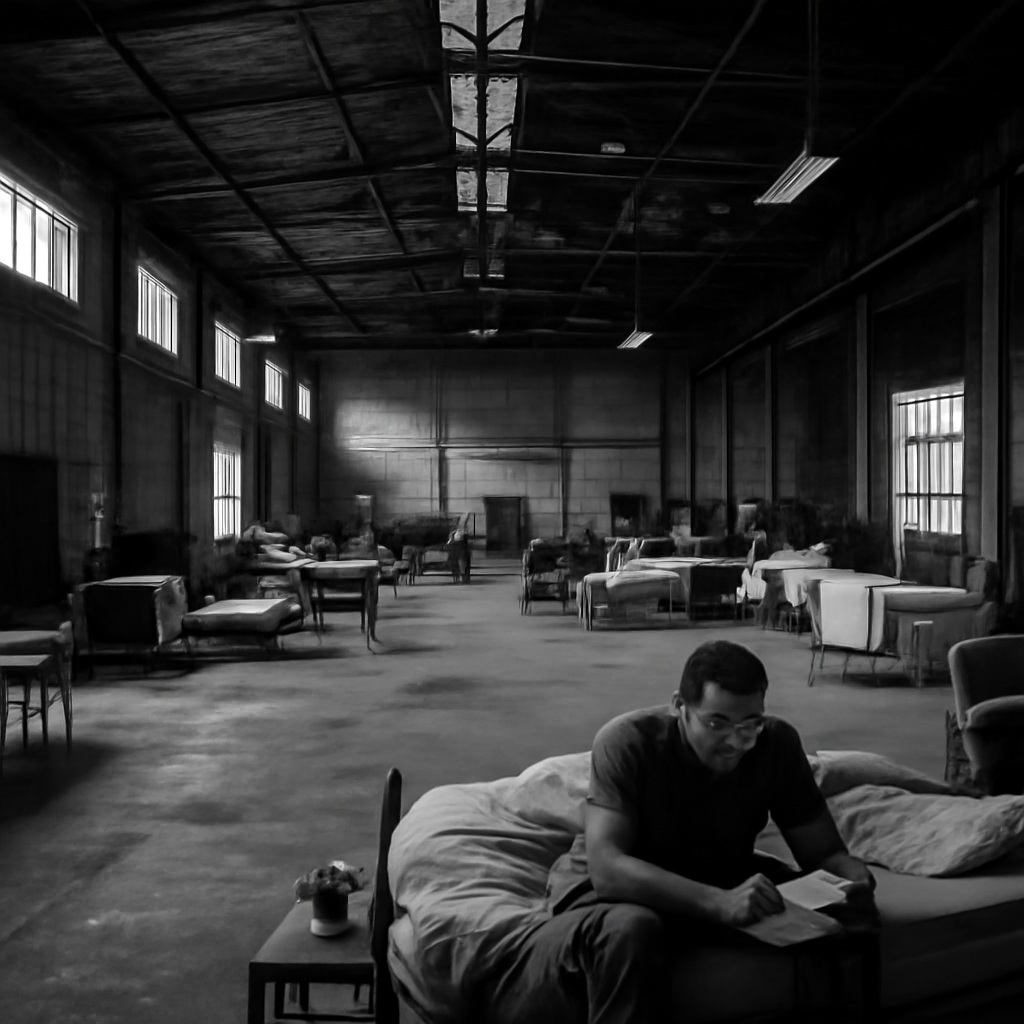
The week’s money trouble was not Cass Oyelaran’s late rent by itself. It was the fact that help had passed through too many hands before it reached him, and each hand had made the help mean something different. Nuri Alvear found the ledger entries beneath the dead skylight: Cass’s six hundred crossed out, an inventory charge still open, and Wren’s account of who had paid her. Teo Vance would not let Nuri explain first. Cass, meanwhile, was looking at a five-hundred-credit receipt, sending Wren forty-eight credits marked LIFT BOOTS, and paying what remained into the rent portal.

Cass had wanted the payment to close a door. Instead it opened several. He asked Nuri at Union Station whether Teo had known before him; Nuri read Cass’s demand that any account come directly, not through Teo. By Tuesday, Nuri’s collaborator line was empty in the only way that mattered: trust had left it. Cass then took the question to Wren, where the cure notice in his coat made the amount impossible to treat as an abstraction.

The collateral damage was Ondine Marsh’s. Cass stood in her darkroom and scratched himself out of a loading-bay negative rather than leave visible evidence of a night he could not bear to explain. What began as a rent problem ended as a set of altered relations: Nuri was finished with Teo, Teo and Nuri had become strained, and Cass had made an ending with Ondine using the smallest available tool.

Cassius "Cass" OyelaranNuri AlvearTeodor "Teo" VanceWren AbadiOndine Marsh
17 April 207521 April 207522 April 2075

#rent#trust#debt#darkroom

News photograph: Nuri’s Uncertified Denver Went to Union Station

Nuri’s Uncertified Denver Went to Union Station

cultural · denver · 5 days · arc: the-verification · arc: the-accreditation

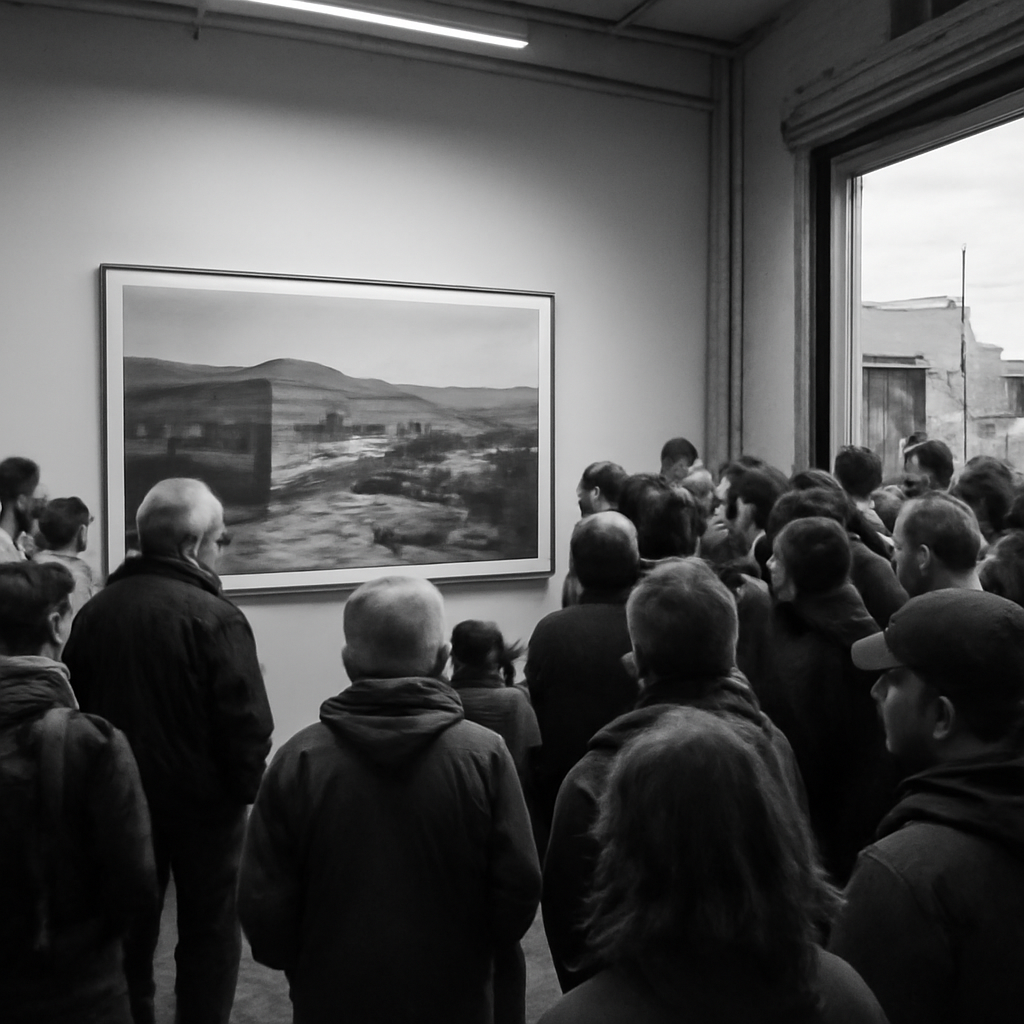
Nuri Alvear’s Denver, all immaculate false streets and politely arranged light, was put before the city in the one place where commuters could not scroll past it. The Arrival Wall shortlist first confirmed its place, then installed it at working scale along Union Station’s east concourse, and finally opened an in-person preference vote. The work was named plainly as machine-composited. It did not need Quiet Galleries certification to be considered, which was precisely why its presence unsettled hand-authored artists.

For Nuri, the commission was not abstract recognition. A Civic Images Annex appointment blinked from their wrist while Ondine clipped contact sheets in the darkroom, including frames Nuri had cut days before. Later, at the station, Cass’s question about Teo sat beside the commuter rail and made public attention feel less like support than another place to be watched.

Teo’s response to the panel had already located what he could believe in Nuri’s image: not its clean water or promised light, but the service object left visible in the scene, doing the work no brochure celebrates. The public vote remained open at week’s end. Nuri had not won the wall; they had become impossible for the house, and for the station’s passing public, to dismiss as an uncertified private experiment.

Nuri AlvearTeodor "Teo" VanceOndine MarshCassius "Cass" Oyelaran

17 April 207518 April 207519 April 207520 April 207521 April 2075

#Union Station#machine-composited#public art#verification

News photograph: The Storm Did Not Become the Crisis It Could Have Been

The Storm Did Not Become the Crisis It Could Have Been

civic · front-range · 3 days · arc: the-reservoir · arc: the-allocation · arc: the-compact

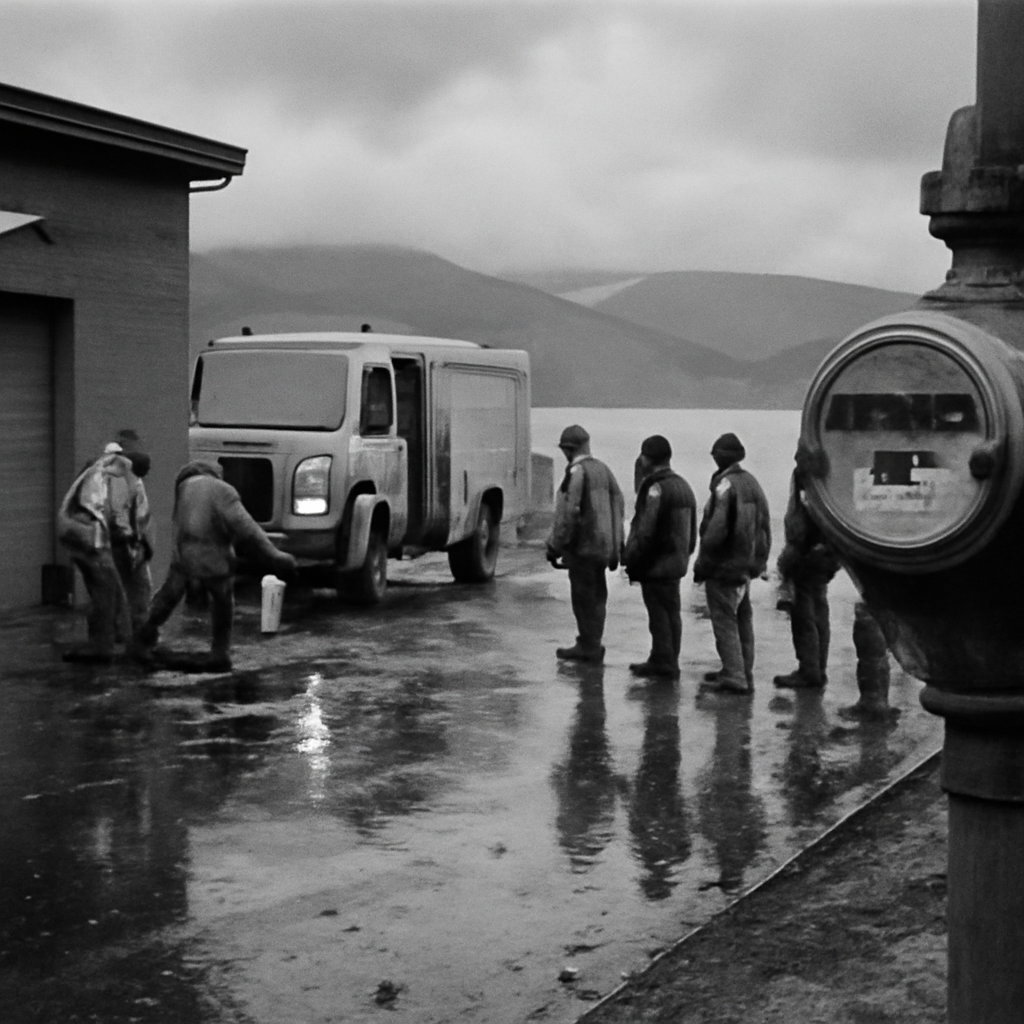
The week’s wet weather brought interruption without collapse. North Fork’s modular snow fences held enough windblown snow above the collection basins to keep the runoff estimate from slipping again—not much against summer demand, but enough to matter in a city trained to count such margins. In Denver, the same system delayed high work and competed rail repair material with agricultural freight for restored slots.

Cheyenne then gave Denver a thirty-day storm-freight dispatch window. Its first backlog of medical, food and replacement loads cleared before the contingency queue had to be opened. It was a practical relief, not a settlement: Denver’s authority over the corridor remained temporary and Wyoming’s objection to that authority remained waiting behind the success.

The weather had not solved the drought or the Compact argument. It had merely shown, over several days, what functioning cooperation looked like at the edge of a harder season: snow caught on a fence, freight redirected, and a backlog moved before anyone had to call it an emergency.

17 April 207522 April 207523 April 2075

#snowpack#freight#Cheyenne#water

News photograph: The Snow Made Hollis Stop

The Snow Made Hollis Stop

personal · denver · 2 days

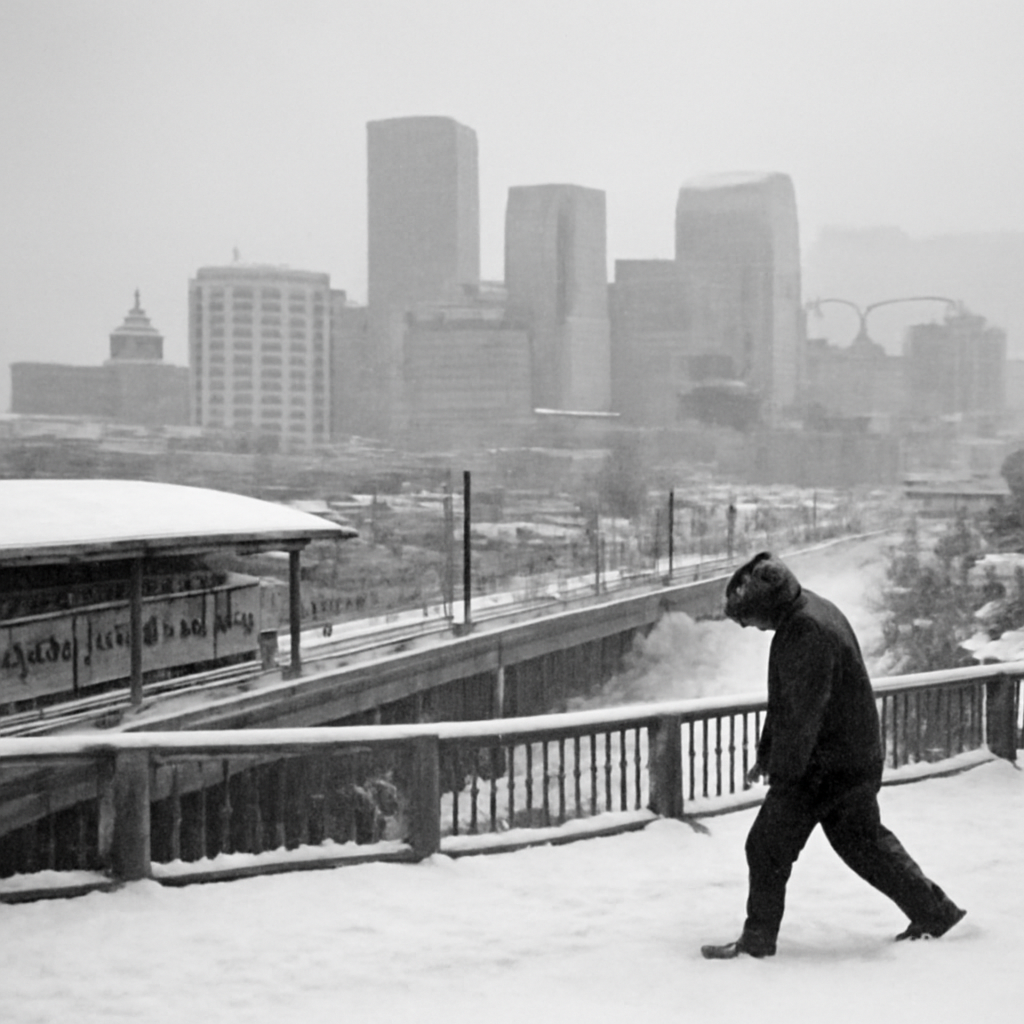
The April system came through wet and narrow, slushing the rail district while putting wind-packed snow onto Denver’s elevated surfaces. The city suspended exterior lifts through Sunday afternoon. For most crews it was an inconvenience measured in a lost day; for Hollis Amaya, whose shoulder had already begun dictating terms she would not name, it was an enforced pause.

Cass stood across the street from her unfinished roofline piece and saw what the stoppage had made visible. The cropped face, interrupted by brick and roof, no longer pretended it wanted to be whole. He knew the difference between stopping because a body required it and calling that necessity a decision. He also knew Hollis would call it a decision if anyone asked.

The snow cleared from the streets by midday and left the foothills white above the city. Hollis’s wall remained incomplete. Nothing had been resolved in the shoulder she concealed, but weather had briefly done what the people around her had not: made work impossible to continue.

Hollis AmayaCassius "Cass" Oyelaran

17 April 207520 April 2075

#weather#mural#shoulder#high work

News photograph: Henshaw Came Back, and So Did the Old Offer

Henshaw Came Back, and So Did the Old Offer

economic · denver · 4 days

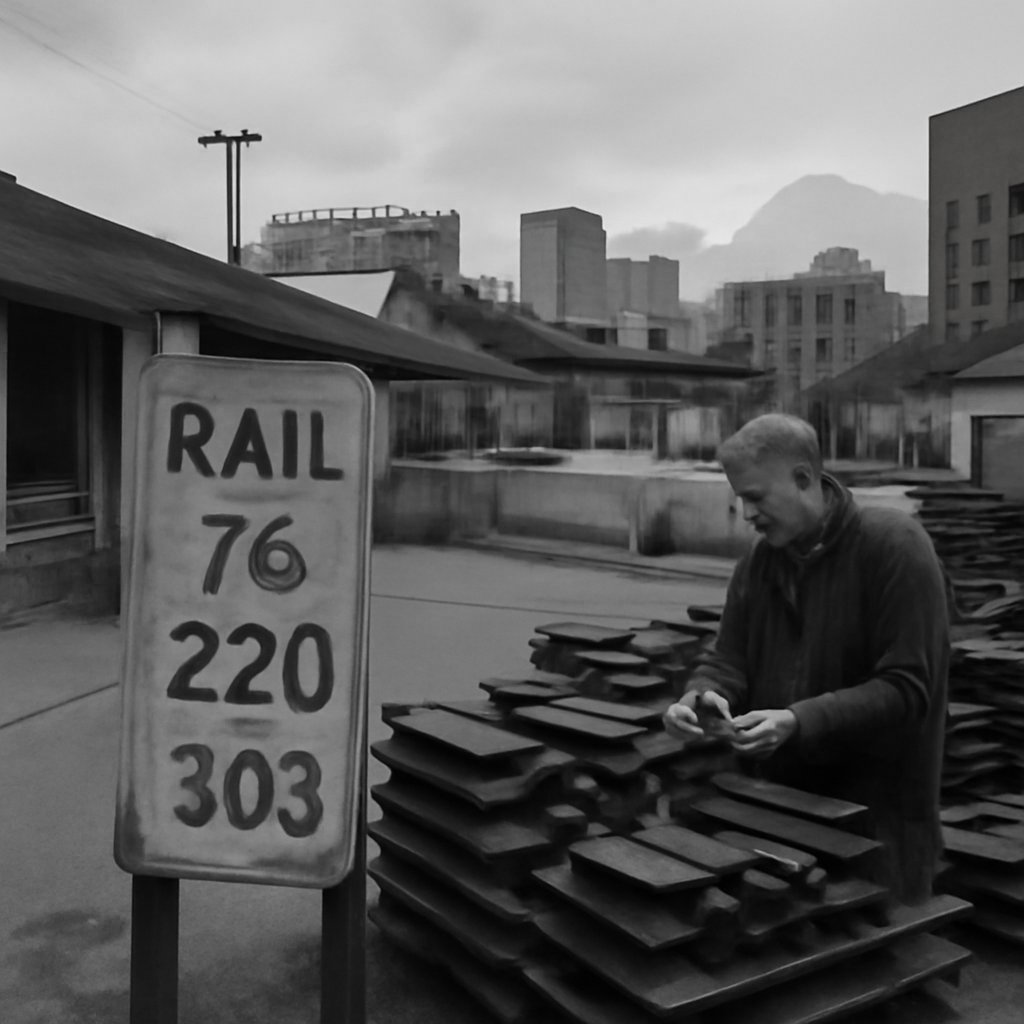
Henshaw Rail’s new two-year repair package returned a kind of certainty to north Denver: bridge and platform work, staffed evening calibration, rail-grade salvage available to smaller shops after years in which industrial material had mostly stayed industrial. Teo Vance had been offered that certainty already by his father, Dennis, in the familiar language of good rail and steady hours. This week, as the contract made the offer newly real, Dennis called again.

Cass heard Teo let the phone ring while he made ugly and neat coils from dead speaker cable. The call was not only about employment. It was about whether Teo would step back into a life Dennis could recognize as sensible, and whether he could do so without being claimed by it. Henshaw’s reopened bay made another future visible too: the warehouse’s scale of work could now meet certified tools and usable salvaged stock without pretending to become a factory.

By the week’s end Dennis had withdrawn the referral. Henshaw’s recruiter called Cass instead, asking whether the referral should remain active under another contact. The company’s return had made room for small shops and for Cass at once, while leaving Teo with the sharper absence of the offer he had not accepted.

Teodor "Teo" VanceCassius "Cass" Oyelaran

18 April 207521 April 207522 April 207523 April 2075

#rail#work#family#salvage

News photograph: Wren Finally Let Someone See the Hand

Wren Finally Let Someone See the Hand

personal · house · 3 days

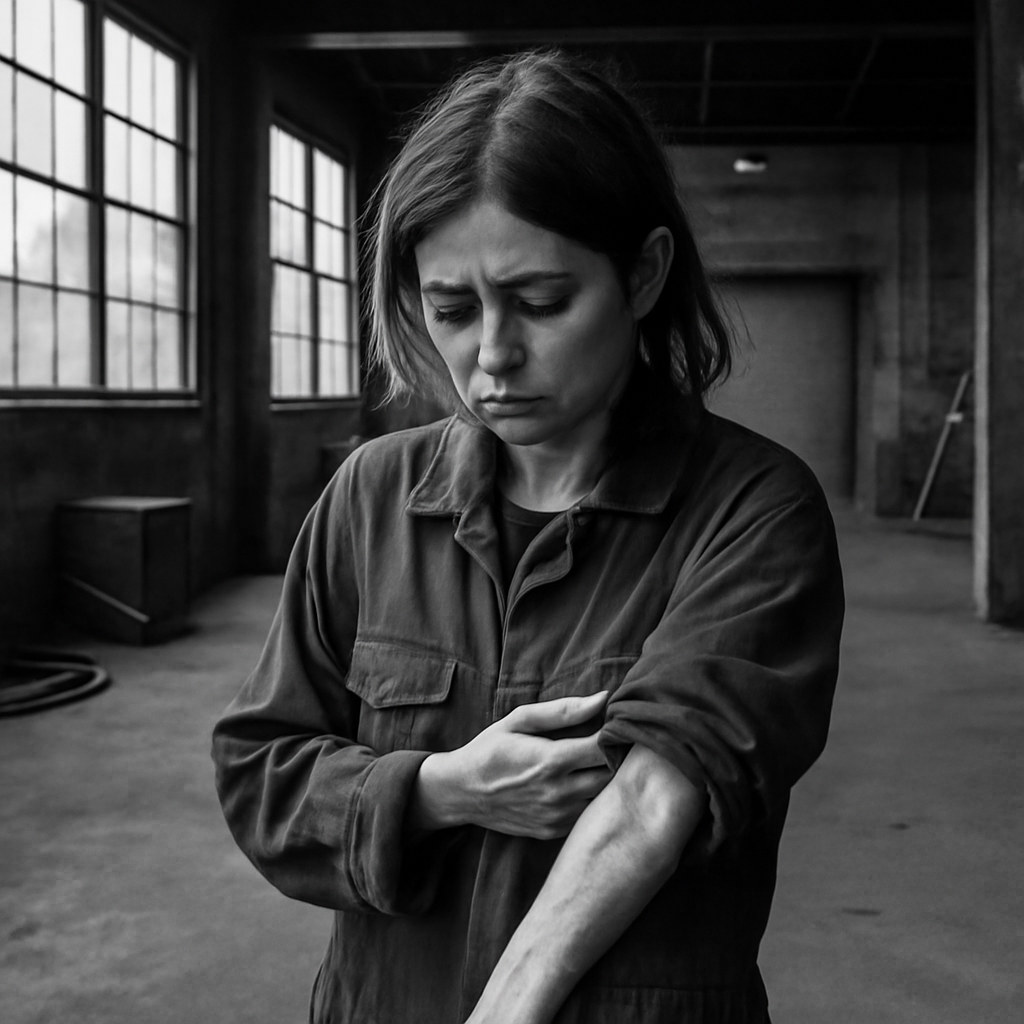
Wren Abadi spent the week trying to preserve the distinction between an injury and a fact about her work. She made a rule about Ondine’s notebook instead of admitting what she needed from Ondine; she fought her lift boot one-handed; then she removed the brace in the north studio and lied about the clinic. Her right thumb was already finding its way into the red canvas, though Wren kept treating the work as evidence of control rather than evidence of damage.

Ondine had been told no often enough to stop pressing. That restraint was what changed the last night. Wren sat on the studio floor with her clinic precheck facedown, the canvas covered, a recording of the old drainpipe hissing nearby. When Ondine appeared, Wren did not offer an explanation or an apology. She said, “Don’t go.” Ondine stayed at the paint shelf, which was as close as Wren could let anyone come.

The room was not repaired. Wren had not gone to the clinic, and the painting had not been made safe by being hidden under cloth. But by the end of the week she had stopped making Ondine leave the injury entirely unseen. Between them, an ending had given way to something unspoken and more difficult.

Wren AbadiOndine Marsh

20 April 207521 April 207523 April 2075

#injury#painting#care#secrecy

The days it was made of