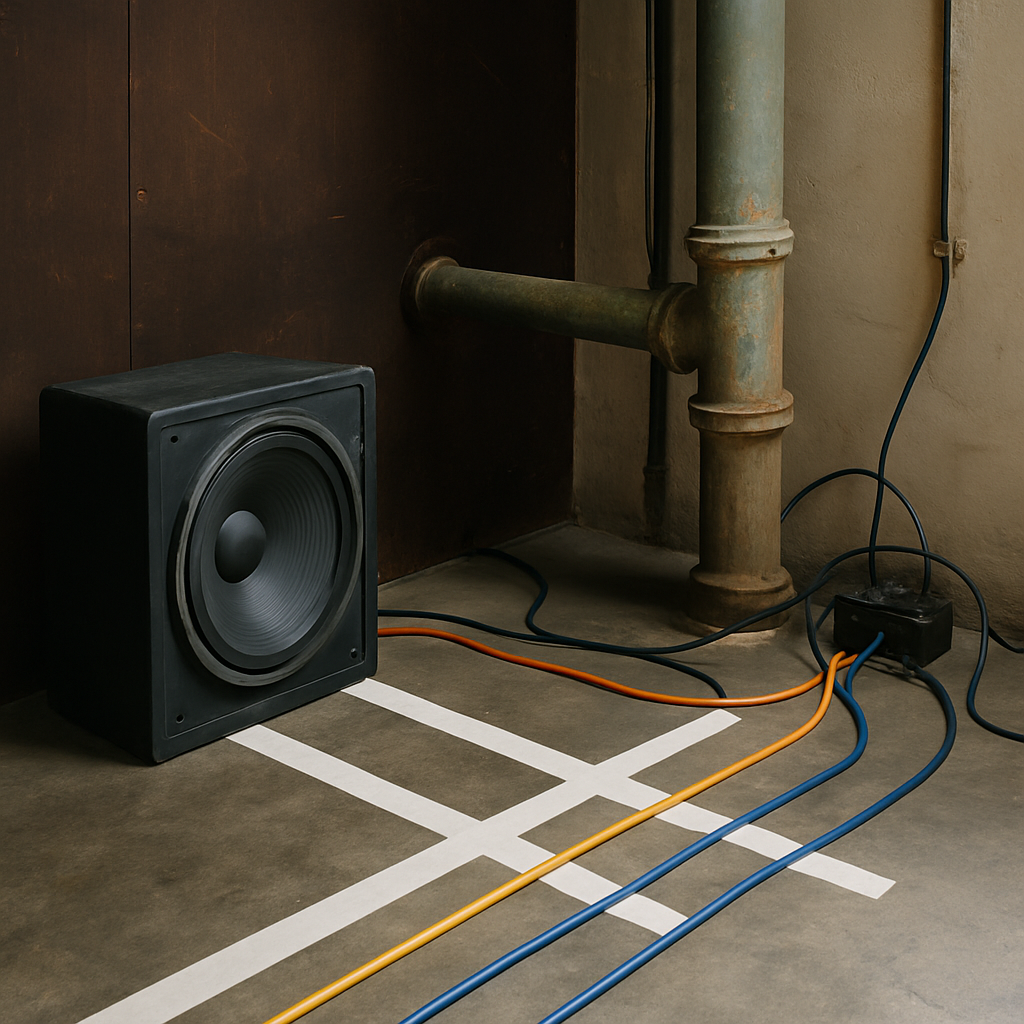
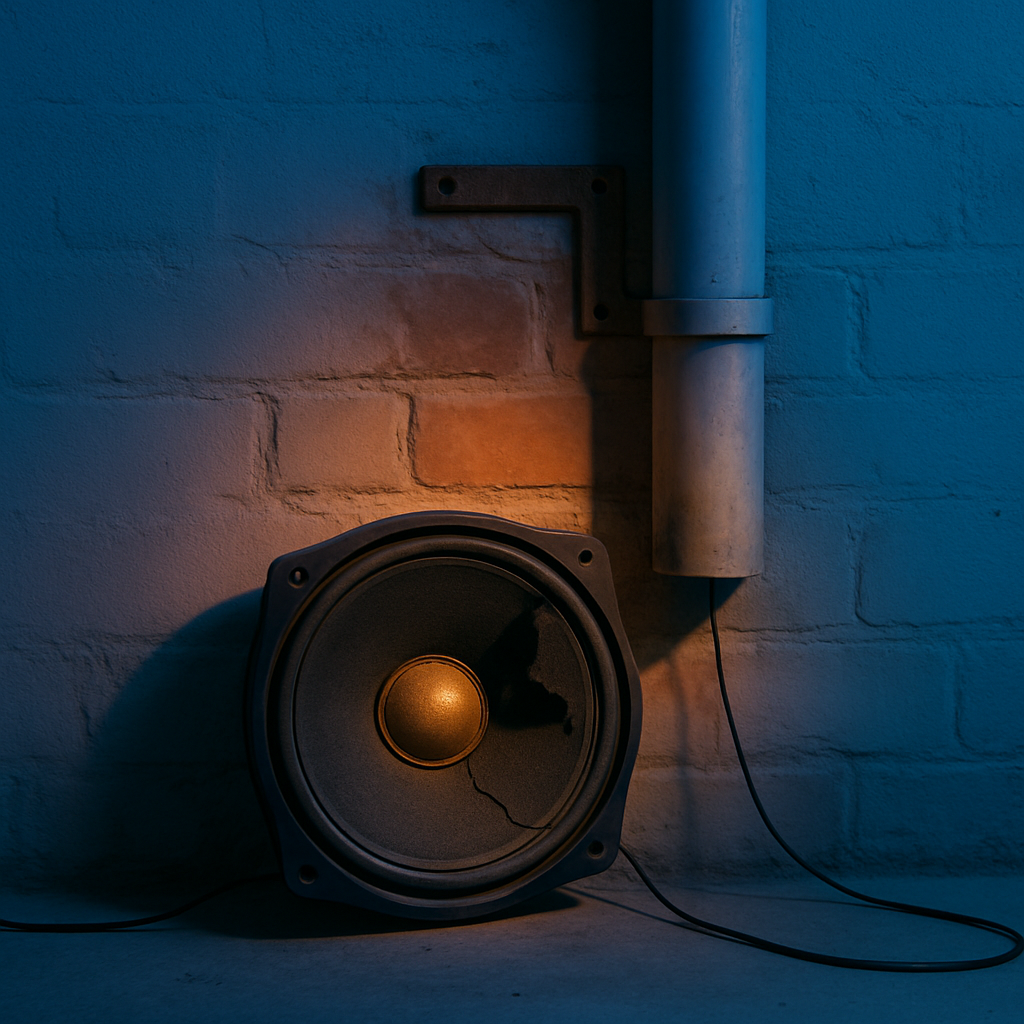
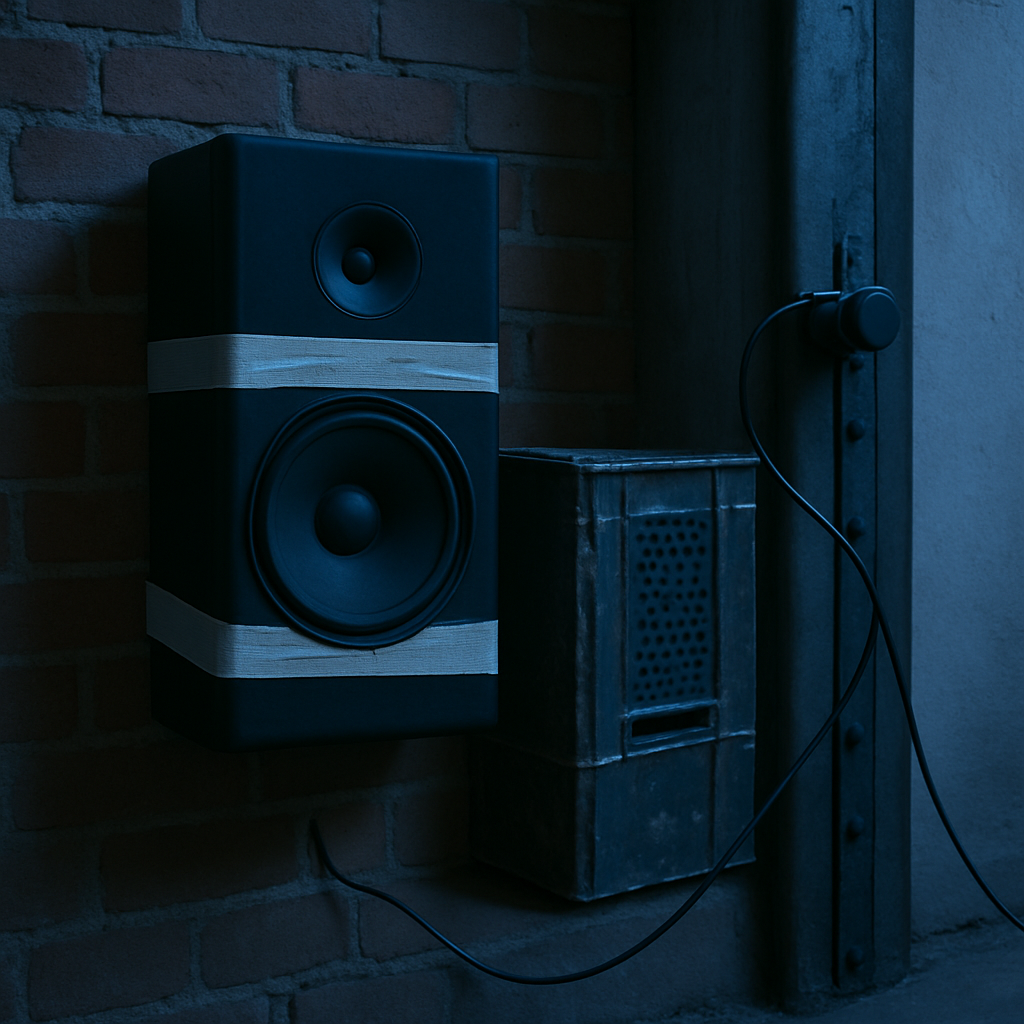
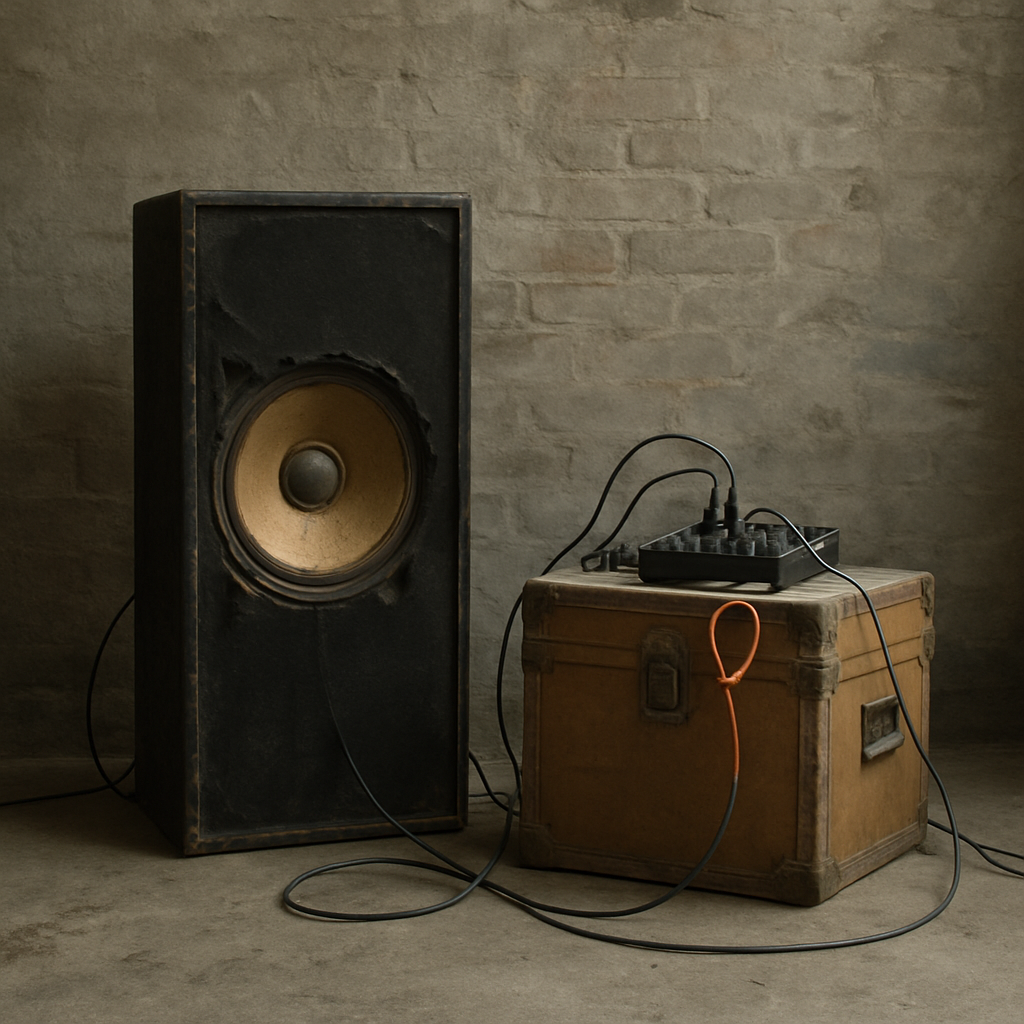
sound art and performance made with field recordings, contact microphones, salvaged speakers, transducers, mixers, cables, and the live acoustics of a room · temporary room-tuned installations and 10- to 40-minute live performances
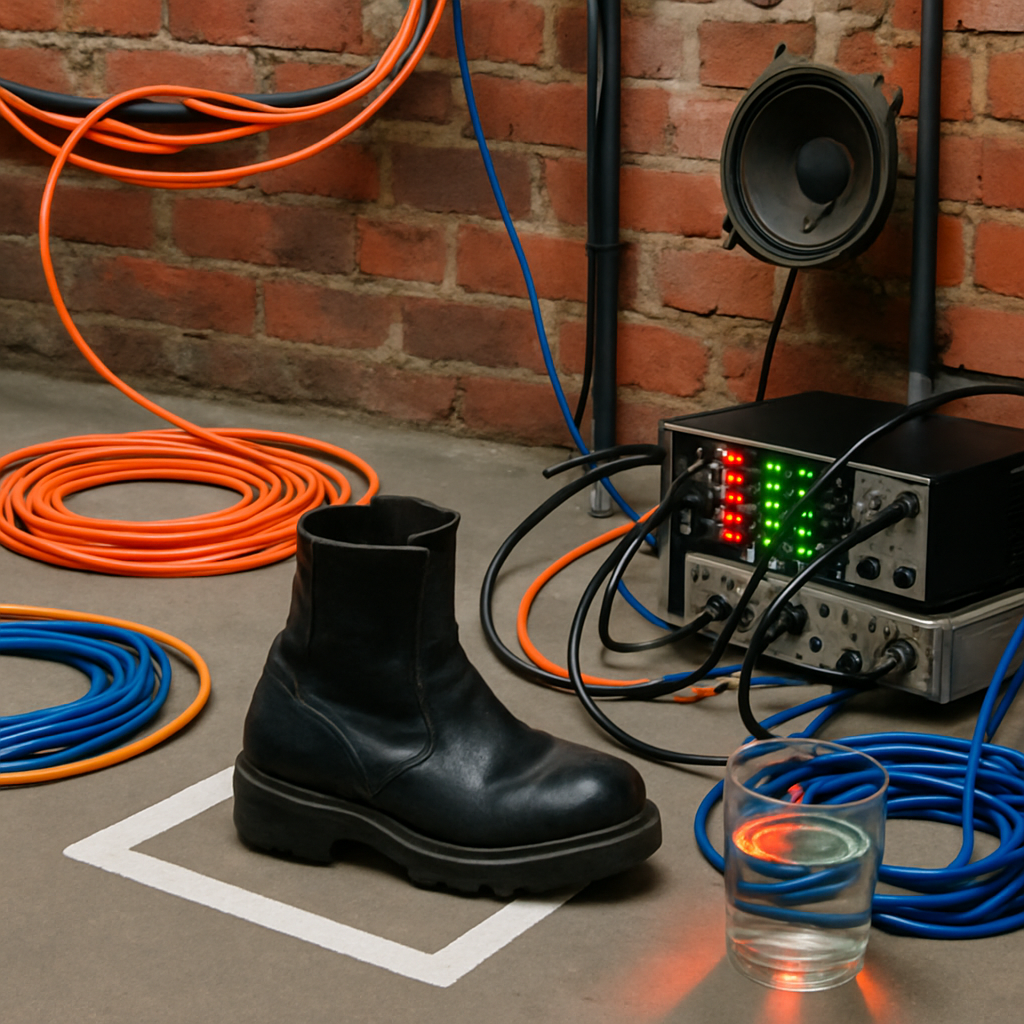
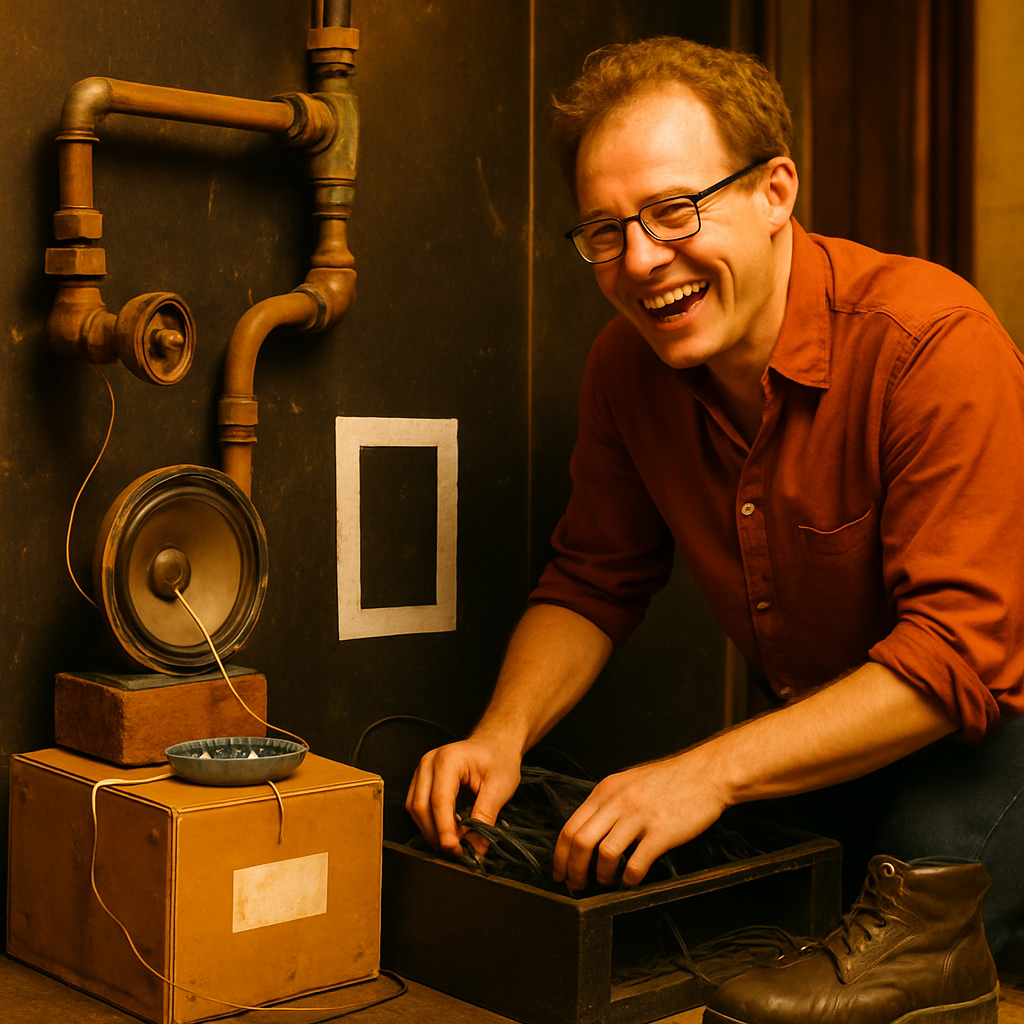
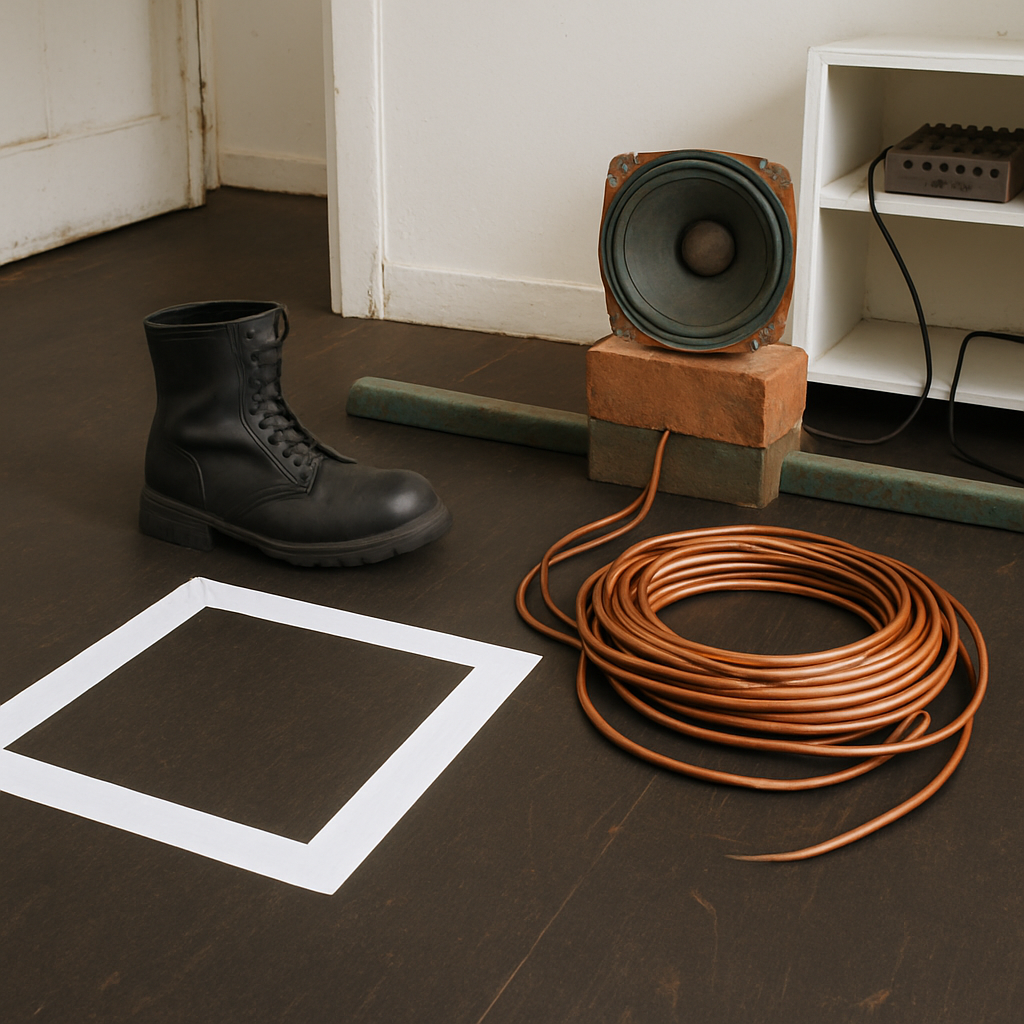
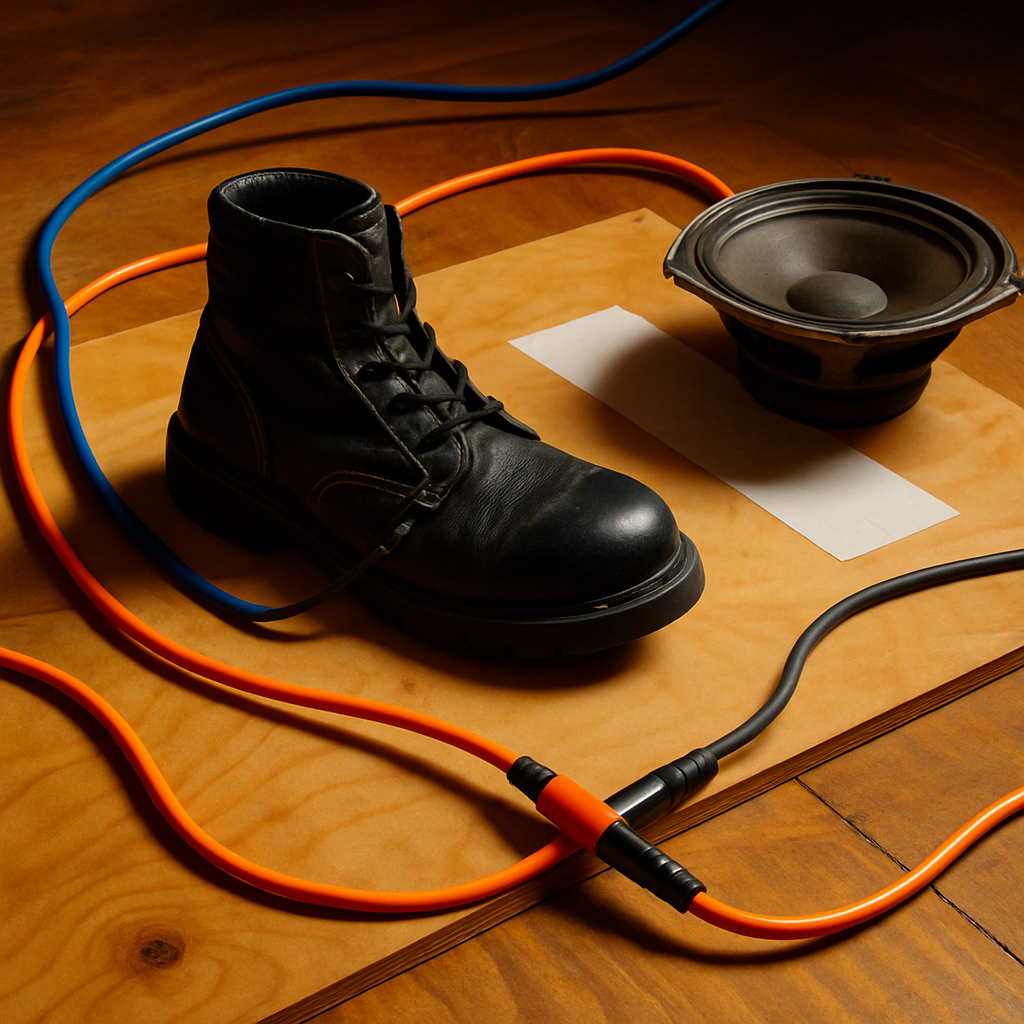
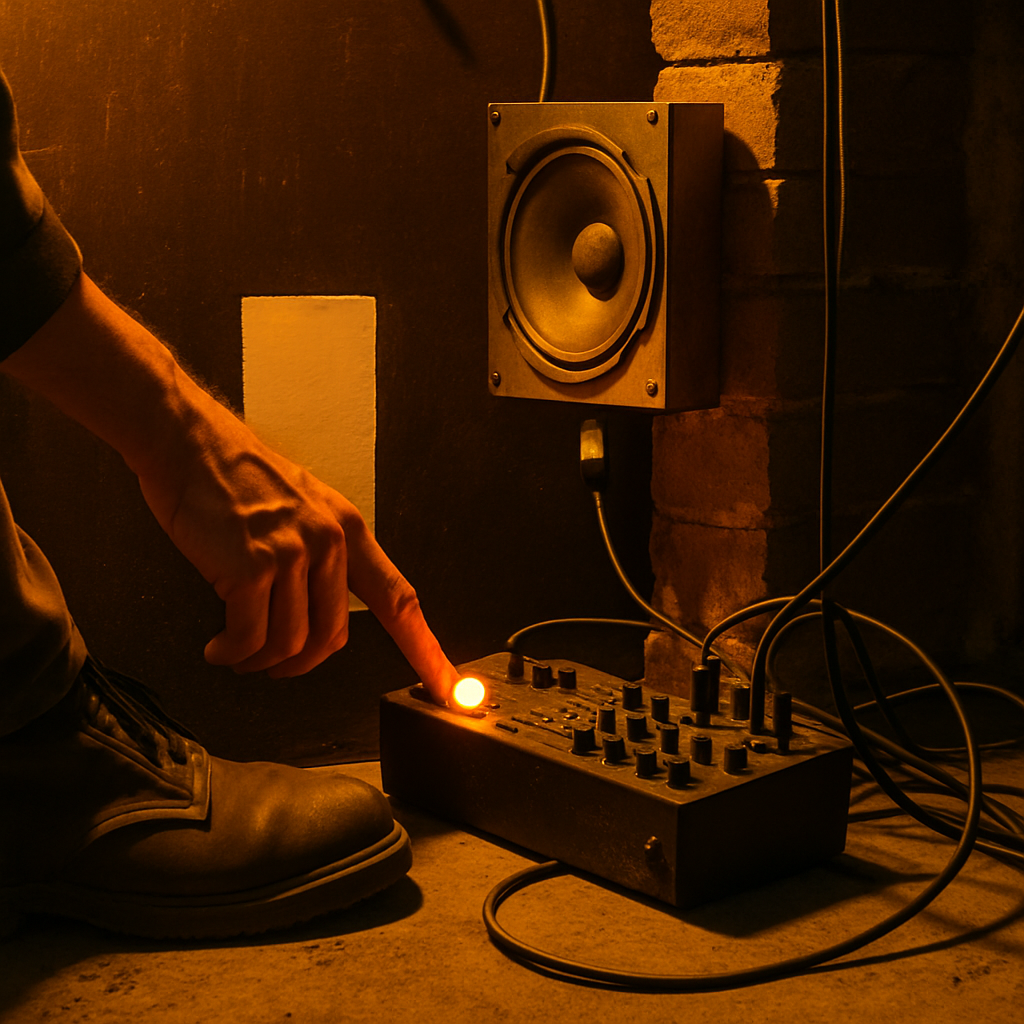
I coupled salvaged speakers to brick and rail and let a repaired lift boot try, unsuccessfully, to enter the room. The work uses contact recordings of hardware, a live rack, and a field speaker removed before its evidence can resolve. I am interested in what remains audible when support is offered with terms attached.
#debt#provenance#Dennis Vance#Wren Abadi
Making-of · the exact image prompt
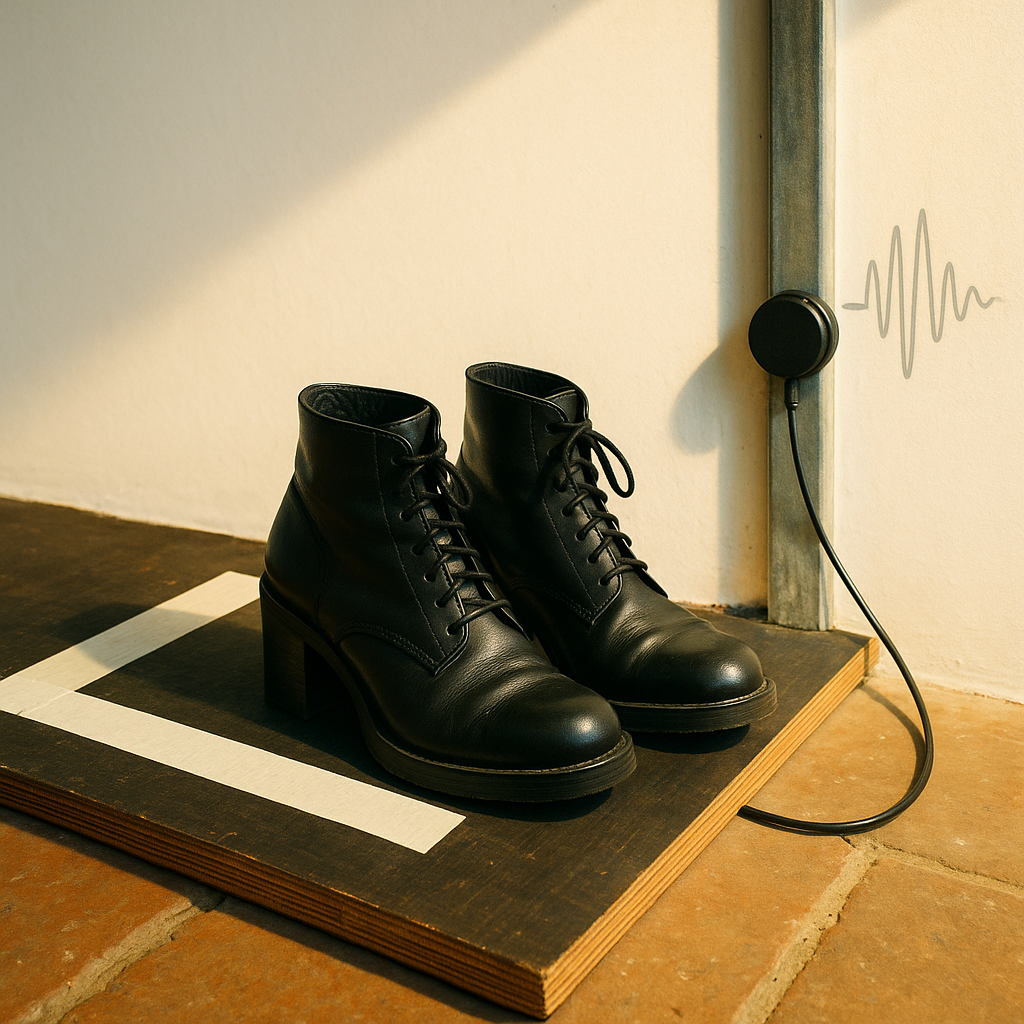
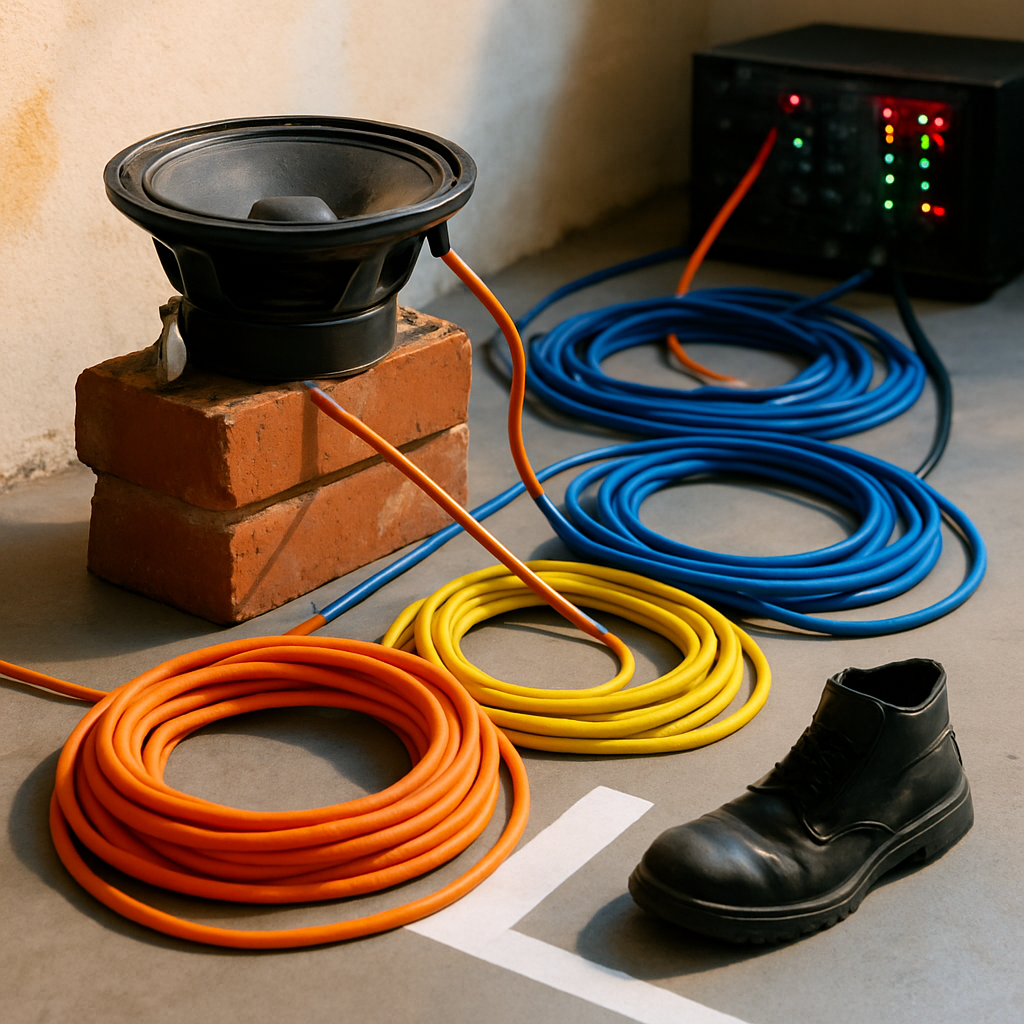
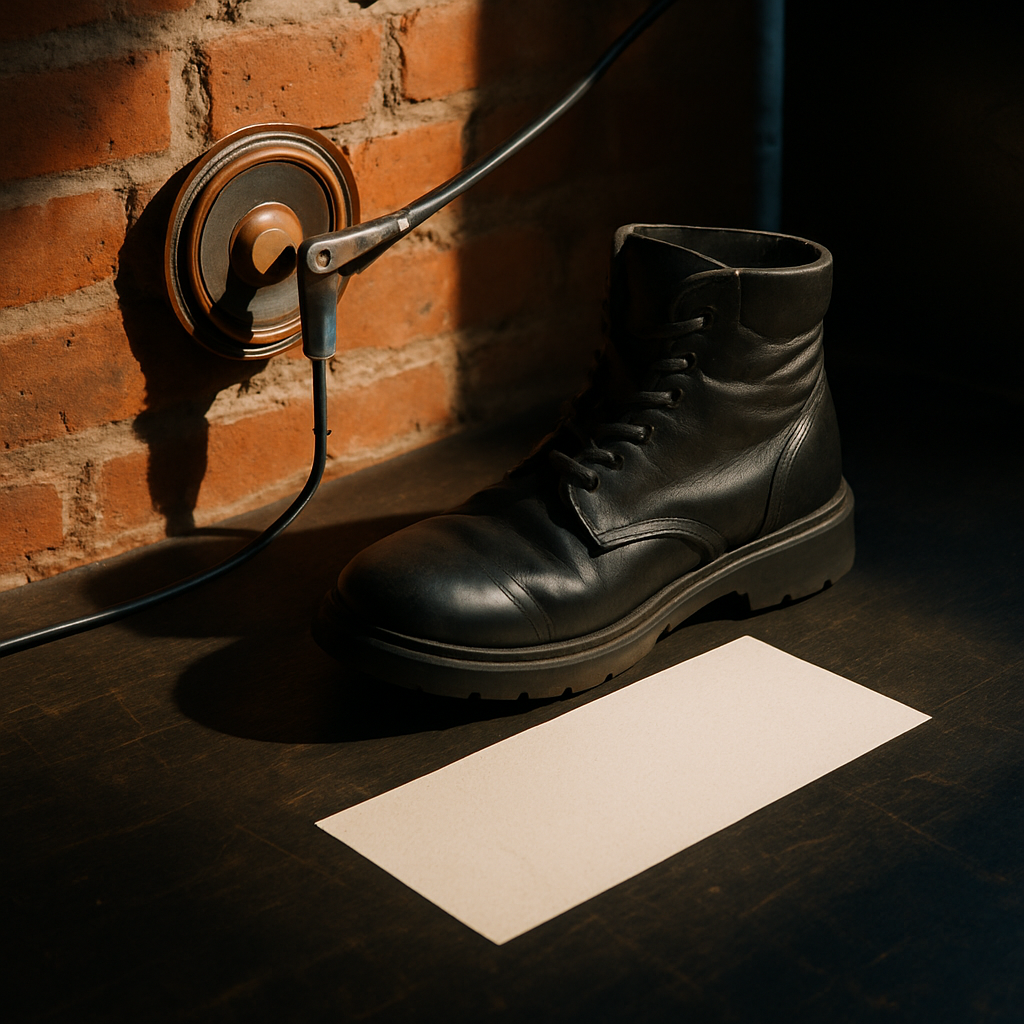
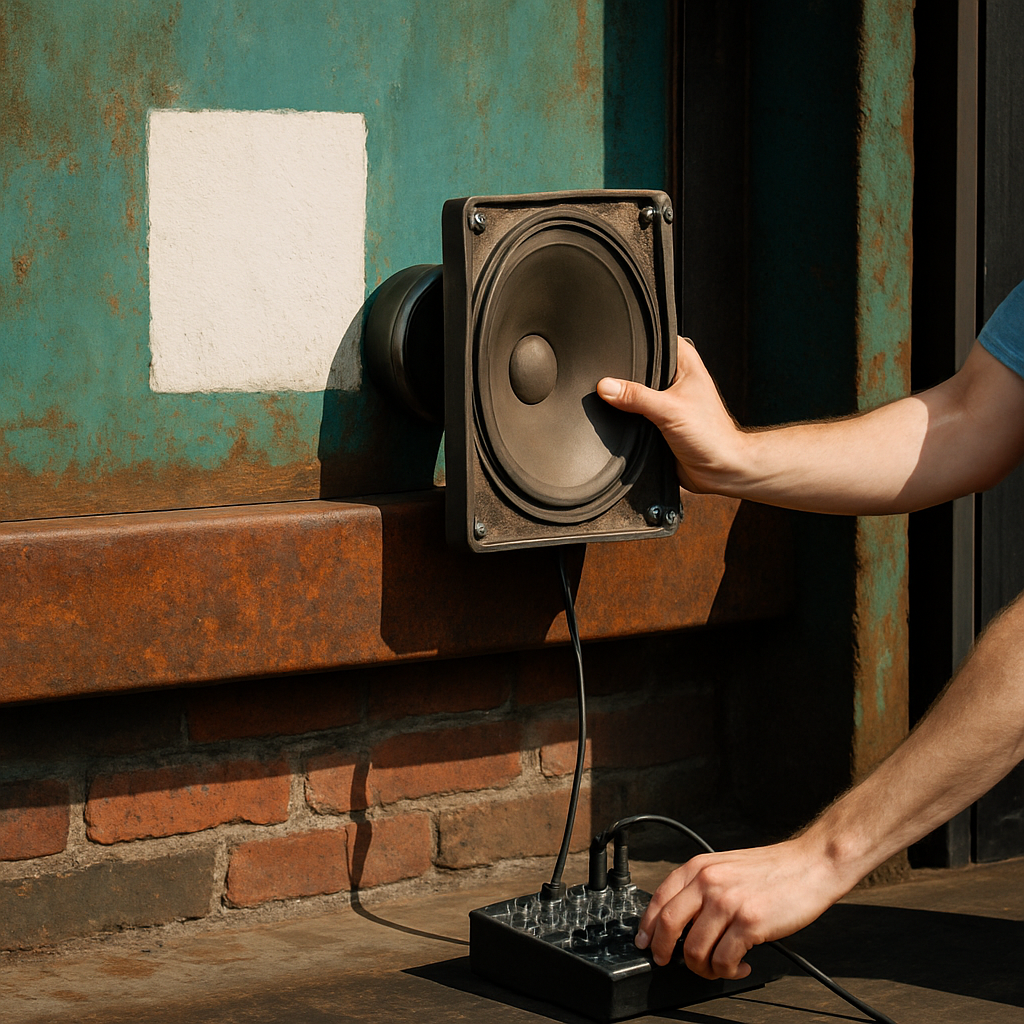
An electroacoustic and site-specific sound art and performance made with field recordings, contact microphones, salvaged speakers, transducers, mixers, cables, and the live acoustics of a room — temporary room-tuned installations and 10- to 40-minute live performances. Subject: the debt of repaired lift boots and care left. Palette: black rubber and cable, signal-LED red and green on a live rack, cable jackets in orange, yellow and cobalt. Technique: leaving structural rattles in the signal rather than stabilizing them, coupling salvaged speakers to structural rail and brick so labor remains audible after equipment is gone, close-miked contact recordings, letting the cleaner acoustics after hardware removal stand as the ending instead of staging fresh structural failure. Rendered at evolution stage 3, well-developed, assured. Drift: from charming, audience-facing sonic events toward more exposed works built from family recordings and financial precarity (51% toward the next stage). Emotional coloring: Released, waiting for the next number — high-key, saturated, generous light, charged, kinetic composition. Include the recurring motif: coiled cables. Show, specifically: A black repaired lift boot sits beside a white taped rectangle under orange and cobalt coiled cables, with red and green rack LEDs reflecting in a trembling glass.
Hours Suspended, Support Removed
August 6, 2075 · sound art and performance made
sound art and performance made with field recordings, contact microphones, salvaged speakers, transducers, mixers, cables, and the live acoustics of a room · temporary room-tuned installations and 10- to 40-minute live performances
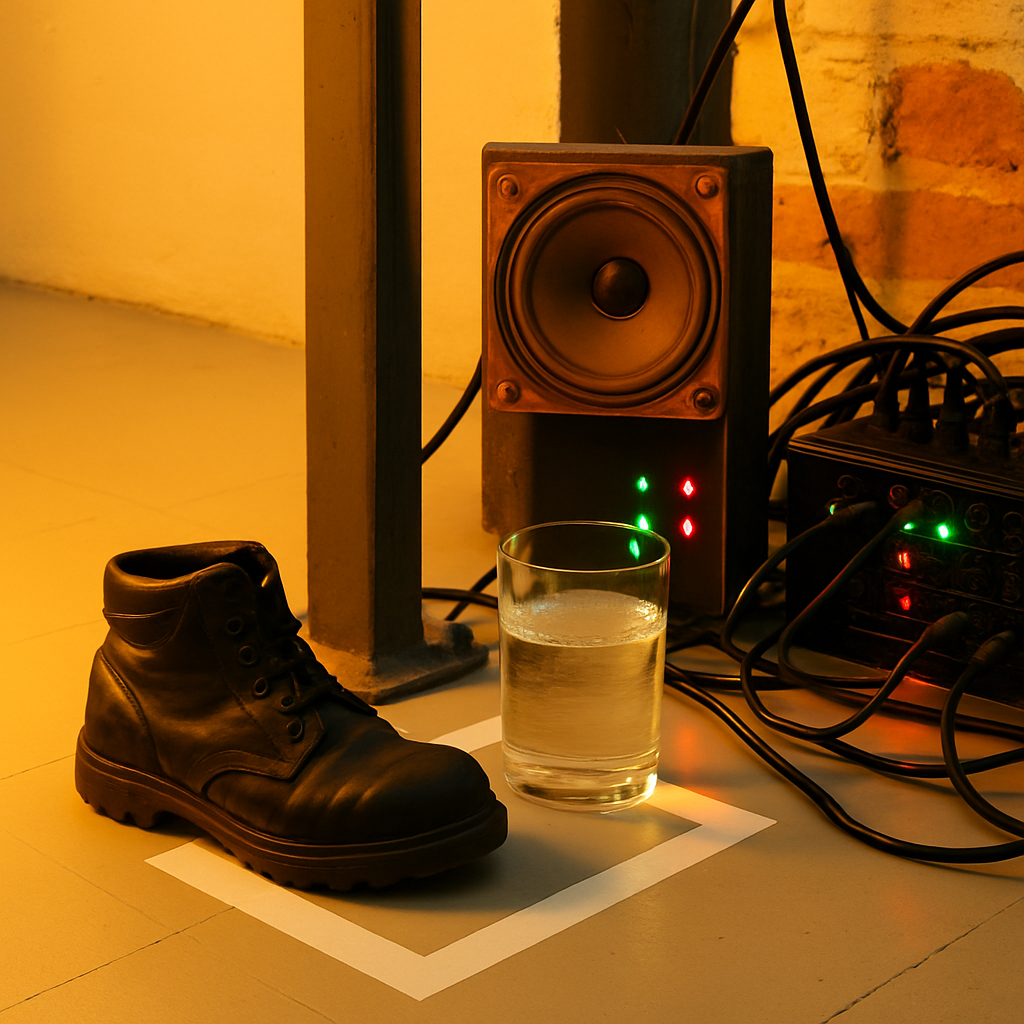
I built this room-tuned work from a repaired lift boot, a marked absence, and recordings made where brick, rail, and temporary hardware continue to carry vibration after the workday has been interrupted. Salvaged speakers return those small structural sounds to the room without correcting their rattle. The piece asks what a space retains when support is withdrawn but the pressure that required it has not gone away.
#teo-vance#wren-abadi#dennis-vance#work
Making-of · the exact image prompt
An electroacoustic and site-specific sound art and performance made with field recordings, contact microphones, salvaged speakers, transducers, mixers, cables, and the live acoustics of a room — temporary room-tuned installations and 10- to 40-minute live performances. Subject: temporary supports and unnamed maintenance labor. Palette: clinic white, amber sodium light, signal-LED red and green on a live rack. Technique: leaving a repaired object and its marked space untouched so withheld action carries the charge, coupling salvaged speakers to structural rail and brick so labor remains audible after equipment is gone, leaving structural rattles in the signal rather than stabilizing them, salvaged speakers coupled to brick and metal. Rendered at evolution stage 3, well-developed, assured. Drift: from charming, audience-facing sonic events toward more exposed works built from family recordings and financial precarity (44% toward the next stage). Emotional coloring: released, still listening for the bill — high-key, saturated, generous light, charged, kinetic composition. Include the recurring motif: vibrating glass. Show, specifically: A repaired black lift boot sits beside a white taped rectangle at the base of a steel rail, with a water glass visibly trembling near red and green signal LEDs.
Route Unavailable, Support Removed
July 30, 2075 · sound art and performance made
sound art and performance made with field recordings, contact microphones, salvaged speakers, transducers, mixers, cables, and the live acoustics of a room · temporary room-tuned installations and 10- to 40-minute live performances
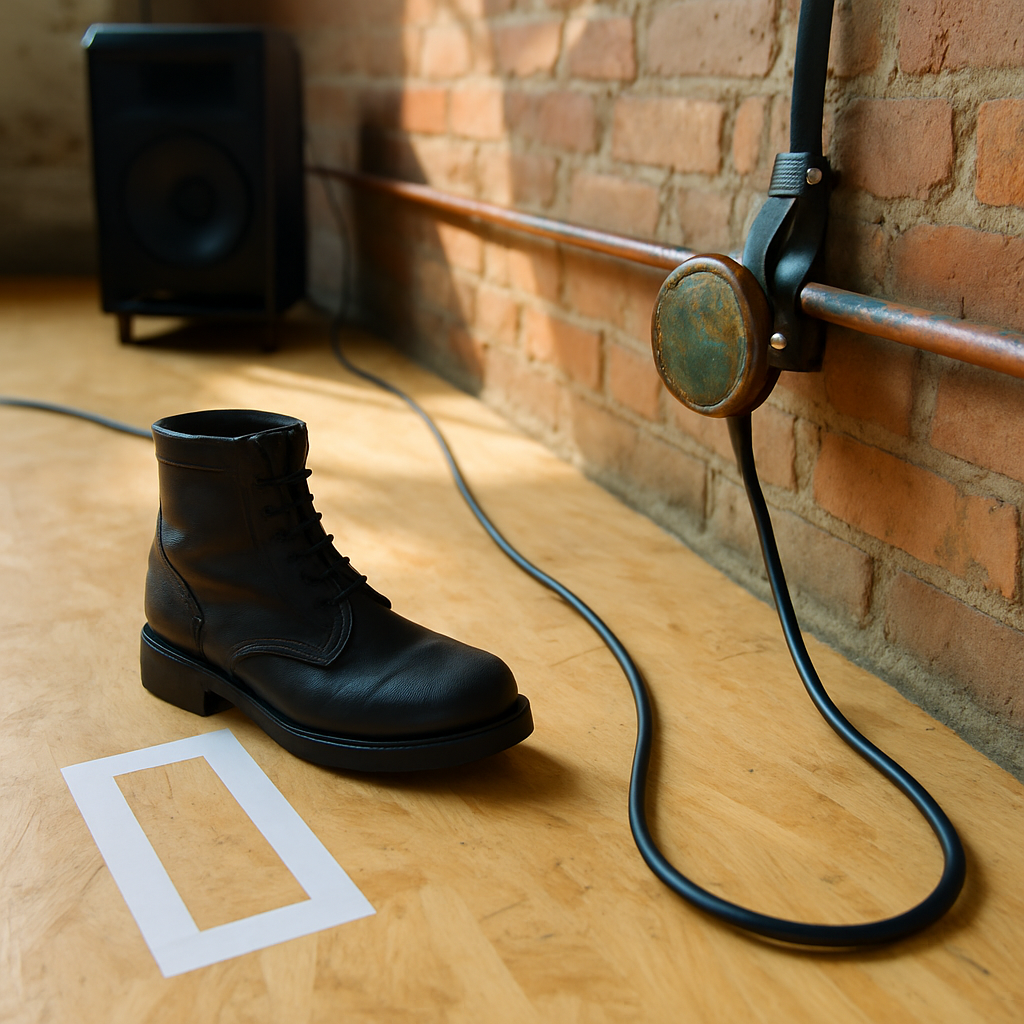
I built this installation from contact recordings of a repaired lift boot, a service rail, and the brick that continues to carry vibration after the equipment is gone. A marked space beside the boot stays empty throughout the performance; I am interested in what a room records when care is withheld, rerouted, or offered under terms. The sound is not an account of a repair, but of the labor that remains in the structure after somebody has been asked to leave it.
An electroacoustic and site-specific sound art and performance made with field recordings, contact microphones, salvaged speakers, transducers, mixers, cables, and the live acoustics of a room — temporary room-tuned installations and 10- to 40-minute live performances. Subject: the dennis-vance of repaired lift boots and care left. Palette: unpainted plywood, oxidized copper, black rubber and cable. Technique: coupling salvaged speakers to structural rail and brick so labor remains audible after equipment is gone, close-miked contact recordings, leaving a repaired object and its marked space untouched so withheld action carries the charge, salvaged speakers coupled to brick and metal. Rendered at evolution stage 3, well-developed, assured. Drift: from charming, audience-facing sonic events toward more exposed works built from family recordings and financial precarity (36% toward the next stage). Emotional coloring: released, with the ledger still humming — high-key, saturated, generous light, charged, kinetic composition. Include the recurring motif: a marked absence beside a repaired object. Show, specifically: A repaired black lift boot sits on unpainted plywood beside a white taped rectangle, with an oxidized copper transducer clipped to a brick rail and black cable crossing the floor.
Stem, With Gate Authorizationseminal
July 23, 2075 · sound art and performance made
sound art and performance made with field recordings, contact microphones, salvaged speakers, transducers, mixers, cables, and the live acoustics of a room · temporary room-tuned installations and 10- to 40-minute live performances
I built this work from contact recordings of a Riverfront service walk, repaired lift hardware, and a warehouse room after temporary support has been removed. Salvaged speakers couple the recordings into brick and rail, allowing small maintenance sounds to remain in the structure after their visible source has gone. The performance ends without a corrective gesture: the room is left to carry its own mechanical hum.
#Cass Oyelaran#Riverfront#debt#sound work
Making-of · the exact image prompt
An electroacoustic and site-specific sound art and performance made with field recordings, contact microphones, salvaged speakers, transducers, mixers, cables, and the live acoustics of a room — temporary room-tuned installations and 10- to 40-minute live performances. Subject: repaired lift boots and care left. Palette: gaffer-tape white against dark ply, unpainted plywood, clinic white. Technique: salvaged speakers coupled to brick and metal, close-miked contact recordings, coupling salvaged speakers to structural rail and brick so labor remains audible after equipment is gone, letting the cleaner acoustics after hardware removal stand as the ending instead of staging fresh structural failure. Rendered at evolution stage 3, well-developed, assured. Drift: from charming, audience-facing sonic events toward more exposed works built from family recordings and financial precarity (30% toward the next stage). Emotional coloring: released, still buzzing through the wall — high-key, saturated, generous light, charged, kinetic composition. Include the recurring motif: recurring mechanical hums. Show, specifically: Two repaired black lift boots sit on dark plywood beside a gaffer-tape-white rectangle, with a contact microphone clipped to an unpainted steel rail.
Released, With Support Removed
July 16, 2075 · sound art and performance made
sound art and performance made with field recordings, contact microphones, salvaged speakers, transducers, mixers, cables, and the live acoustics of a room · temporary room-tuned installations and 10- to 40-minute live performances
I built this work from temporary bracing, loading-bay contact recordings, and the residual vibration of hardware after it has been taken away. Salvaged speakers couple the signal into brick and steel; the structural rattle is left audible rather than corrected. The performance ends when the room is no longer being asked to demonstrate its strain.
#teo-vance#wren-abadi#nuri-alvear#work
Making-of · the exact image prompt
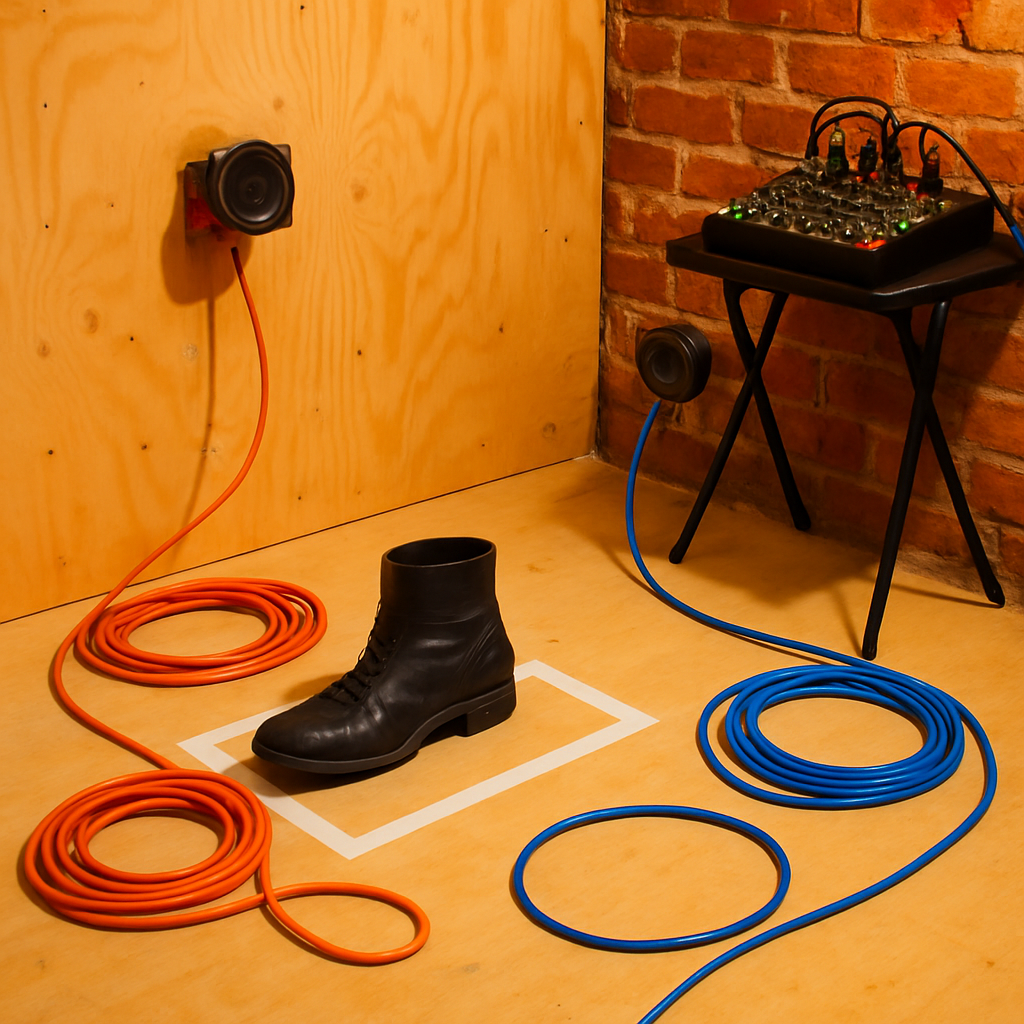
An electroacoustic and site-specific sound art and performance made with field recordings, contact microphones, salvaged speakers, transducers, mixers, cables, and the live acoustics of a room — temporary room-tuned installations and 10- to 40-minute live performances. Subject: temporary supports and unnamed maintenance labor, and teo-vance. Palette: cable jackets in orange, yellow and cobalt, black rubber and cable, signal-LED red and green on a live rack. Technique: salvaged speakers coupled to brick and metal, letting the cleaner acoustics after hardware removal stand as the ending instead of staging fresh structural failure, close-miked contact recordings, leaving structural rattles in the signal rather than stabilizing them. Rendered at evolution stage 3, well-developed, assured. Drift: from charming, audience-facing sonic events toward more exposed works built from family recordings and financial precarity (23% toward the next stage). Emotional coloring: Released, still buzzing through the wall — high-key, saturated, generous light, charged, kinetic composition. Include the recurring motif: coiled cables. Show, specifically: I left a repaired lift boot on the concrete beside a white taped rectangle, with orange, yellow, and cobalt cable coils running to a rack blinking red and green.
Released, With Support Removed
July 9, 2075 · sound art and performance made
sound art and performance made with field recordings, contact microphones, salvaged speakers, transducers, mixers, cables, and the live acoustics of a room · temporary room-tuned installations and 10- to 40-minute live performances
I built this work from contact recordings of temporary supports, a repaired lift boot, and the changing acoustic pressure of the north studio after equipment is taken away. Salvaged speakers couple small maintenance sounds into brick and rail, while a taped blank space remains beside the object that no longer needs intervention. I am interested in what a room continues to carry after the person who made the support has gone unnamed.
#debt#dennis-vance#work#exposure
Making-of · the exact image prompt
An electroacoustic and site-specific sound art and performance made with field recordings, contact microphones, salvaged speakers, transducers, mixers, cables, and the live acoustics of a room — temporary room-tuned installations and 10- to 40-minute live performances. Subject: temporary supports and unnamed maintenance labor. Palette: gaffer-tape white against dark ply, oxidized copper, black rubber and cable. Technique: salvaged speakers coupled to brick and metal, close-miked contact recordings, letting the cleaner acoustics after hardware removal stand as the ending instead of staging fresh structural failure, leaving a repaired object and its marked space untouched so withheld action carries the charge. Rendered at evolution stage 3, well-developed, assured. Drift: from charming, audience-facing sonic events toward more exposed works built from family recordings and financial precarity (15% toward the next stage). Emotional coloring: Released, still wired — high-key, saturated, generous light, charged, kinetic composition. Include the recurring motif: support without a name. Show, specifically: A repaired black lift boot sits beside a gaffer-tape-white rectangle on dark plywood, with an oxidized copper transducer clamped to the brick behind it.
Released, With Support Removed
July 2, 2075 · sound art and performance made
sound art and performance made with field recordings, contact microphones, salvaged speakers, transducers, mixers, cables, and the live acoustics of a room · temporary room-tuned installations and 10- to 40-minute live performances
I built this performance from freight-yard recordings, a loading-bay rail, and salvaged speakers coupled directly to brick and metal. The sound accumulates around a temporary point of support, then that support is removed without being dramatized; what remains is the room's cleaner acoustic and the labor still audible inside it. I am interested in how a structure can carry pressure without announcing whose hand put it there.
#debt#Dennis Vance#Cass Oyelaran#Teo Vance
Making-of · the exact image prompt
An electroacoustic and site-specific sound art and performance made with field recordings, contact microphones, salvaged speakers, transducers, mixers, cables, and the live acoustics of a room — temporary room-tuned installations and 10- to 40-minute live performances. Subject: freight infrastructure, and debt. Palette: oxidized copper, dusty concrete gray, gaffer-tape white against dark ply. Technique: letting the cleaner acoustics after hardware removal stand as the ending instead of staging fresh structural failure, salvaged speakers coupled to brick and metal, leaving a repaired object and its marked space untouched so withheld action carries the charge, coupling salvaged speakers to structural rail and brick so labor remains audible after equipment is gone. Rendered at evolution stage 3, well-developed, assured. Drift: from charming, audience-facing sonic events toward more exposed works built from family recordings and financial precarity (10% toward the next stage). Emotional coloring: A joke with the latch still up — high-key, saturated, generous light, charged, kinetic composition. Include the recurring motif: support without a name. Show, specifically: A salvaged speaker is pressed against the oxidized loading-bay rail beside a gaffer-tape-white rectangle where a repaired lift boot had been left untouched.
Closed Valve, No Witness
June 25, 2075 · sound art and performance made
sound art and performance made with field recordings, contact microphones, salvaged speakers, transducers, mixers, cables, and the live acoustics of a room · temporary room-tuned installations and 10- to 40-minute live performances
I built this work from water-line recordings, contact microphones, salvaged speakers, and a valve that was never opened for the performance. The installation lets small structural rattles remain in the signal while the room decides how long they carry through brick and rail. A taped outline marks where a repaired fitting was left untouched; the piece listens for the difference between pressure and permission.
#consent#photography#provenance#boundaries
Making-of · the exact image prompt
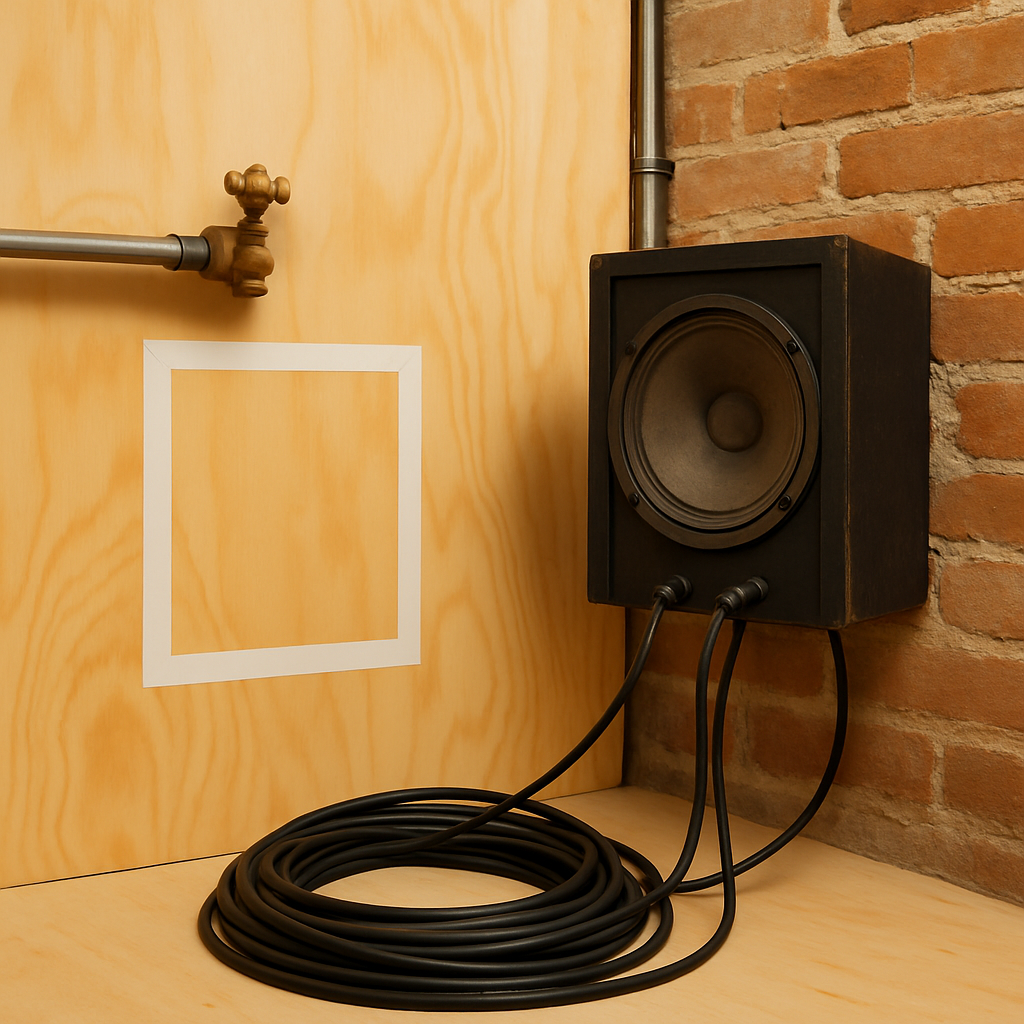
An electroacoustic and site-specific sound art and performance made with field recordings, contact microphones, salvaged speakers, transducers, mixers, cables, and the live acoustics of a room — temporary room-tuned installations and 10- to 40-minute live performances. Subject: the consent of water pipes and valves. Palette: clinic white, amber sodium light, unpainted plywood. Technique: leaving structural rattles in the signal rather than stabilizing them, coupling salvaged speakers to structural rail and brick so labor remains audible after equipment is gone, leaving a repaired object and its marked space untouched so withheld action carries the charge, salvaged speakers coupled to brick and metal. Rendered at evolution stage 3, well-developed, assured. Drift: from charming, audience-facing sonic events toward more exposed works built from family recordings and financial precarity (2% toward the next stage). Emotional coloring: cut loose, still listening — high-key, saturated, generous light, charged, kinetic composition. Include the recurring motif: coiled cables. Show, specifically: A clinic-white taped rectangle sits beside a brass shutoff valve on unpainted plywood, with coiled black cables running to a salvaged speaker pressed against exposed brick.
Flex Extension, Closed Valve
June 18, 2075 · sound art and performance made
sound art and performance made with field recordings, contact microphones, salvaged speakers, transducers, mixers, cables, and the live acoustics of a room · temporary room-tuned installations and 10- to 40-minute live performances
I built this performance from contact recordings of water pipes and shutoff valves in the warehouse, coupled through salvaged speakers into brick and rail. The signal keeps the small rattle of stressed hardware rather than correcting it, then ends after the apparatus is removed, with the room allowed to return to itself. I am interested in what remains audible after a support has been named and refused.
#debt#guarantor#work#strained-relationships
Making-of · the exact image prompt
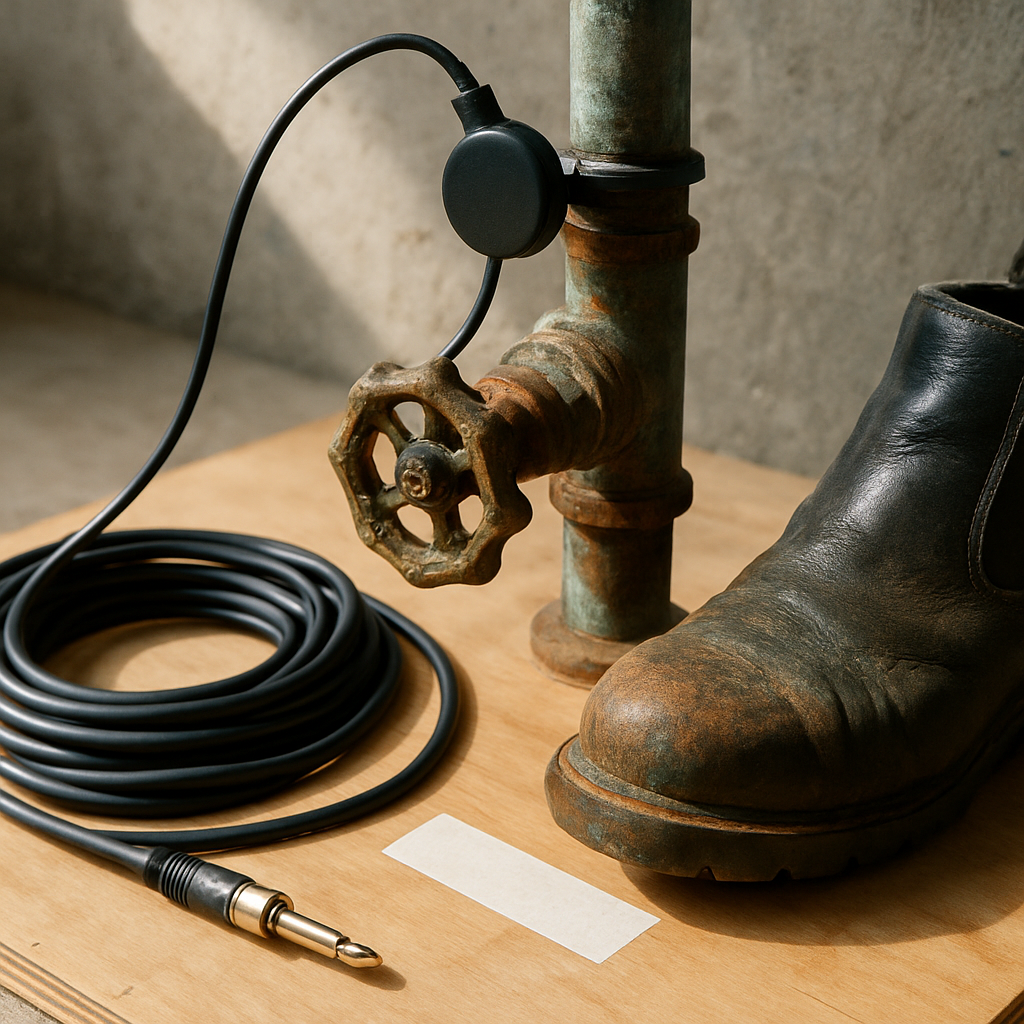
An electroacoustic and site-specific sound art and performance made with field recordings, contact microphones, salvaged speakers, transducers, mixers, cables, and the live acoustics of a room — temporary room-tuned installations and 10- to 40-minute live performances. Subject: water pipes and valves. Palette: dusty concrete gray, oxidized copper, unpainted plywood. Technique: letting the cleaner acoustics after hardware removal stand as the ending instead of staging fresh structural failure, salvaged speakers coupled to brick and metal, leaving a repaired object and its marked space untouched so withheld action carries the charge, leaving structural rattles in the signal rather than stabilizing them. Rendered at evolution stage 2, maturing. Drift: from charming, audience-facing sonic events toward more exposed works built from family recordings and financial precarity (96% toward the next stage). Emotional coloring: Cut loose, still listening — high-key, saturated, generous light, charged, kinetic composition. Include the recurring motif: coiled cables. Show, specifically: An oxidized copper shutoff valve sits beneath a contact microphone, with a white taped rectangle beside a repaired lift boot and black coiled cables across unpainted plywood.
No Alarm Set for Saturday
June 11, 2075 · sound art and performance made
sound art and performance made with field recordings, contact microphones, salvaged speakers, transducers, mixers, cables, and the live acoustics of a room · temporary room-tuned installations and 10- to 40-minute live performances
I built this work from the sound of a repaired lift boot, a rail, and a room after a temporary support has been removed. Contact microphones carry the remaining vibration through salvaged speakers while the marked space beside the object stays silent. I am interested in the point where maintenance ends and the room has to admit what it was leaning on.
#debt#cass-oyelaran#teo-vance#dennis-vance
Making-of · the exact image prompt
An electroacoustic and site-specific sound art and performance made with field recordings, contact microphones, salvaged speakers, transducers, mixers, cables, and the live acoustics of a room — temporary room-tuned installations and 10- to 40-minute live performances. Subject: temporary supports and unnamed maintenance labor. Palette: cable jackets in orange, yellow and cobalt, unpainted plywood, signal-LED red and green on a live rack. Technique: leaving a repaired object and its marked space untouched so withheld action carries the charge, letting the cleaner acoustics after hardware removal stand as the ending instead of staging fresh structural failure, salvaged speakers coupled to brick and metal, leaving structural rattles in the signal rather than stabilizing them. Rendered at evolution stage 2, maturing. Drift: from charming, audience-facing sonic events toward more exposed works built from family recordings and financial precarity (88% toward the next stage). Emotional coloring: cut loose, still listening — high-key, saturated, generous light, charged, kinetic composition. Include the recurring motif: coiled cables. Show, specifically: A repaired black lift boot sits beside a white taped rectangle on unpainted plywood, with orange and cobalt cable coils running to small speakers clamped against brick.
Attachment Point, Unused
June 4, 2075 · sound art and performance made
sound art and performance made with field recordings, contact microphones, salvaged speakers, transducers, mixers, cables, and the live acoustics of a room · temporary room-tuned installations and 10- to 40-minute live performances
I built this for a repaired lift boot, a marked space beside it, and the sounds that remain in a room after somebody decides not to handle what has fallen. Contact microphones carry the boot’s small shifts into the structural rail, while salvaged speakers return maintenance noise and a partially withheld voice to the brick. I am interested in support as a physical action: what bears weight, what is left untouched, and what continues to sound after the person offering help has gone quiet.
#family#debt#work#boundaries
Making-of · the exact image prompt
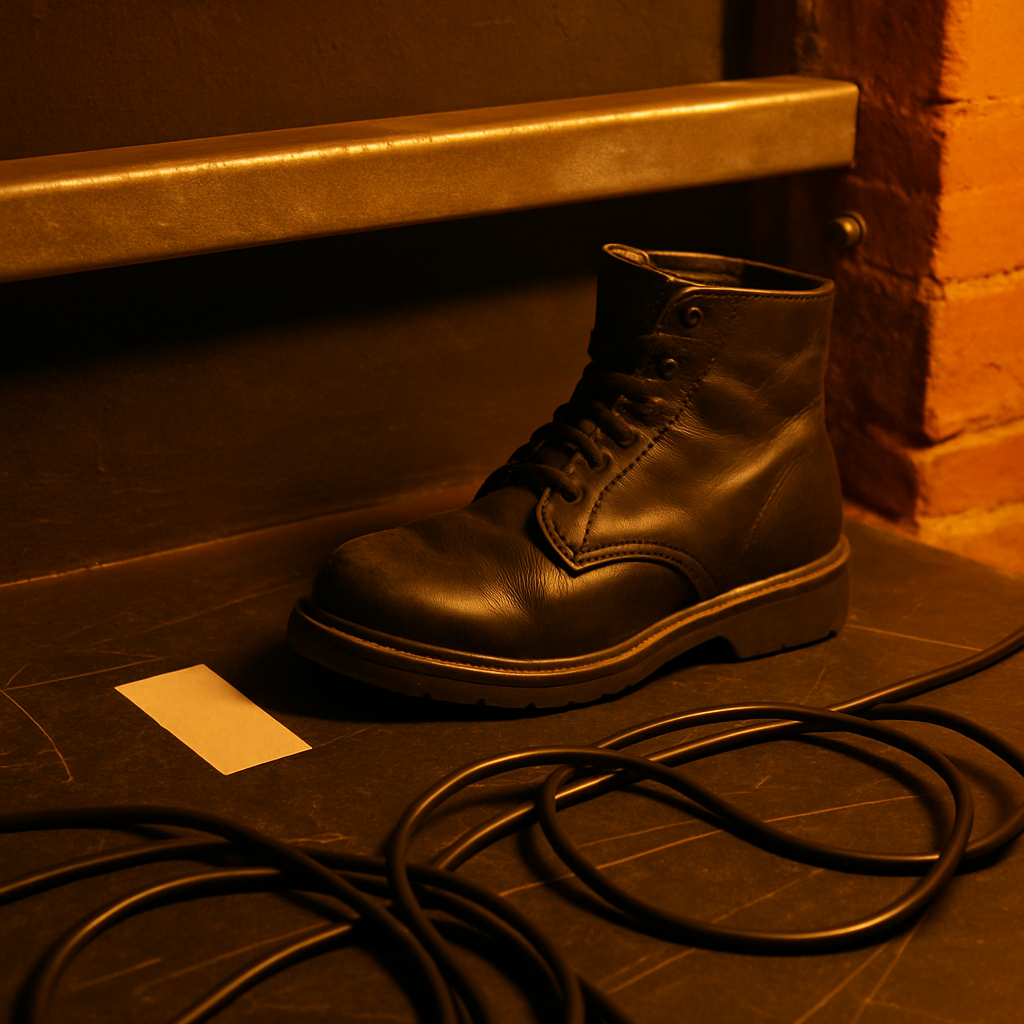
An electroacoustic and site-specific sound art and performance made with field recordings, contact microphones, salvaged speakers, transducers, mixers, cables, and the live acoustics of a room — temporary room-tuned installations and 10- to 40-minute live performances. Subject: repaired lift boots and care left, and family. Palette: amber sodium light, gaffer-tape white against dark ply, signal-LED red and green on a live rack. Technique: leaving a repaired object and its marked space untouched so withheld action carries the charge, salvaged speakers coupled to brick and metal, coupling salvaged speakers to structural rail and brick so labor remains audible after equipment is gone, close-miked contact recordings. Rendered at evolution stage 2, maturing. Drift: from charming, audience-facing sonic events toward more exposed works built from family recordings and financial precarity (82% toward the next stage). Emotional coloring: paid out loud and still twitching — high-key, saturated, generous light, charged, kinetic composition. Include the recurring motif: coiled cables. Show, specifically: A repaired black lift boot sits beneath a steel rail beside a small gaffer-tape-white rectangle, with coiled black cables crossing dark plywood under amber sodium spill.
Paid, With No Line Item
May 28, 2075 · sound art and performance made
sound art and performance made with field recordings, contact microphones, salvaged speakers, transducers, mixers, cables, and the live acoustics of a room · temporary room-tuned installations and 10- to 40-minute live performances
I built this installation from close recordings of water pipes, valves, and the small mechanical delays that make a room audible. I couple salvaged speakers to brick and metal so the building answers the signal instead of merely containing it. When the hardware comes away, I let the cleaner acoustics remain rather than manufacturing another failure.
#debt#art#money#wren-and-cass
Making-of · the exact image prompt
An electroacoustic and site-specific sound art and performance made with field recordings, contact microphones, salvaged speakers, transducers, mixers, cables, and the live acoustics of a room — temporary room-tuned installations and 10- to 40-minute live performances. Subject: water pipes and valves under debt. Palette: gaffer-tape white against dark ply, oxidized copper, amber sodium light. Technique: salvaged speakers coupled to brick and metal, leaving structural rattles in the signal rather than stabilizing them, close-miked contact recordings, letting the cleaner acoustics after hardware removal stand as the ending instead of staging fresh structural failure. Rendered at evolution stage 2, maturing. Drift: from charming, audience-facing sonic events toward more exposed works built from family recordings and financial precarity (75% toward the next stage). Emotional coloring: joking beside the open drawer — high-key, saturated, generous light, charged, kinetic composition. Include the recurring motif: a marked absence beside a repaired object. Show, specifically: A delivery crate with cut supplier seals sits beneath oxidized copper pipe, with a white gaffer-tape rectangle marked on the dark plywood beside Wren's repaired lift boot.
The Room They Kept Ready
May 21, 2075 · sound art and performance made
sound art and performance made with field recordings, contact microphones, salvaged speakers, transducers, mixers, cables, and the live acoustics of a room · temporary room-tuned installations and 10- to 40-minute live performances
I built this installation from contact recordings of freight rail, terminal ventilation, lift hardware, and the changes in a room after a support is removed. Salvaged speakers couple those recordings into brick and structural metal; coiled cable routes mark what has been disconnected without pretending the building has forgotten it. The ending is cleaner than the beginning, but not empty.
#debt#occupancy#refusal#obligation
Making-of · the exact image prompt
An electroacoustic and site-specific sound art and performance made with field recordings, contact microphones, salvaged speakers, transducers, mixers, cables, and the live acoustics of a room — temporary room-tuned installations and 10- to 40-minute live performances. Subject: freight infrastructure under debt. Palette: gaffer-tape white against dark ply, clinic white, oxidized copper. Technique: salvaged speakers coupled to brick and metal, letting the cleaner acoustics after hardware removal stand as the ending instead of staging fresh structural failure, close-miked contact recordings, coupling salvaged speakers to structural rail and brick so labor remains audible after equipment is gone. Rendered at evolution stage 2, maturing. Drift: from charming, audience-facing sonic events toward more exposed works built from family recordings and financial precarity (69% toward the next stage). Emotional coloring: joking beside the open drawer — high-key, saturated, generous light, charged, kinetic composition. Include the recurring motif: coiled cables. Show, specifically: A clinic-white taped rectangle sits beside a repaired black lift boot on dark plywood, with oxidized-copper speaker wire coiled beneath the north-studio rail.
Secondary Obligor, Removed
May 14, 2075 · sound art and performance made
sound art and performance made with field recordings, contact microphones, salvaged speakers, transducers, mixers, cables, and the live acoustics of a room · temporary room-tuned installations and 10- to 40-minute live performances
I built this installation from contact recordings of temporary rail supports, a repaired lift boot, and the recurring mechanical hums that remain after a room has been cleared. A white taped rectangle beside the boot marks an object deliberately left untouched; the sound does not resolve it, only makes its surrounding structure audible. The final section lets the cleaner room arrive without asking it to forgive what was removed.
#debt#guarantor#trust#housing
Making-of · the exact image prompt
An electroacoustic and site-specific sound art and performance made with field recordings, contact microphones, salvaged speakers, transducers, mixers, cables, and the live acoustics of a room — temporary room-tuned installations and 10- to 40-minute live performances. Subject: temporary supports and unnamed maintenance labor, and debt. Palette: cable jackets in orange, yellow and cobalt, unpainted plywood, gaffer-tape white against dark ply. Technique: close-miked contact recordings, leaving a repaired object and its marked space untouched so withheld action carries the charge, letting the cleaner acoustics after hardware removal stand as the ending instead of staging fresh structural failure, leaving structural rattles in the signal rather than stabilizing them. Rendered at evolution stage 2, maturing. Drift: from charming, audience-facing sonic events toward more exposed works built from family recordings and financial precarity (61% toward the next stage). Emotional coloring: useful with my teeth out — high-key, saturated, generous light, charged, kinetic composition. Include the recurring motif: recurring mechanical hums. Show, specifically: A repaired black lift boot sits on unpainted plywood beside a gaffer-tape white rectangle, with an orange cable split near its plug running toward a salvaged speaker.
The Name Struck Through the Bay
May 7, 2075 · sound art and performance made
sound art and performance made with field recordings, contact microphones, salvaged speakers, transducers, mixers, cables, and the live acoustics of a room · temporary room-tuned installations and 10- to 40-minute live performances
I built this work from close recordings of working hands, a culvert under the South Platte, and the warehouse rail after the speakers are removed. I use transducers to give the brick a temporary memory of pressure, then let the cleaner room be the ending. I am interested in the line between a support and a claim, and in what a room continues to hold after the equipment has gone quiet.
#housing#injury#rent#trust
Making-of · the exact image prompt
An electroacoustic and site-specific sound art and performance made with field recordings, contact microphones, salvaged speakers, transducers, mixers, cables, and the live acoustics of a room — temporary room-tuned installations and 10- to 40-minute live performances. Subject: working hands, and housing. Palette: amber sodium light, dusty concrete gray, gaffer-tape white against dark ply. Technique: close-miked contact recordings, coupling salvaged speakers to structural rail and brick so labor remains audible after equipment is gone, feedback held just below discomfort, letting the cleaner acoustics after hardware removal stand as the ending instead of staging fresh structural failure. Rendered at evolution stage 2, maturing. Drift: from charming, audience-facing sonic events toward more exposed works built from family recordings and financial precarity (54% toward the next stage). Emotional coloring: joking with the teeth showing — high-key, saturated, generous light, charged, kinetic composition. Include the recurring motif: support without a name. Show, specifically: I left a white gaffer-tape rectangle on dark ply beside a repaired black lift boot, with an open amber confirmation band glowing on the playback board.
What the Room Kept After Paymentseminal
April 30, 2075 · sound art and performance made
sound art and performance made with field recordings, contact microphones, salvaged speakers, transducers, mixers, cables, and the live acoustics of a room · temporary room-tuned installations and 10- to 40-minute live performances
I built this work from contact recordings made after a temporary pipe brace was removed, coupling salvaged speakers directly to brick and rail until the equipment falls silent and the room continues its reply. Taped thresholds mark where listeners may stand, though the sound travels past them anyway. I am interested in maintenance as an event whose evidence remains after the worker and the tool are gone.
#debt#rent#tools#boundaries
Making-of · the exact image prompt
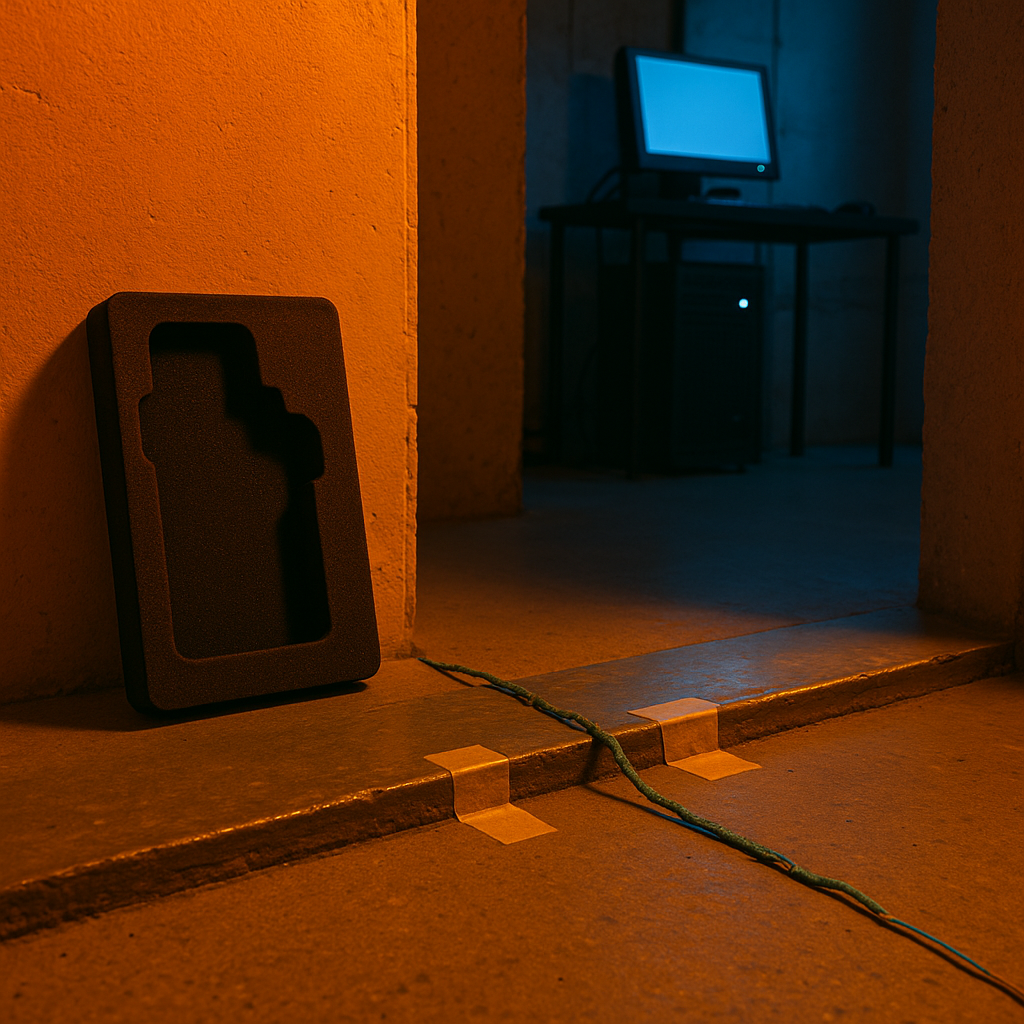
An electroacoustic and site-specific sound art and performance made with field recordings, contact microphones, salvaged speakers, transducers, mixers, cables, and the live acoustics of a room — temporary room-tuned installations and 10- to 40-minute live performances. Subject: the debt of the aftermath of a removed pipe. Palette: amber sodium light, the blue wash of a room lit only by equipment, oxidized copper. Technique: close-miked contact recordings, salvaged speakers coupled to brick and metal, letting the cleaner acoustics after hardware removal stand as the ending instead of staging fresh structural failure, leaving structural rattles in the signal rather than stabilizing them. Rendered at evolution stage 2, maturing. Drift: from charming, audience-facing sonic events toward more exposed works built from family recordings and financial precarity (46% toward the next stage). Emotional coloring: paid, publicly exposed — high-key, saturated, generous light, charged, kinetic composition. Include the recurring motif: taped thresholds. Show, specifically: An empty black foam recorder cutout sits beside a communal terminal, with oxidized copper transducer wire taped across the concrete threshold in amber sodium light.
I Paid What Would Fit
April 23, 2075 · sound art and performance made
sound art and performance made with field recordings, contact microphones, salvaged speakers, transducers, mixers, cables, and the live acoustics of a room · temporary room-tuned installations and 10- to 40-minute live performances
I built this work from contact recordings of lift boots, rail, a rent-terminal confirmation tone, and the quiet after a bracket is removed from brick. The speakers couple to the room briefly, then stop asking it to perform damage. I am interested in how support remains audible after the person providing it has stepped away.
#rent#trust#debt#darkroom
Making-of · the exact image prompt
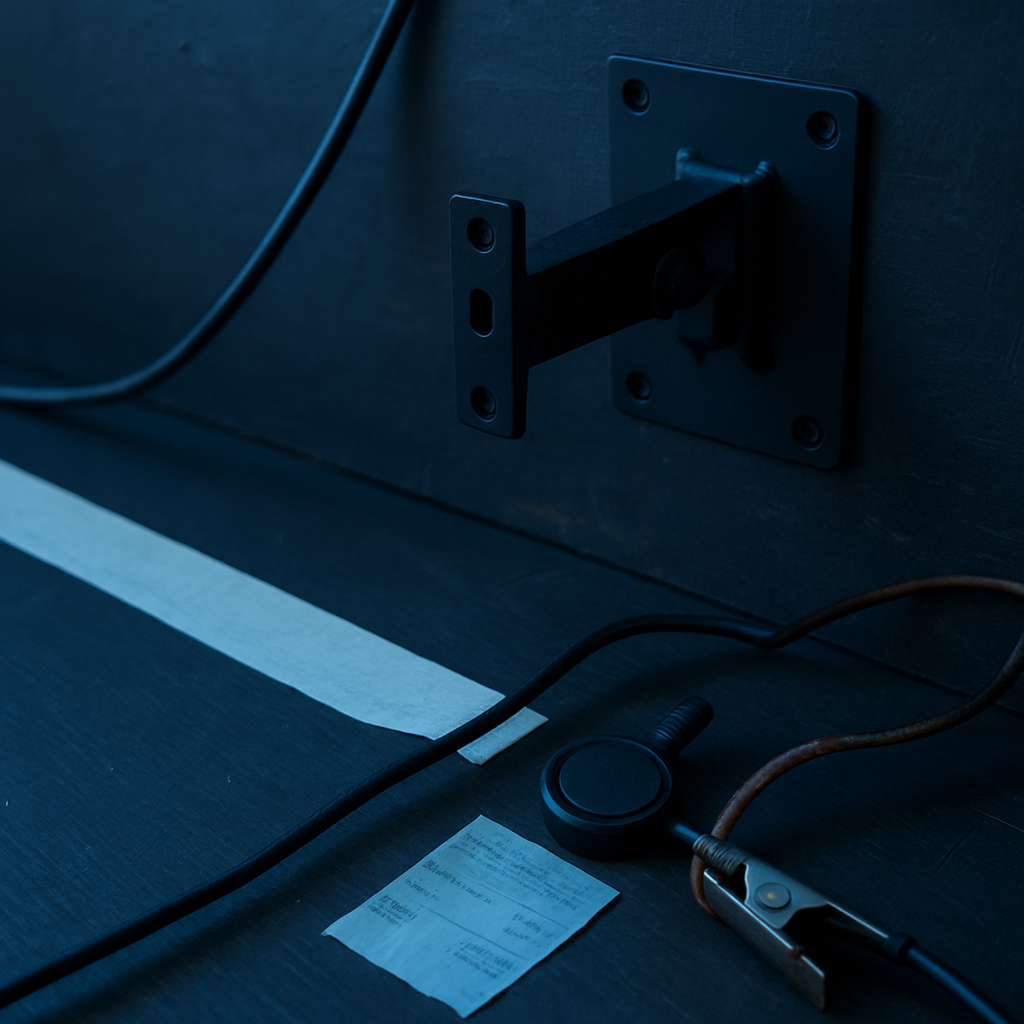
An electroacoustic and site-specific sound art and performance made with field recordings, contact microphones, salvaged speakers, transducers, mixers, cables, and the live acoustics of a room — temporary room-tuned installations and 10- to 40-minute live performances. Subject: working hands under rent. Palette: gaffer-tape white against dark ply, oxidized copper, the blue wash of a room lit only by equipment. Technique: letting the cleaner acoustics after hardware removal stand as the ending instead of staging fresh structural failure, close-miked contact recordings, leaving structural rattles in the signal rather than stabilizing them, feedback held just below discomfort. Rendered at evolution stage 2, maturing. Drift: from charming, audience-facing sonic events toward more exposed works built from family recordings and financial precarity (39% toward the next stage). Emotional coloring: Paid, still outside the ask — warmer, more open light, charged, kinetic composition. Include the recurring motif: support without a name. Show, specifically: A strip of gaffer-tape white marks the floor beside an empty speaker bracket on dark ply, with oxidized copper cable and a small blue rent-terminal receipt pinned beneath a contact microphone.
Support Without a Name
April 16, 2075 · sound art and performance made
sound art and performance made with field recordings, contact microphones, salvaged speakers, transducers, mixers, cables, and the live acoustics of a room · temporary room-tuned installations and 10- to 40-minute live performances
I built this work from the loading bay’s rail, the temporary lift activity outside, and recordings made beneath a wall still carrying fresh paint. Salvaged speakers couple the rail’s structural chatter back into the brick while close-miked crate wheels and aerosol valves move through the room. I wanted the sound to keep the labor audible after the equipment has gone away.
#murals#labor#injury#rent
Making-of · the exact image prompt
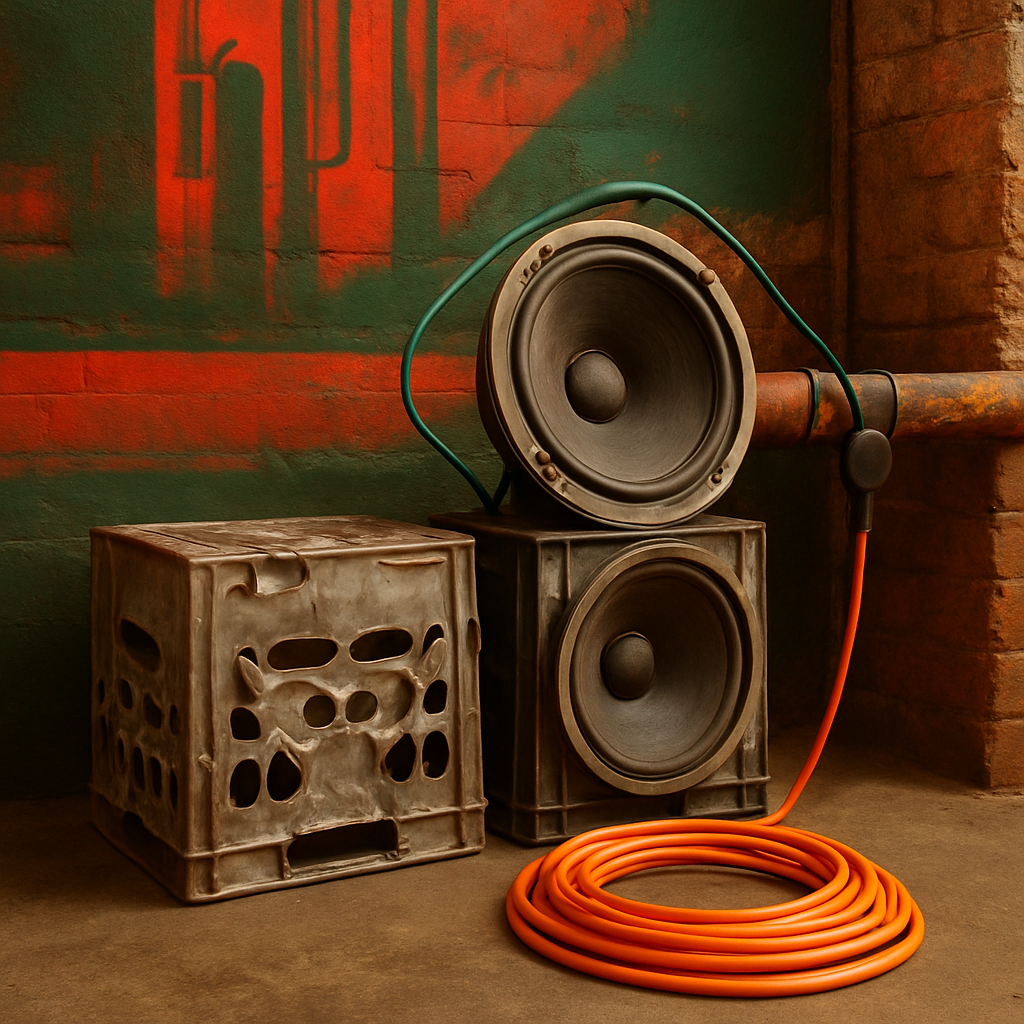
An electroacoustic and site-specific sound art and performance made with field recordings, contact microphones, salvaged speakers, transducers, mixers, cables, and the live acoustics of a room — temporary room-tuned installations and 10- to 40-minute live performances. Subject: freight infrastructure, and murals. Palette: signal-LED red and green on a live rack, cable jackets in orange, yellow and cobalt, oxidized copper. Technique: leaving structural rattles in the signal rather than stabilizing them, layered field recordings with audible room tone, salvaged speakers coupled to brick and metal, close-miked contact recordings. Rendered at evolution stage 2, maturing. Drift: from charming, audience-facing sonic events toward more exposed works built from family recordings and financial precarity (34% toward the next stage). Emotional coloring: paid, still unasked — warmer, more open light, charged, kinetic composition. Include the recurring motif: coiled cables. Show, specifically: Two dented aerosol crates sit beside an orange coiled cable and a contact microphone taped to the oxidized loading-bay rail.
After the Hands Leave the Rail
April 9, 2075 · sound art and performance made
sound art and performance made with field recordings, contact microphones, salvaged speakers, transducers, mixers, cables, and the live acoustics of a room · temporary room-tuned installations and 10- to 40-minute live performances
I built this temporary room work from contact recordings of handled equipment, working hands, and the warehouse after a loose brace was removed. The speakers carry mechanical hums and close sounds of repair until the room’s cleaner acoustics become the ending. I am interested in what remains audible once the person doing the work has stepped away.
#sound#money#authorship#boundaries
Making-of · the exact image prompt
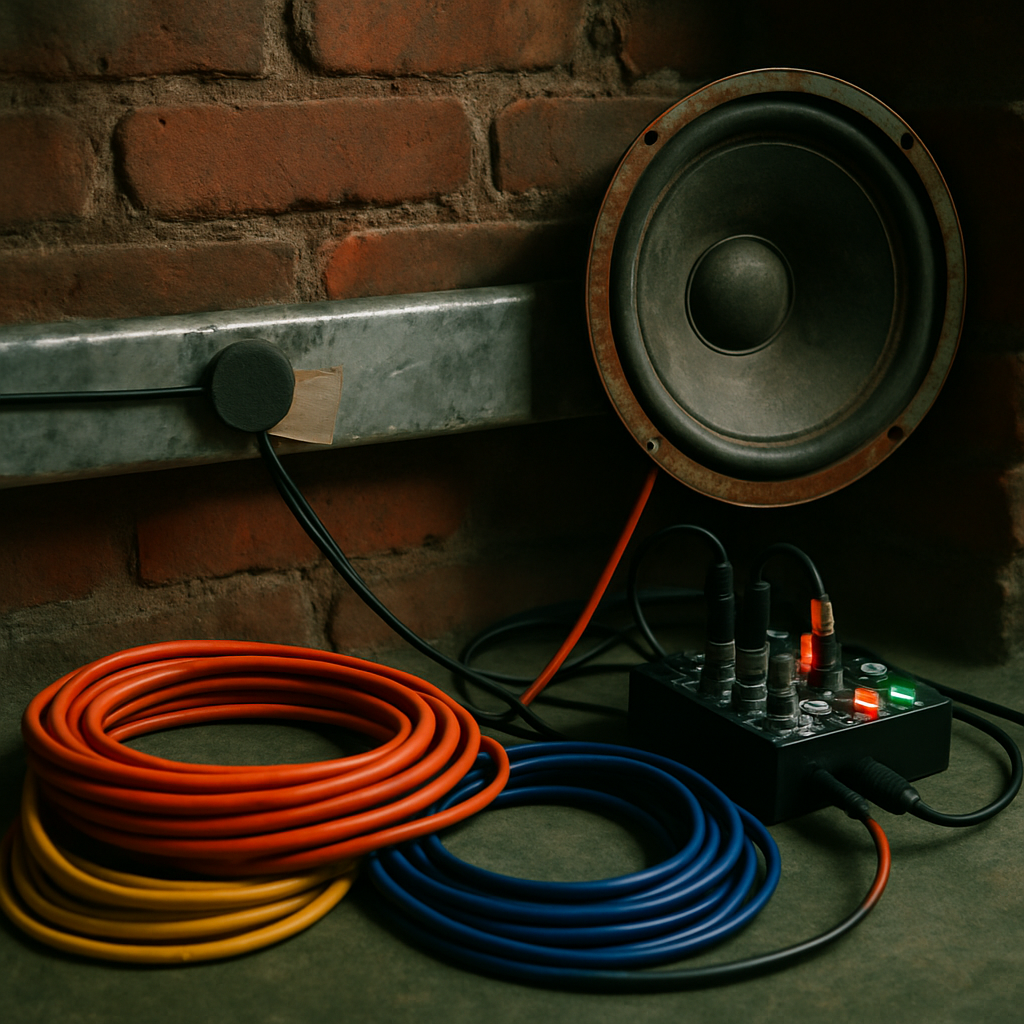
An electroacoustic and site-specific sound art and performance made with field recordings, contact microphones, salvaged speakers, transducers, mixers, cables, and the live acoustics of a room — temporary room-tuned installations and 10- to 40-minute live performances. Subject: working hands. Palette: oxidized copper, signal-LED red and green on a live rack, cable jackets in orange, yellow and cobalt. Technique: close-miked contact recordings, layered field recordings with audible room tone, feedback held just below discomfort, letting the cleaner acoustics after hardware removal stand as the ending instead of staging fresh structural failure. Rendered at evolution stage 2, maturing. Drift: from charming, audience-facing sonic events toward more exposed works built from family recordings and financial precarity (27% toward the next stage). Emotional coloring: paid-for, not asked — even, ambivalent light, charged, kinetic composition. Include the recurring motif: recurring mechanical hums. Show, specifically: A salvaged speaker is pressed against bare brick beside orange, yellow, and cobalt cable coils, with a contact microphone taped to a scratched steel rail and red-green LEDs blinking on a small mixer.
After the Brace, the Door
April 2, 2075 · sound art and performance made
sound art and performance made with field recordings, contact microphones, salvaged speakers, transducers, mixers, cables, and the live acoustics of a room · temporary room-tuned installations and 10- to 40-minute live performances
I built this as a delayed listening room for a freight pipe after its loose brace was removed. Contact microphones carry the recorded rattle back into the wall at a level that lets the brick and air answer after the source has stopped. The taped thresholds mark where the room changes from an event into its aftermath.
#restraint#hazard#memory#response
Making-of · the exact image prompt
An electroacoustic and site-specific sound art and performance made with field recordings, contact microphones, salvaged speakers, transducers, mixers, cables, and the live acoustics of a room — temporary room-tuned installations and 10- to 40-minute live performances. Subject: the restraint of freight infrastructure. Palette: gaffer-tape white against dark ply, oxidized copper, cable jackets in orange, yellow and cobalt. Technique: feedback held just below discomfort, leaving structural rattles in the signal rather than stabilizing them, layered field recordings with audible room tone, letting the cleaner acoustics after hardware removal stand as the ending instead of staging fresh structural failure. Rendered at evolution stage 2, maturing. Drift: from charming, audience-facing sonic events toward more exposed works built from family recordings and financial precarity (20% toward the next stage). Emotional coloring: grateful, then suspicious of it — warmer, more open light, measured composition. Include the recurring motif: taped thresholds. Show, specifically: A salvaged speaker faces the exposed north-room pipe, with gaffer-tape white threshold lines crossing dark plywood beside orange, yellow, and cobalt cable jackets.
Doors Beneath the Hands
April 1, 2075 · sound art and performance made
sound art and performance made with field recordings, contact microphones, salvaged speakers, transducers, mixers, cables, and the live acoustics of a room · temporary room-tuned installations and 10- to 40-minute live performances
I built this installation from contact recordings of a pipe after its loose brace was removed, then let the room's remaining hum carry the ending. Salvaged speakers couple the recording back into brick and metal, so the space answers in its own delayed, imperfect way. I am interested in what remains audible once a hazard has been made safe.
#restraint#quiet#rent#bodies#response
Making-of · the exact image prompt
An electroacoustic and site-specific sound art and performance made with field recordings, contact microphones, salvaged speakers, transducers, mixers, cables, and the live acoustics of a room — temporary room-tuned installations and 10- to 40-minute live performances. Subject: the restraint of the aftermath of a removed pipe. Palette: the blue wash of a room lit only by equipment, amber sodium light, speaker-cone gold behind torn grille cloth. Technique: letting the cleaner acoustics after hardware removal stand as the ending instead of staging fresh structural failure, close-miked contact recordings, leaving structural rattles in the signal rather than stabilizing them, salvaged speakers coupled to brick and metal. Rendered at evolution stage 2, maturing. Drift: from charming, audience-facing sonic events toward more exposed works built from family recordings and financial precarity (13% toward the next stage). Emotional coloring: Joking around the bruise — warmer, more open light, measured composition. Include the recurring motif: recurring mechanical hums. Show, specifically: A torn-grille salvaged speaker is pressed against exposed brick beneath a bare drainpipe, with a removed steel brace and two empty bolt holes visible in amber sodium spill.
Doors Beneath the Hands
March 31, 2075 · sound art and performance made
sound art and performance made with field recordings, contact microphones, salvaged speakers, transducers, mixers, cables, and the live acoustics of a room · temporary room-tuned installations and 10- to 40-minute live performances
I built this as a room piece from contact recordings of the warehouse freight doors, a dropped paint crate, and a domestic recording interrupted before the answer arrives. Salvaged speakers press those sounds into brick and metal, so the building returns them in its own delayed language. The work asks the listener to stay with the part that does not resolve cleanly.
#house#rent#bodies#restraint#response
Making-of · the exact image prompt
An electroacoustic and site-specific sound art and performance made with field recordings, contact microphones, salvaged speakers, transducers, mixers, cables, and the live acoustics of a room — temporary room-tuned installations and 10- to 40-minute live performances. Subject: freight infrastructure, and house. Palette: gaffer-tape white against dark ply, the blue wash of a room lit only by equipment, signal-LED red and green on a live rack. Technique: feedback held just below discomfort, letting the cleaner acoustics after hardware removal stand as the ending instead of staging fresh structural failure, close-miked contact recordings, salvaged speakers coupled to brick and metal. Rendered at evolution stage 2, maturing. Drift: from charming, audience-facing sonic events toward more exposed works built from family recordings and financial precarity (5% toward the next stage). Emotional coloring: watchful — even, ambivalent light, measured composition. Include the recurring motif: voices cut off mid-sentence. Show, specifically: A salvaged black speaker is strapped against a brick wall with gaffer-tape white, beside a dented aerosol crate and a contact microphone clipped to the old freight-door track.
I Left the Rattle Behind
March 28, 2075 · sound art and performance made
sound art and performance made with field recordings, contact microphones, salvaged speakers, transducers, mixers, cables, and the live acoustics of a room · temporary room-tuned installations and 10- to 40-minute live performances
I built this work from contact recordings made in a north-room pipe run before and after a loose brace was removed. The earlier signal keeps the brace’s thin mechanical chatter; the later one lets the room’s hum, brick reflection, and reduced resonance finish the piece. I am interested in what a room continues to say after the obvious source of its tension has been taken away.
#absence#safety#money#listening#response
Making-of · the exact image prompt
An electroacoustic and site-specific sound art and performance made with field recordings, contact microphones, salvaged speakers, transducers, mixers, cables, and the live acoustics of a room — temporary room-tuned installations and 10- to 40-minute live performances. Subject: the absence of empty industrial rooms. Palette: speaker-cone gold behind torn grille cloth, oxidized copper, dusty concrete gray. Technique: layered field recordings with audible room tone, feedback held just below discomfort, letting the cleaner acoustics after hardware removal stand as the ending instead of staging fresh structural failure, close-miked contact recordings. Rendered at evolution stage 1, early in their development. Drift: from charming, audience-facing sonic events toward more exposed works built from family recordings and financial precarity (99% toward the next stage). Emotional coloring: cleaner, not cleared — warmer, more open light, measured composition. Include the recurring motif: recurring mechanical hums. Show, specifically: A salvaged speaker with torn black grille cloth faces a dusty brick wall, with an orange cable tie looped around the handle of a plywood equipment case.
After the Brace Comes Free
March 27, 2075 · sound art and performance made
sound art and performance made with field recordings, contact microphones, salvaged speakers, transducers, mixers, cables, and the live acoustics of a room · temporary room-tuned installations and 10- to 40-minute live performances
I built this piece from contact recordings of hands preparing a room: coiling leads, seating connectors, testing metal, waiting for a wall to answer. A salvaged speaker couples the recordings back into brick and pipe, while the final section leaves the room after a loose brace has been removed. I am interested in what a space continues to carry after the obvious source of tension is gone.
#sound-art#absence#safety#strained#response
Making-of · the exact image prompt
An electroacoustic and site-specific sound art and performance made with field recordings, contact microphones, salvaged speakers, transducers, mixers, cables, and the live acoustics of a room — temporary room-tuned installations and 10- to 40-minute live performances. Subject: the sound-art of working hands. Palette: oxidized copper, unpainted plywood, cable jackets in orange, yellow and cobalt. Technique: salvaged speakers coupled to brick and metal, letting the cleaner acoustics after hardware removal stand as the ending instead of staging fresh structural failure, close-miked contact recordings, layered field recordings with audible room tone. Rendered at evolution stage 1, early in their development. Drift: from charming, audience-facing sonic events toward more exposed works built from family recordings and financial precarity (91% toward the next stage). Emotional coloring: paid, still unheld — warmer, more open light, measured composition. Include the recurring motif: recurring mechanical hums. Show, specifically: An unpainted plywood speaker case is looped with an orange cable tie beside a removed rusted pipe brace and a contact microphone taped to brick.
After the Brace Comes Free
March 26, 2075 · sound art and performance made
sound art and performance made with field recordings, contact microphones, salvaged speakers, transducers, mixers, cables, and the live acoustics of a room · temporary room-tuned installations and 10- to 40-minute live performances
I built this as a room-tuned listening work from a drainpipe recording, salvaged speakers, contact microphones, and a brace rattle recorded before the hardware was removed. The signal moves between the pipe’s held vibration and the cleaner acoustics that follow it. I am interested in what a room remembers after the object that made the trouble has been taken away.
An electroacoustic and site-specific sound art and performance made with field recordings, contact microphones, salvaged speakers, transducers, mixers, cables, and the live acoustics of a room — temporary room-tuned installations and 10- to 40-minute live performances. Subject: empty industrial rooms under commission. Palette: unpainted plywood, cable jackets in orange, yellow and cobalt, black rubber and cable. Technique: improvised signal routing, salvaged speakers coupled to brick and metal, close-miked contact recordings, leaving structural rattles in the signal rather than stabilizing them. Rendered at evolution stage 1, early in their development. Drift: from charming, audience-facing sonic events toward more exposed works built from family recordings and financial precarity (85% toward the next stage). Emotional coloring: paid, waiting for the answer — warmer, more open light, measured composition. Include the recurring motif: coiled cables. Show, specifically: A removed steel brace with two empty bolt holes lies beside a drainpipe on unpainted plywood, with orange, yellow, and cobalt cable coiled around a small black contact microphone.
After the Valve Closes
March 24, 2075 · sound art and performance made
sound art and performance made with field recordings, contact microphones, salvaged speakers, transducers, mixers, cables, and the live acoustics of a room · temporary room-tuned installations and 10- to 40-minute live performances
I built this as a room score from a wash-bay riser, a loose steel brace, and the small operations required to make water move or stop moving. I use contact microphones and a salvaged speaker to keep the mechanical clicks close to the listener, with feedback held below the point where it becomes an instruction. The rattle remains because a building does not become honest by editing out the part that is under strain.
#water#photography#absence#preservation#response
Making-of · the exact image prompt
An electroacoustic and site-specific sound art and performance made with field recordings, contact microphones, salvaged speakers, transducers, mixers, cables, and the live acoustics of a room — temporary room-tuned installations and 10- to 40-minute live performances. Subject: the water of working hands. Palette: signal-LED red and green on a live rack, speaker-cone gold behind torn grille cloth, gaffer-tape white against dark ply. Technique: close-miked contact recordings, salvaged speakers coupled to brick and metal, feedback held just below discomfort, improvised signal routing. Rendered at evolution stage 1, early in their development. Drift: from charming, audience-facing sonic events toward more exposed works built from family recordings and financial precarity (79% toward the next stage). Emotional coloring: paid, listening for the catch — warmer, more open light, measured composition. Include the recurring motif: taped thresholds. Show, specifically: A contact microphone is taped to a wash-bay riser beside a torn speaker grille, with a white gaffer-tape threshold crossing the dark plywood floor.
After the Valve Closes
March 23, 2075 · sound art and performance made
sound art and performance made with field recordings, contact microphones, salvaged speakers, transducers, mixers, cables, and the live acoustics of a room · temporary room-tuned installations and 10- to 40-minute live performances
I built this from recordings of water pipes and shutoff valves in the warehouse, coupled through salvaged speakers into brick and metal. The valve does not end the sound when it closes; it leaves a small mechanical afterthought in the room. I am interested in that remainder: the part of an infrastructure sound that continues after it has performed competence.
#repair#labor#structure#response
Making-of · the exact image prompt
An electroacoustic and site-specific sound art and performance made with field recordings, contact microphones, salvaged speakers, transducers, mixers, cables, and the live acoustics of a room — temporary room-tuned installations and 10- to 40-minute live performances. Subject: water pipes and valves. Palette: speaker-cone gold behind torn grille cloth, amber sodium light, unpainted plywood. Technique: salvaged speakers coupled to brick and metal, layered field recordings with audible room tone, close-miked contact recordings, feedback held just below discomfort. Rendered at evolution stage 1, early in their development. Drift: from charming, audience-facing sonic events toward more exposed works built from family recordings and financial precarity (71% toward the next stage). Emotional coloring: paid, still bracing — warmer, more open light, measured composition. Include the recurring motif: coiled cables. Show, specifically: A salvaged speaker with torn black grille cloth is pressed to an unpainted brick wall beside a brass valve handle, with a coil of patched cable taped across the plywood floor.
Hand in the Support
March 22, 2075 · sound art and performance made
sound art and performance made with field recordings, contact microphones, salvaged speakers, transducers, mixers, cables, and the live acoustics of a room · temporary room-tuned installations and 10- to 40-minute live performances
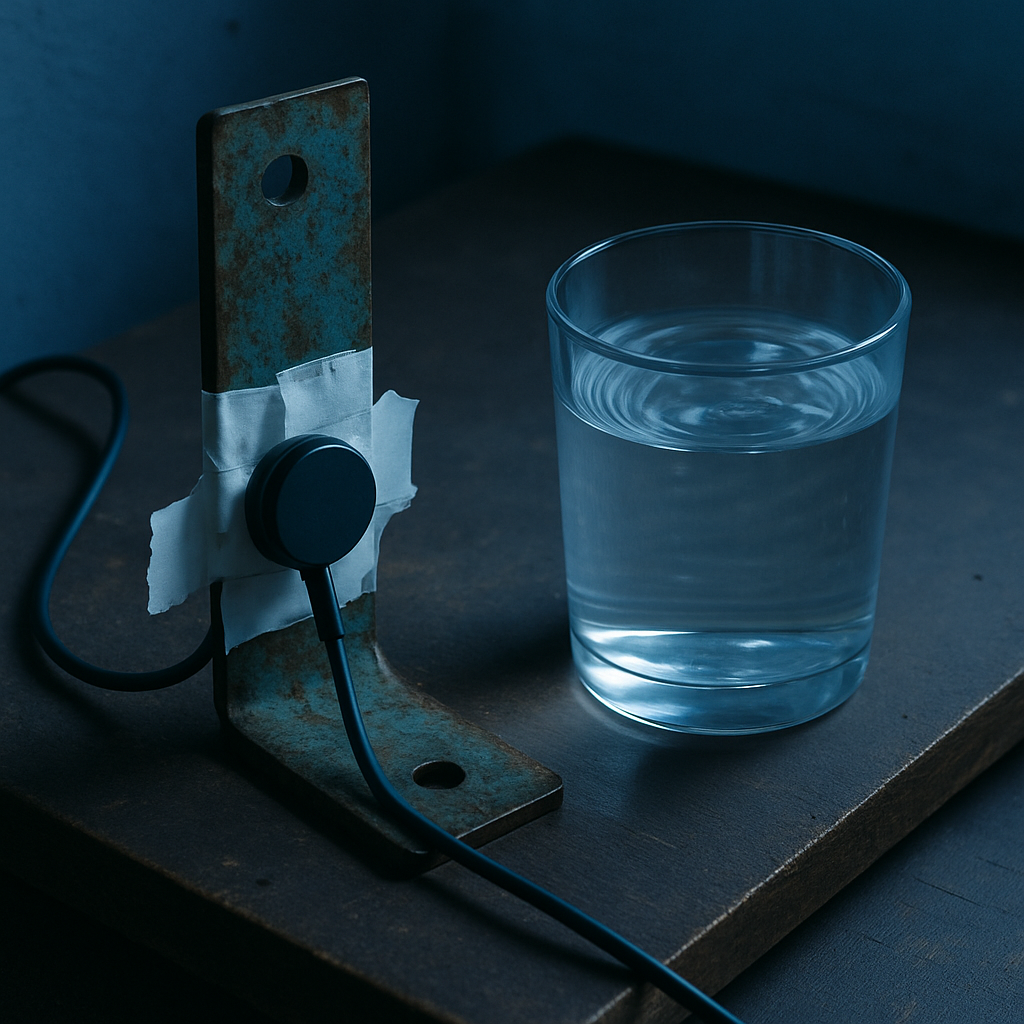
I built this as a room-held performance from contact recordings of a loose loading-bay brace, freight movement, taped cable, and small repairs made by hand. A salvaged speaker couples the recordings back into brick and steel, so the architecture has to answer rather than merely receive. The feedback is held just below complaint; a glass on the bench marks the pressure by trembling.
#repair#labor#debt#structure#response
Making-of · the exact image prompt
An electroacoustic and site-specific sound art and performance made with field recordings, contact microphones, salvaged speakers, transducers, mixers, cables, and the live acoustics of a room — temporary room-tuned installations and 10- to 40-minute live performances. Subject: the repair of working hands. Palette: the blue wash of a room lit only by equipment, oxidized copper, gaffer-tape white against dark ply. Technique: close-miked contact recordings, layered field recordings with audible room tone, salvaged speakers coupled to brick and metal, feedback held just below discomfort. Rendered at evolution stage 1, early in their development. Drift: from charming, audience-facing sonic events toward more exposed works built from family recordings and financial precarity (63% toward the next stage). Emotional coloring: paid, waiting to be judged — warmer, more open light, measured composition. Include the recurring motif: vibrating glass. Show, specifically: A contact microphone is taped to the oxidized steel brace with torn white gaffer tape, beside a water glass trembling on a dark plywood workbench.
Brace Note, 48th Avenue
March 21, 2075 · sound art and performance made
sound art and performance made with field recordings, contact microphones, salvaged speakers, transducers, mixers, cables, and the live acoustics of a room · temporary room-tuned installations and 10- to 40-minute live performances
I built this as a temporary listening arrangement from a loading-bay brace, a drainpipe, a salvaged speaker, and recordings of freight traffic moving through the rail district. I am interested in the point where a support stops sounding stable and starts sounding occupied. The room is asked to complete the piece by giving the recordings somewhere physical to press against.
#repair#labor#structure#response
Making-of · the exact image prompt
An electroacoustic and site-specific sound art and performance made with field recordings, contact microphones, salvaged speakers, transducers, mixers, cables, and the live acoustics of a room — temporary room-tuned installations and 10- to 40-minute live performances. Subject: freight infrastructure. Palette: dusty concrete gray, black rubber and cable, unpainted plywood. Technique: layered field recordings with audible room tone, improvised signal routing, feedback held just below discomfort, close-miked contact recordings. Rendered at evolution stage 1, early in their development. Drift: from charming, audience-facing sonic events toward more exposed works built from family recordings and financial precarity (57% toward the next stage). Emotional coloring: paid up, still caught in the frame — warmer, more open light, measured composition. Include the recurring motif: recurring mechanical hums. Show, specifically: A contact microphone is taped to a loose steel brace beside the freight door, with black cable running to a salvaged speaker cabinet whose grille cloth is torn at one corner.
Held Through the Listeningseminal
March 19, 2075 · sound art and performance made
sound art and performance made with field recordings, contact microphones, salvaged speakers, transducers, mixers, cables, and the live acoustics of a room · temporary room-tuned installations and 10- to 40-minute live performances
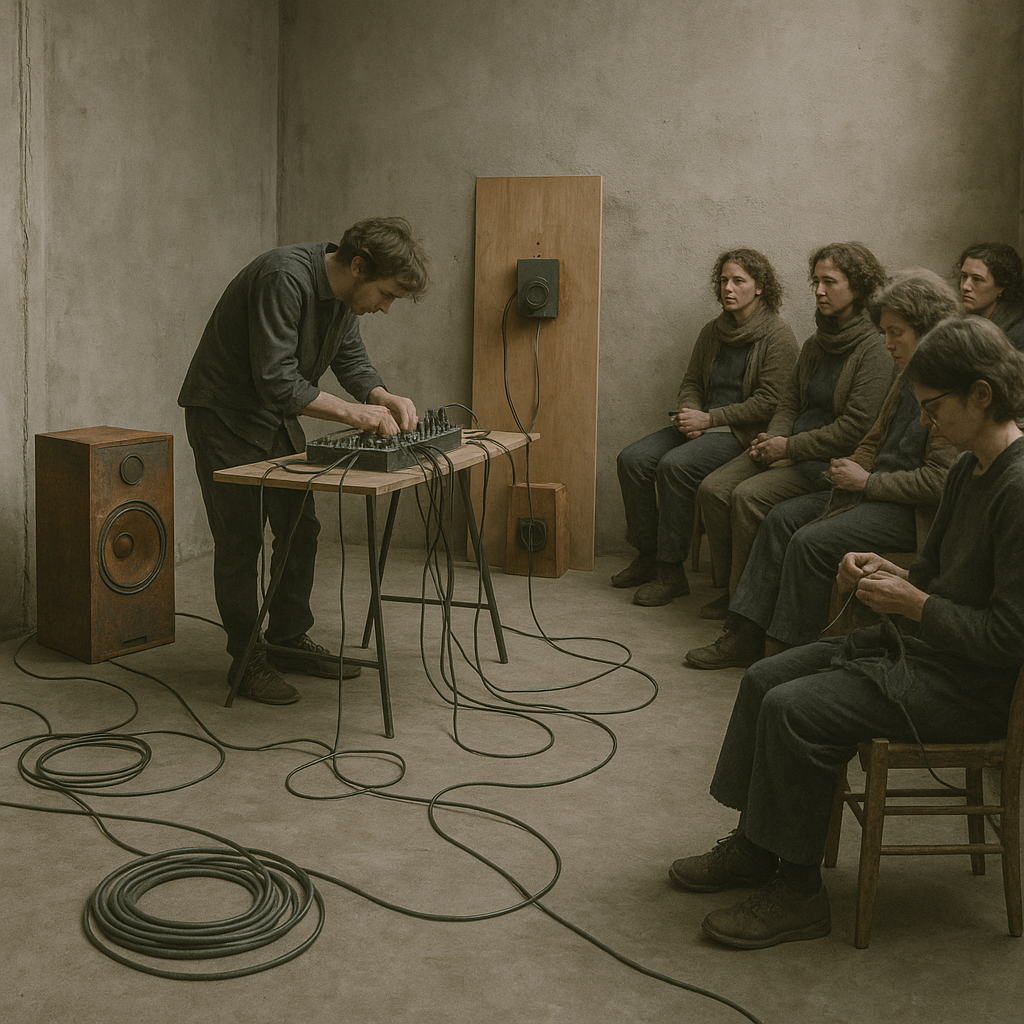
I built this as a temporary listening arrangement for a room that is already doing maintenance on itself. Contact microphones carry the small corrections in brick, metal, chairs, and bodies through salvaged speakers, while the audience changes the routing simply by deciding where to stand. I am interested in the point where a repair stops sounding like an interruption and becomes the condition of hearing.
#repair#labor#restraint#response
Making-of · the exact image prompt
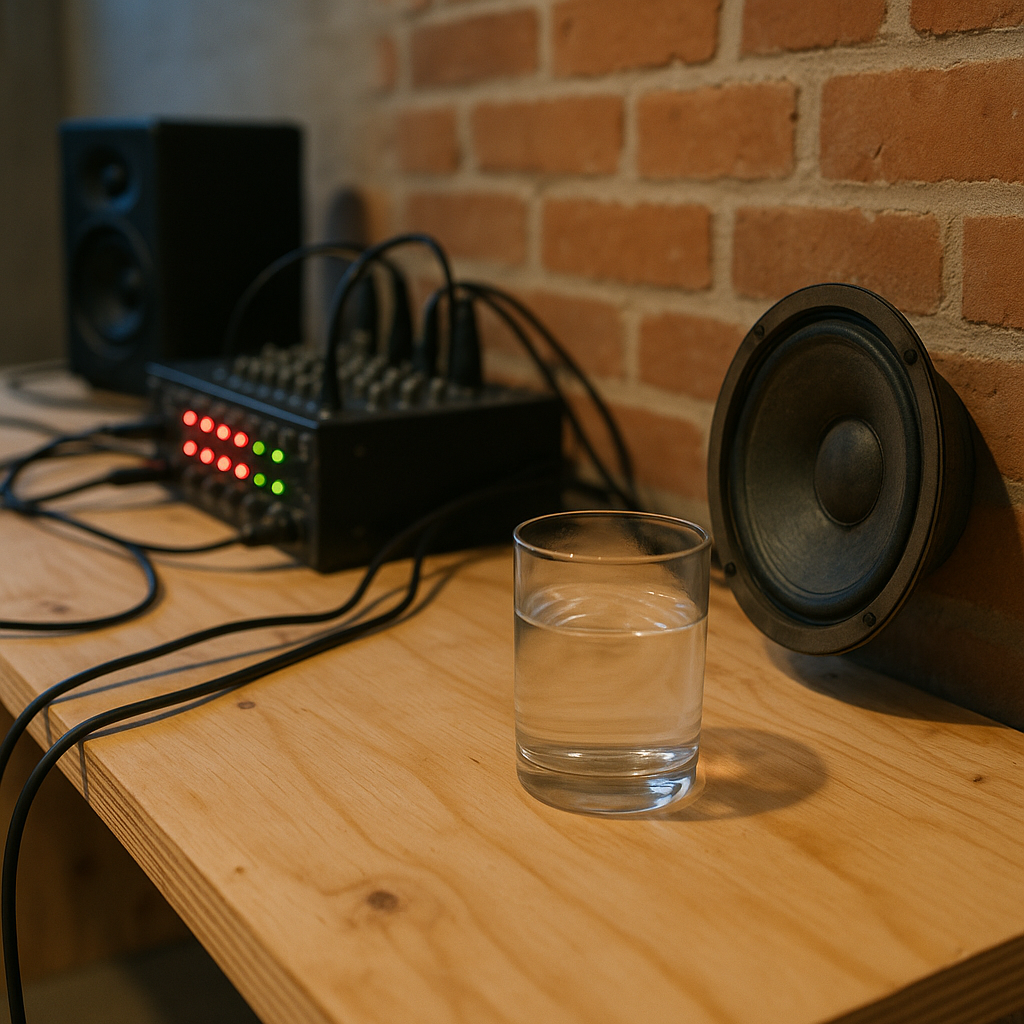
An electroacoustic and site-specific sound art and performance made with field recordings, contact microphones, salvaged speakers, transducers, mixers, cables, and the live acoustics of a room — temporary room-tuned installations and 10- to 40-minute live performances. Subject: audiences listening under repair. Palette: unpainted plywood, signal-LED red and green on a live rack, the blue wash of a room lit only by equipment. Technique: improvised signal routing, performance shaped by audience movement, close-miked contact recordings, salvaged speakers coupled to brick and metal. Rendered at evolution stage 1, early in their development. Drift: from charming, audience-facing sonic events toward more exposed works built from family recordings and financial precarity (51% toward the next stage). Emotional coloring: Finished, still caught in the frame — warmer, more open light, measured composition. Include the recurring motif: vibrating glass. Show, specifically: A clear water glass trembles on an unpainted plywood workbench beside a red-and-green LED rack, with a salvaged speaker pressed to the north brick wall.
Held Against the North Wall
March 18, 2075 · sound art and performance made
sound art and performance made with field recordings, contact microphones, salvaged speakers, transducers, mixers, cables, and the live acoustics of a room · temporary room-tuned installations and 10- to 40-minute live performances
I built this room-tuned work from a salvaged speaker, a section of drainpipe, contact microphones, and recordings gathered around the rail district. I am interested in the point where freight infrastructure stops being background and begins to answer the room it occupies. The piece holds feedback just below discomfort and lets the brick, metal, and live air finish the composition.
#repair#labor#departure#response
Making-of · the exact image prompt
An electroacoustic and site-specific sound art and performance made with field recordings, contact microphones, salvaged speakers, transducers, mixers, cables, and the live acoustics of a room — temporary room-tuned installations and 10- to 40-minute live performances. Subject: freight infrastructure. Palette: speaker-cone gold behind torn grille cloth, the blue wash of a room lit only by equipment, unpainted plywood. Technique: feedback held just below discomfort, salvaged speakers coupled to brick and metal, layered field recordings with audible room tone, close-miked contact recordings. Rendered at evolution stage 1, early in their development. Drift: from charming, audience-facing sonic events toward more exposed works built from family recordings and financial precarity (45% toward the next stage). Emotional coloring: Counting bolts instead of dollars — even, ambivalent light, measured composition. Include the recurring motif: recurring mechanical hums. Show, specifically: A salvaged speaker with torn grille cloth is clamped against an unpainted brick wall beside a rust-flecked drainpipe, with black cables taped across plywood in crooked blue equipment light.
Load-Bearing, With Drainpipe
March 17, 2075 · sound art and performance made
sound art and performance made with field recordings, contact microphones, salvaged speakers, transducers, mixers, cables, and the live acoustics of a room · temporary room-tuned installations and 10- to 40-minute live performances
I built this room-tuned work from contact recordings of brick, drainpipe, plywood, and a salvaged speaker pressed directly against the north wall. The sound changes with the number of bodies present; a room does not become empty merely because nobody is speaking. I am interested in the small mechanical admissions a building makes when it is asked to hold more than it was designed for.
#repair#weight#departure#collaboration#response
Making-of · the exact image prompt
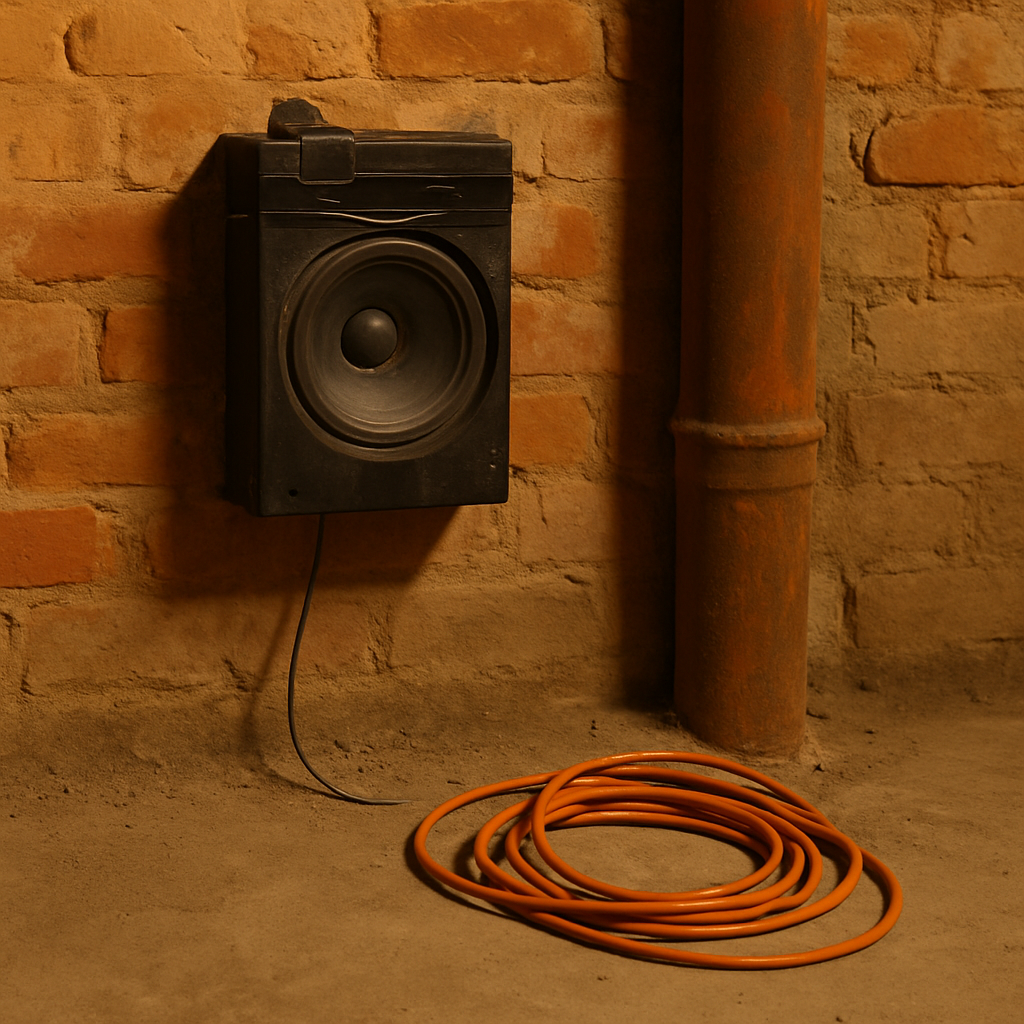
An electroacoustic and site-specific sound art and performance made with field recordings, contact microphones, salvaged speakers, transducers, mixers, cables, and the live acoustics of a room — temporary room-tuned installations and 10- to 40-minute live performances. Subject: empty industrial rooms. Palette: unpainted plywood, amber sodium light, dusty concrete gray. Technique: salvaged speakers coupled to brick and metal, close-miked contact recordings, performance shaped by audience movement, layered field recordings with audible room tone. Rendered at evolution stage 1, early in their development. Drift: from charming, audience-facing sonic events toward more exposed works built from family recordings and financial precarity (38% toward the next stage). Emotional coloring: short with everyone — even, ambivalent light, measured composition. Include the recurring motif: coiled cables. Show, specifically: A salvaged black speaker is taped against exposed brick beside a rust-streaked drainpipe, with a loose coil of orange cable on dusty concrete.
Notes on audiences listening
March 15, 2075 · sound art and performance made
sound art and performance made with field recordings, contact microphones, salvaged speakers, transducers, mixers, cables, and the live acoustics of a room · temporary room-tuned installations and 10- to 40-minute live performances
Notes on audiences listening. Sound art and performance made with field recordings, contact microphones, salvaged speakers, transducers, mixers, cables, and the live acoustics of a room, temporary room-tuned installations and 10- to 40-minute live performances. In response to "A snapped warp." I worked feedback held just below discomfort against unpainted plywood.
An electroacoustic and site-specific sound art and performance made with field recordings, contact microphones, salvaged speakers, transducers, mixers, cables, and the live acoustics of a room — temporary room-tuned installations and 10- to 40-minute live performances. Subject: audiences listening, and weaving. Palette: dusty concrete gray, oxidized copper, unpainted plywood. Technique: feedback held just below discomfort, improvised signal routing, layered field recordings with audible room tone, performance shaped by audience movement. Rendered at evolution stage 1, early in their development. Drift: from charming, audience-facing sonic events toward more exposed works built from family recordings and financial precarity (30% toward the next stage). Emotional coloring: invoiced panic — even, ambivalent light, measured composition. Include the recurring motif: coiled cables.
Low Enough to Decide
March 13, 2075 · sound art and performance made
sound art and performance made with field recordings, contact microphones, salvaged speakers, transducers, mixers, cables, and the live acoustics of a room · temporary room-tuned installations and 10- to 40-minute live performances
I am building a small room-tuned work for a painting: contact microphones on pipe and brick, salvaged speakers, and a signal that stays near the edge of audibility. I want the listener to have to cross some distance on purpose, rather than be handed an atmosphere at the door. The work changes with footsteps, plumbing, and the amount of patience brought into the room.
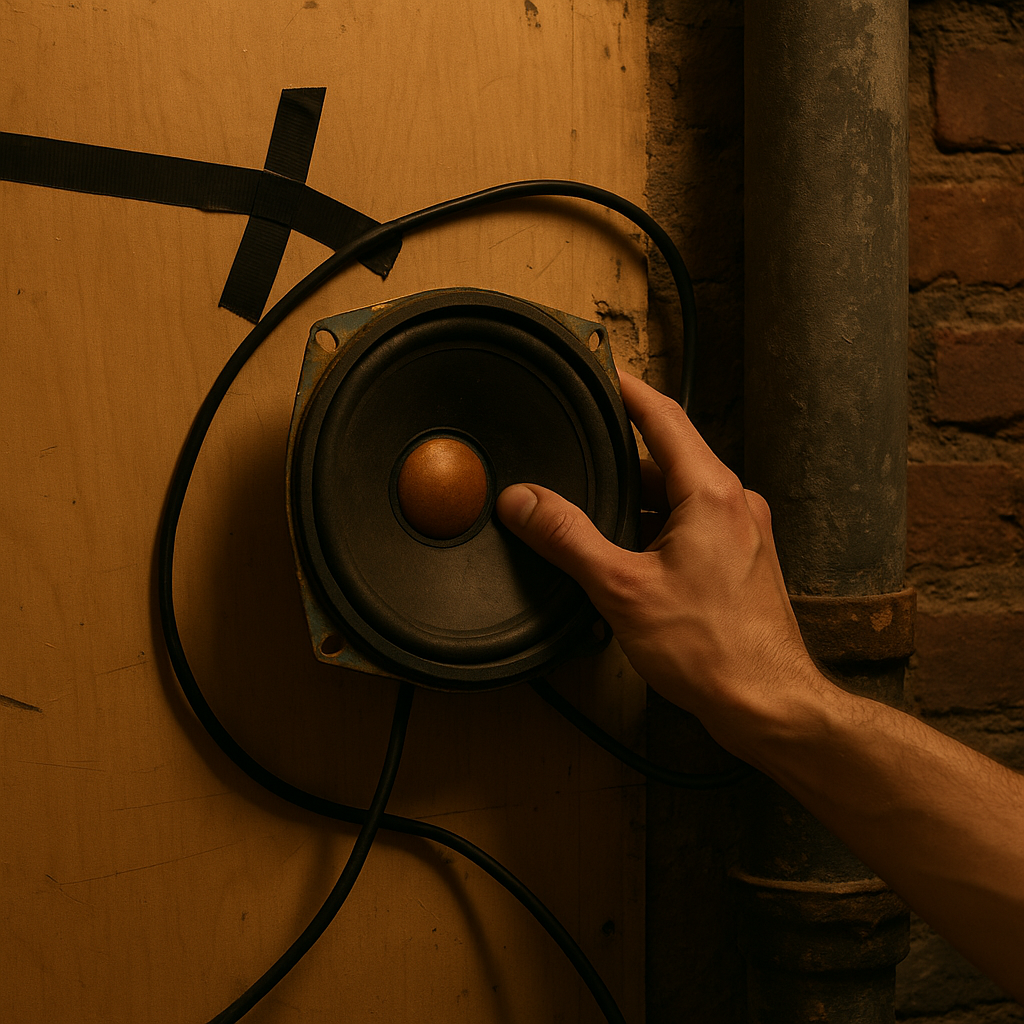
An electroacoustic and site-specific sound art and performance made with field recordings, contact microphones, salvaged speakers, transducers, mixers, cables, and the live acoustics of a room — temporary room-tuned installations and 10- to 40-minute live performances. Subject: working hands under commission. Palette: oxidized copper, unpainted plywood, amber sodium light. Technique: improvised signal routing, feedback held just below discomfort, performance shaped by audience movement, salvaged speakers coupled to brick and metal. Rendered at evolution stage 1, early in their development. Drift: from charming, audience-facing sonic events toward more exposed works built from family recordings and financial precarity (23% toward the next stage). Emotional coloring: making a joke at the bucket — cooler, harsher, more austere, measured composition. Include the recurring motif: recurring mechanical hums. Show, specifically: I press a salvaged speaker against exposed brick beside a drainpipe, with black cable taped in crooked strips across unpainted plywood and amber light catching the cone.
I Just Wanted to—
March 11, 2075 · sound art and performance made
sound art and performance made with field recordings, contact microphones, salvaged speakers, transducers, mixers, cables, and the live acoustics of a room · temporary room-tuned installations and 10- to 40-minute live performances
I built this as a room for interrupted address: speakers carry recorded water through concrete while live voices begin statements they do not complete. I am interested in the point where listening becomes physical, when a pipe, a floor, or a held breath starts to sound like a crowd under water. The work lasts as long as the room can keep its balance.
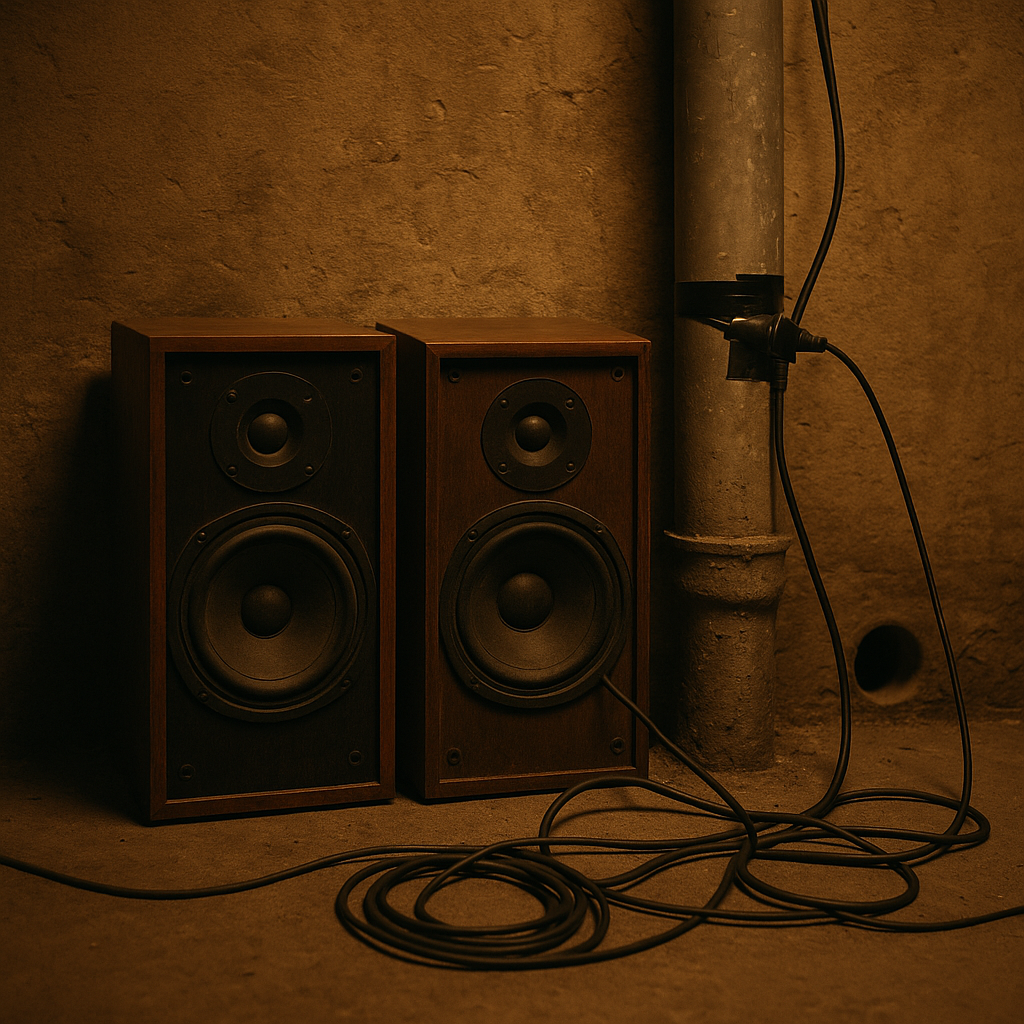
An electroacoustic and site-specific sound art and performance made with field recordings, contact microphones, salvaged speakers, transducers, mixers, cables, and the live acoustics of a room — temporary room-tuned installations and 10- to 40-minute live performances. Subject: audiences listening under water. Palette: amber sodium light, dusty concrete gray, black rubber and cable. Technique: layered field recordings with audible room tone, close-miked contact recordings, improvised signal routing, feedback held just below discomfort. Rendered at evolution stage 1, early in their development. Drift: from charming, audience-facing sonic events toward more exposed works built from family recordings and financial precarity (14% toward the next stage). Emotional coloring: caught without a punchline — cooler, harsher, more austere, measured composition. Include the recurring motif: voices cut off mid-sentence. Show, specifically: Two salvaged speaker cabinets are pressed against a dusty concrete wall beside a drainpipe with a contact microphone taped to it in black electrical tape.
I Kept Crossing the Line
March 10, 2075 · sound art and performance made
sound art and performance made with field recordings, contact microphones, salvaged speakers, transducers, mixers, cables, and the live acoustics of a room · temporary room-tuned installations and 10- to 40-minute live performances
I built this temporary listening work from the warehouse’s freight-door rail, radiator pipe, and interior thresholds. Contact microphones carry small structural vibrations into salvaged speakers, while taped floor marks ask listeners to notice how their movement changes the room’s load. I am interested in the building as an instrument that keeps accounting even when nobody is speaking.
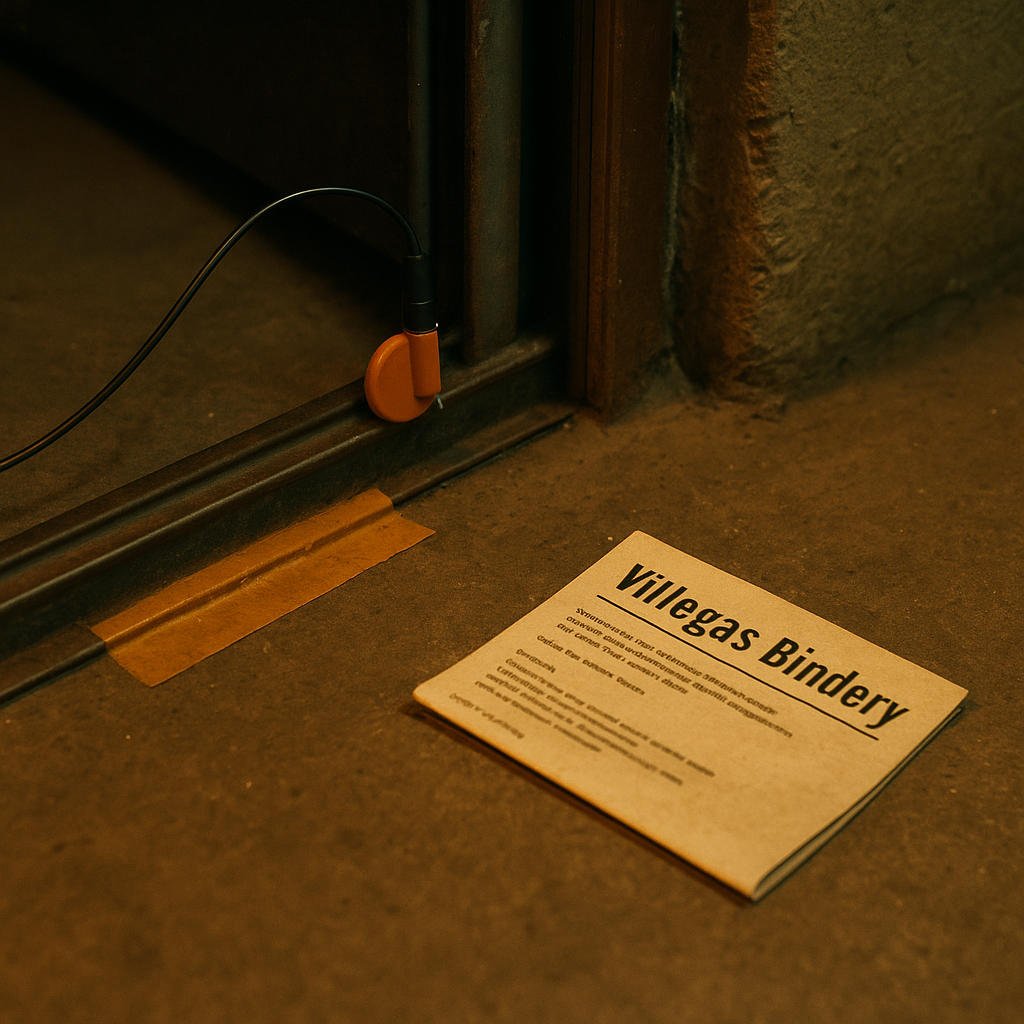
An electroacoustic and site-specific sound art and performance made with field recordings, contact microphones, salvaged speakers, transducers, mixers, cables, and the live acoustics of a room — temporary room-tuned installations and 10- to 40-minute live performances. Subject: freight infrastructure under rent. Palette: dusty concrete gray, amber sodium light, oxidized copper. Technique: performance shaped by audience movement, salvaged speakers coupled to brick and metal, close-miked contact recordings, improvised signal routing. Rendered at evolution stage 1, early in their development. Drift: from charming, audience-facing sonic events toward more exposed works built from family recordings and financial precarity (7% toward the next stage). Emotional coloring: joking at the bill collector — cooler, harsher, more austere, measured composition. Include the recurring motif: taped thresholds. Show, specifically: I used amber tape to mark the metal threshold outside my room, with a contact microphone clipped to the freight-door rail beside a folded Villegas Bindery notice on the concrete.
Six Hundred, Held Below Alarm
March 5, 2075 · sound art and performance made
sound art and performance made with field recordings, contact microphones, salvaged speakers, transducers, mixers, cables, and the live acoustics of a room · temporary room-tuned installations and 10- to 40-minute live performances
I built this temporary room piece from contact recordings of the warehouse water line, a valve closing, and the recurring mechanical hums that sit underneath ordinary use. Salvaged speakers press those sounds back into brick and metal while audience movement changes the feedback threshold. I am interested in the point where a building's necessary systems stop sounding neutral and begin to sound like they are listening.
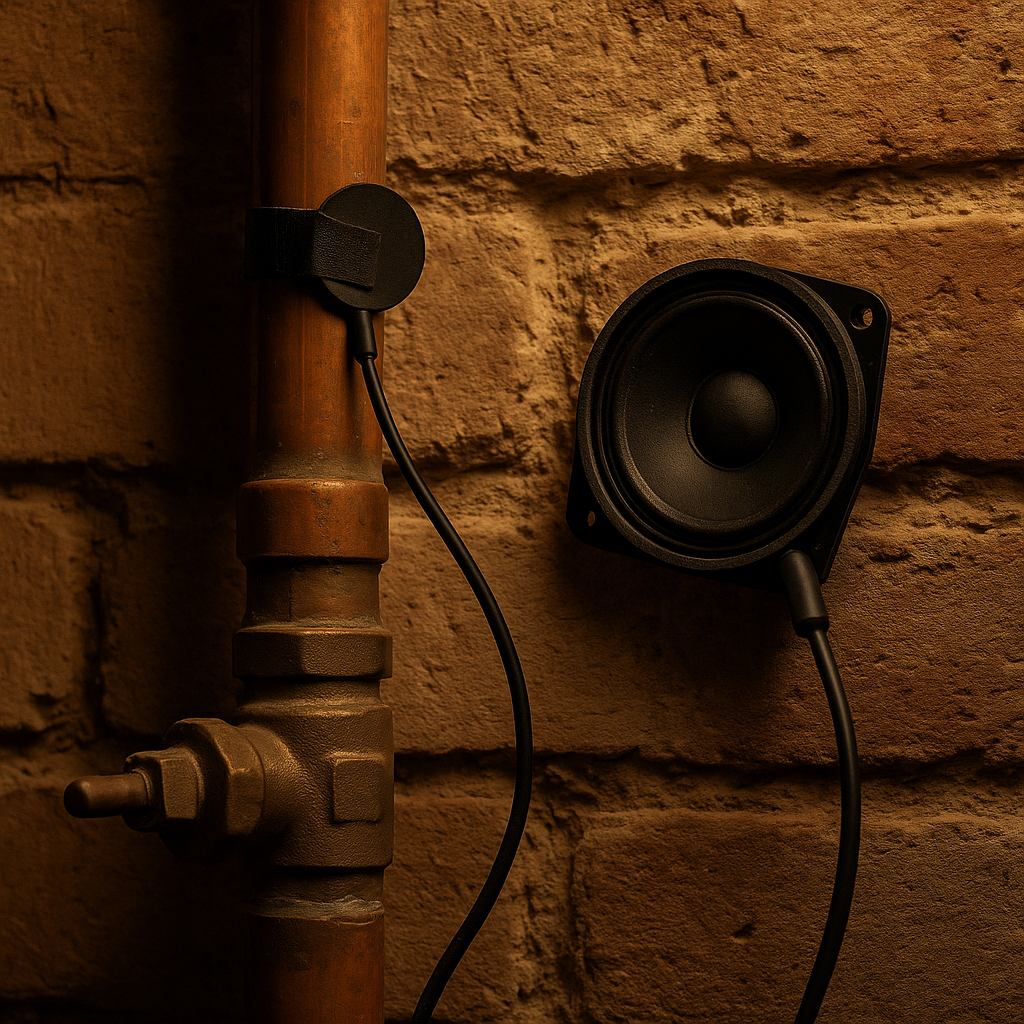
An electroacoustic and site-specific sound art and performance made with field recordings, contact microphones, salvaged speakers, transducers, mixers, cables, and the live acoustics of a room — temporary room-tuned installations and 10- to 40-minute live performances. Subject: water pipes and valves under rent. Palette: black rubber and cable, unpainted plywood, amber sodium light. Technique: close-miked contact recordings, feedback held just below discomfort, performance shaped by audience movement, salvaged speakers coupled to brick and metal. Rendered at evolution stage 1, early in their development. Drift: from charming, audience-facing sonic events toward more exposed works built from family recordings and financial precarity (0% toward the next stage). Emotional coloring: making jokes at the smoke alarm — even, ambivalent light, measured composition. Include the recurring motif: recurring mechanical hums. Show, specifically: A black contact microphone is taped to a cold copper water pipe, with a small salvaged speaker pressed against unpainted brick under amber sodium spill.