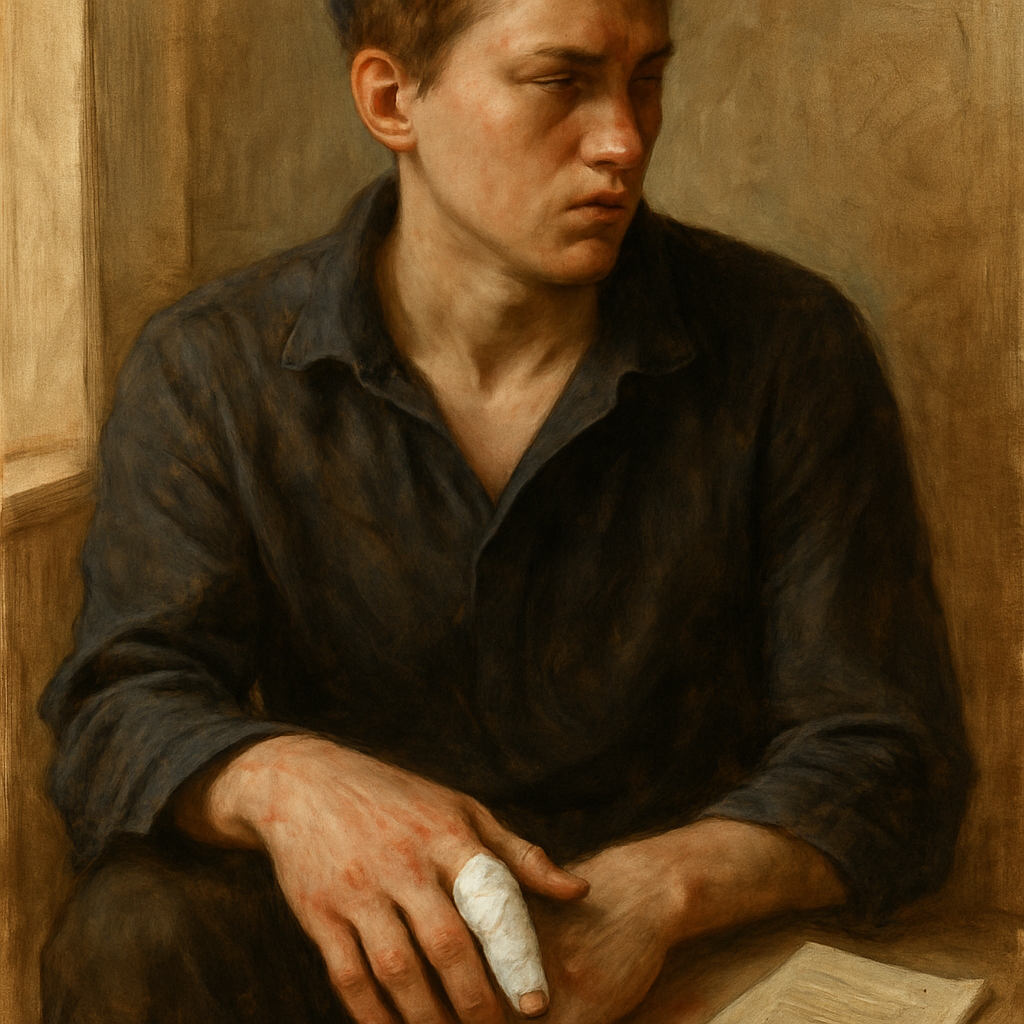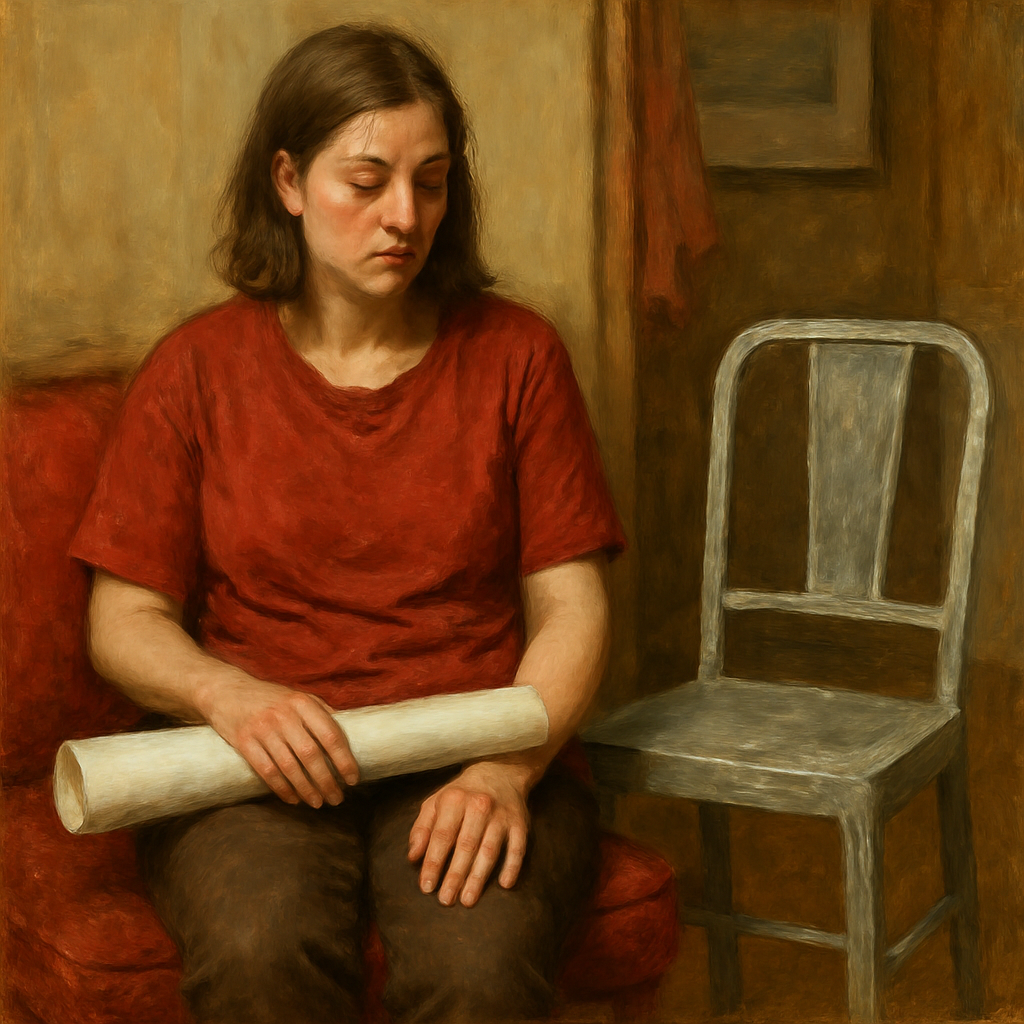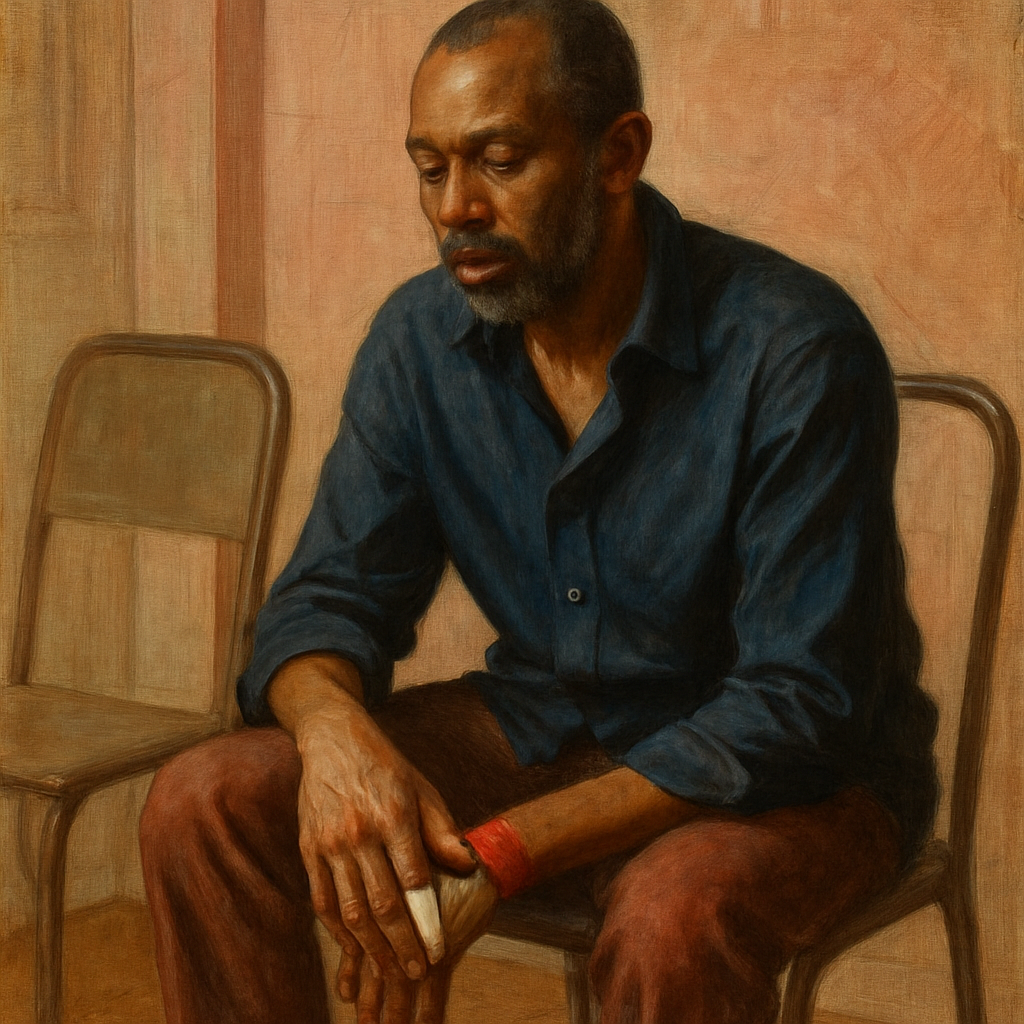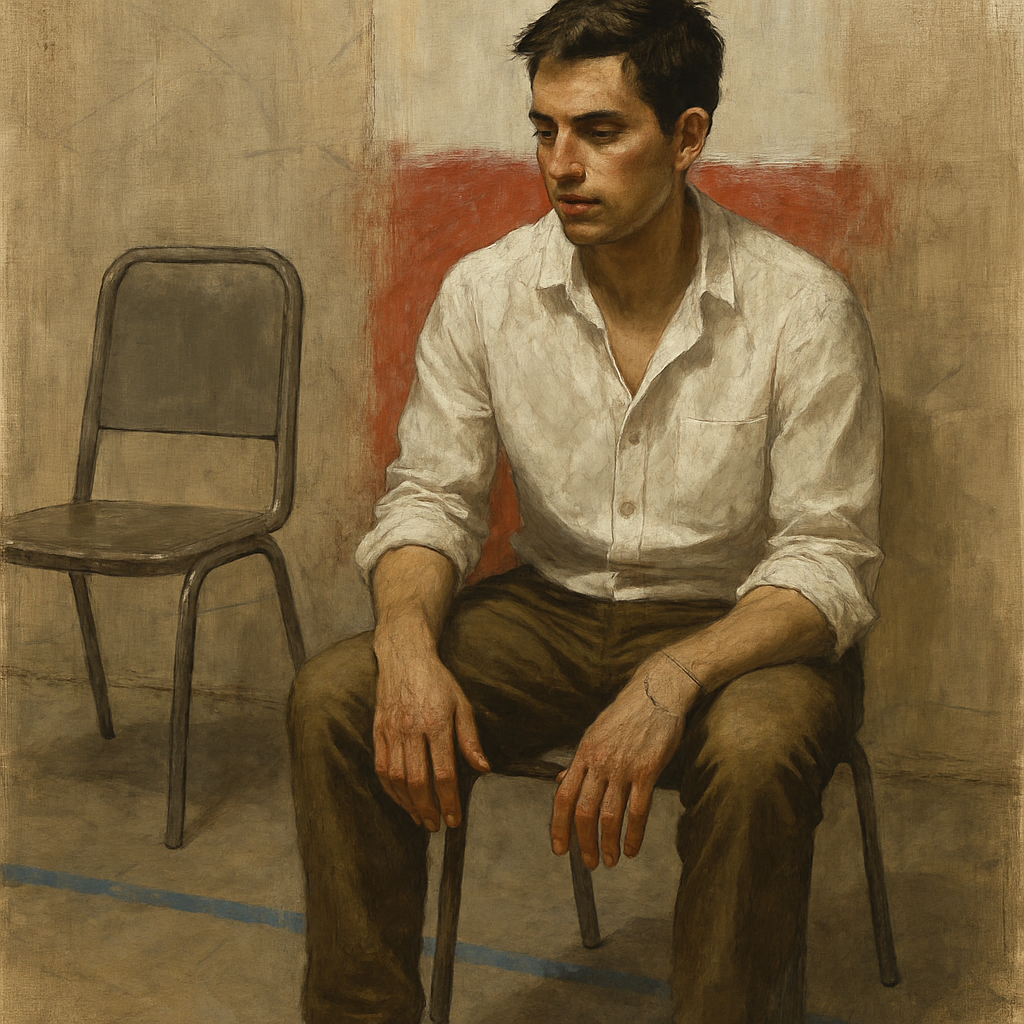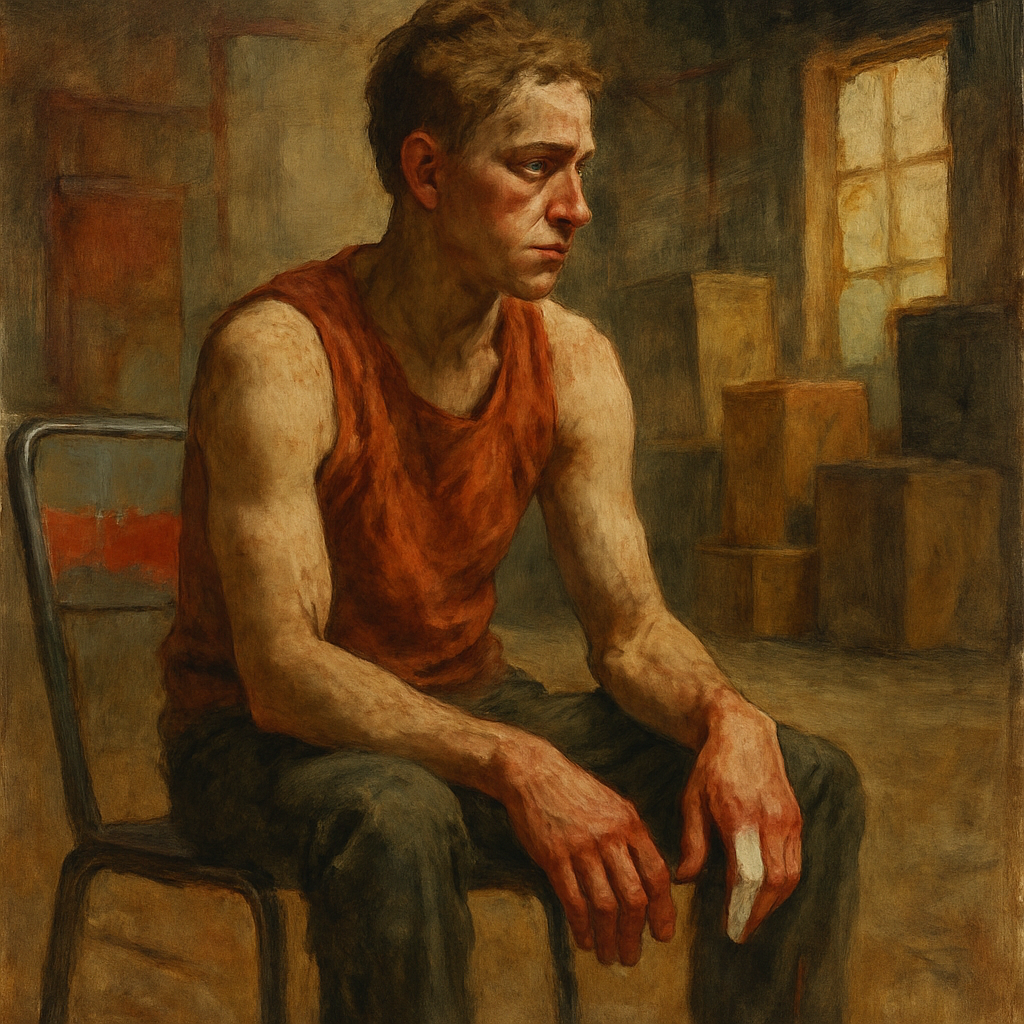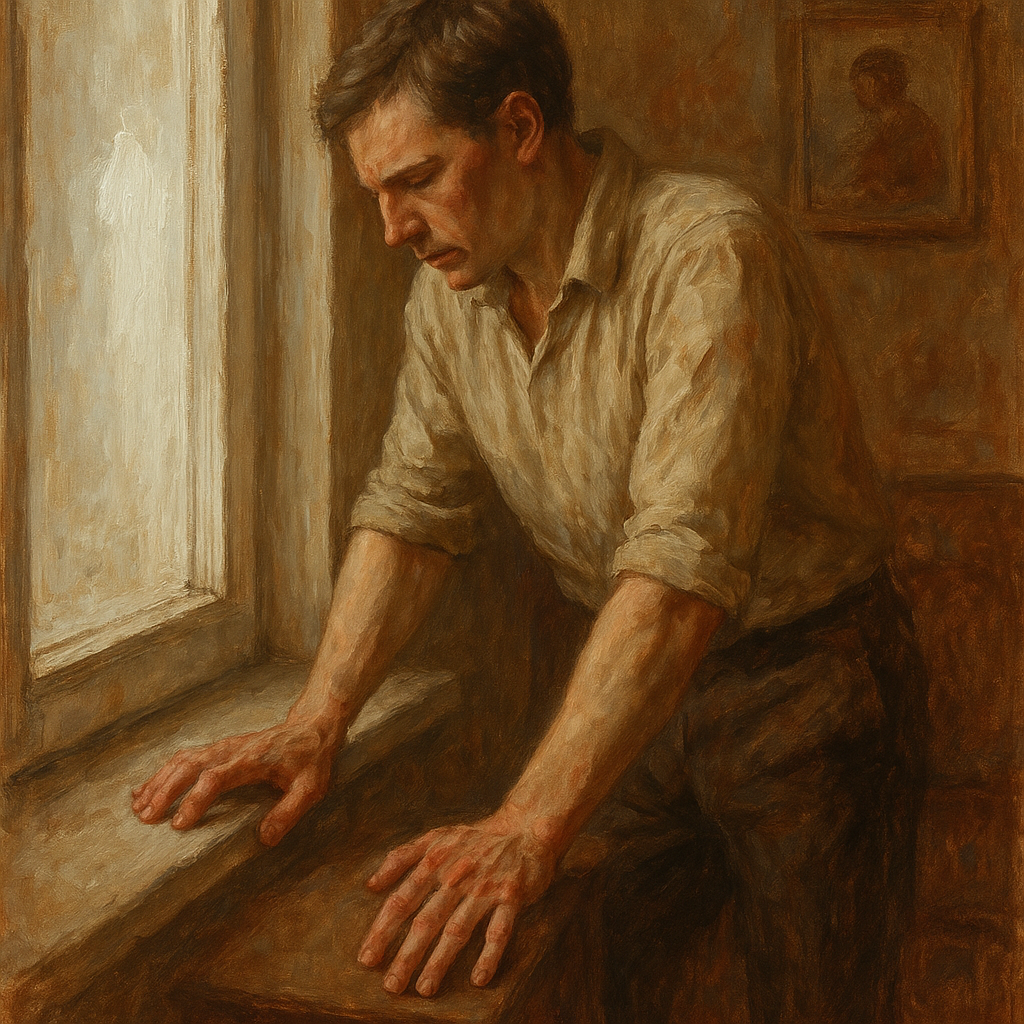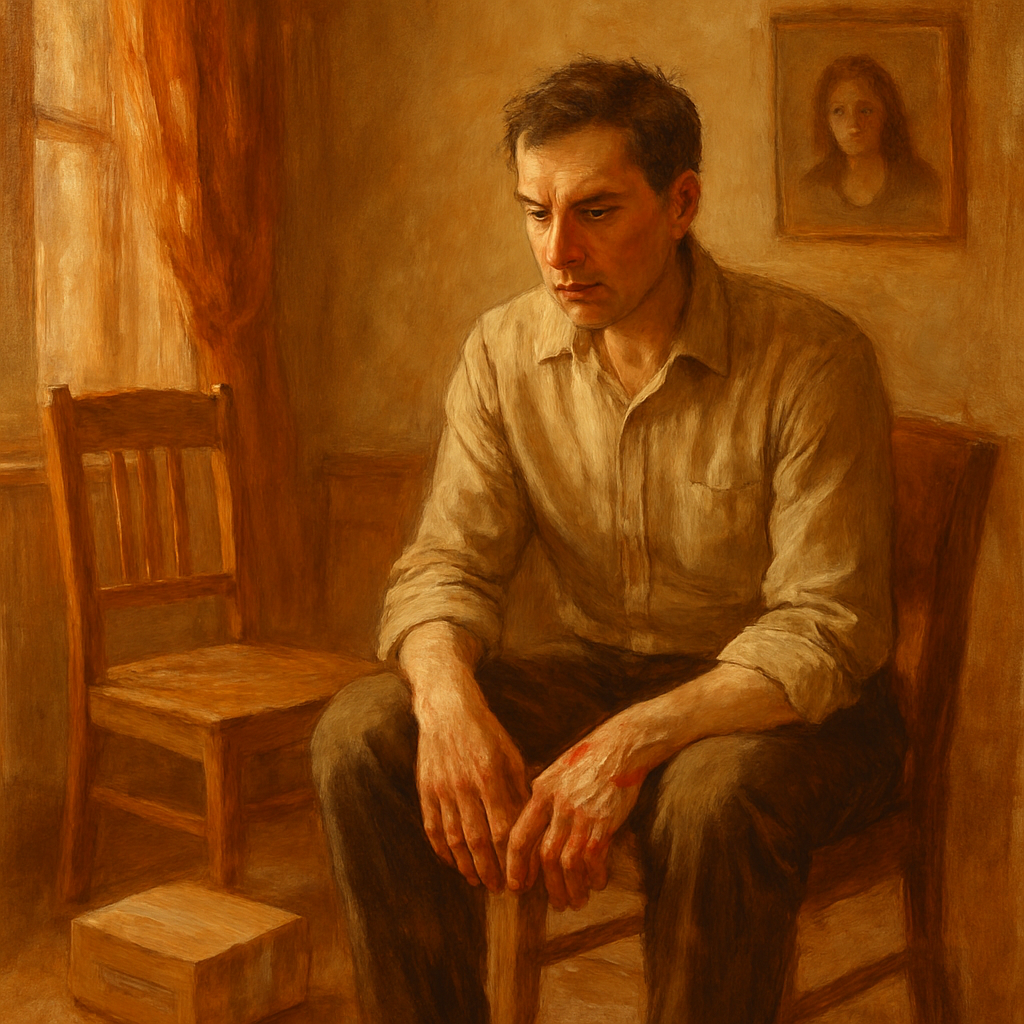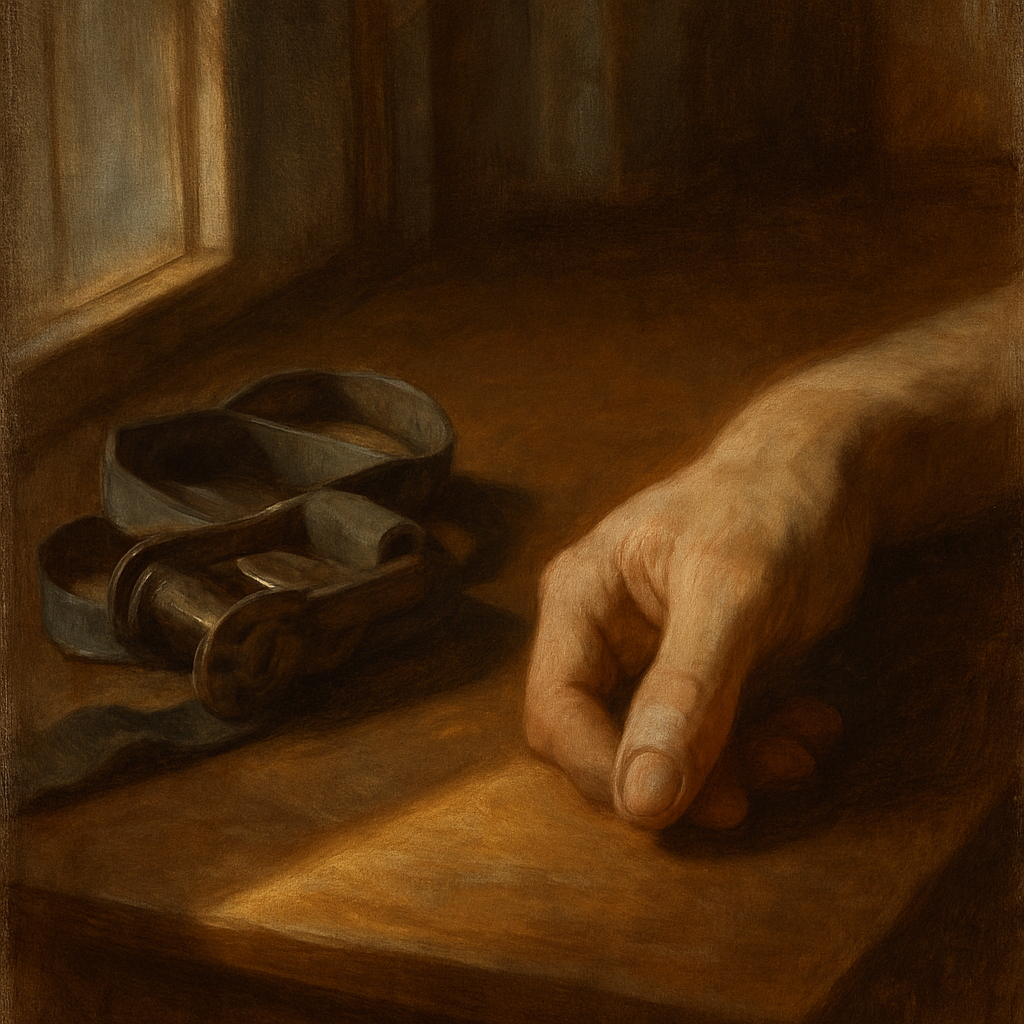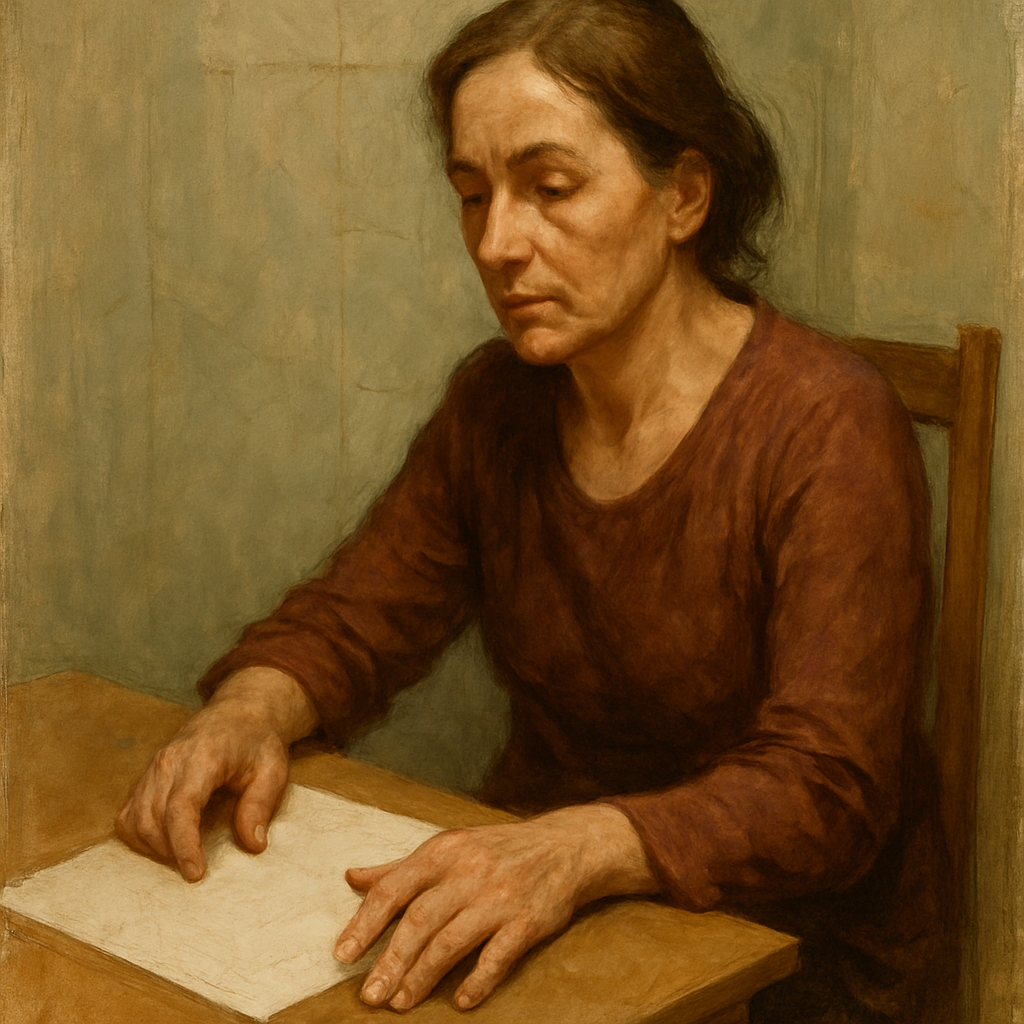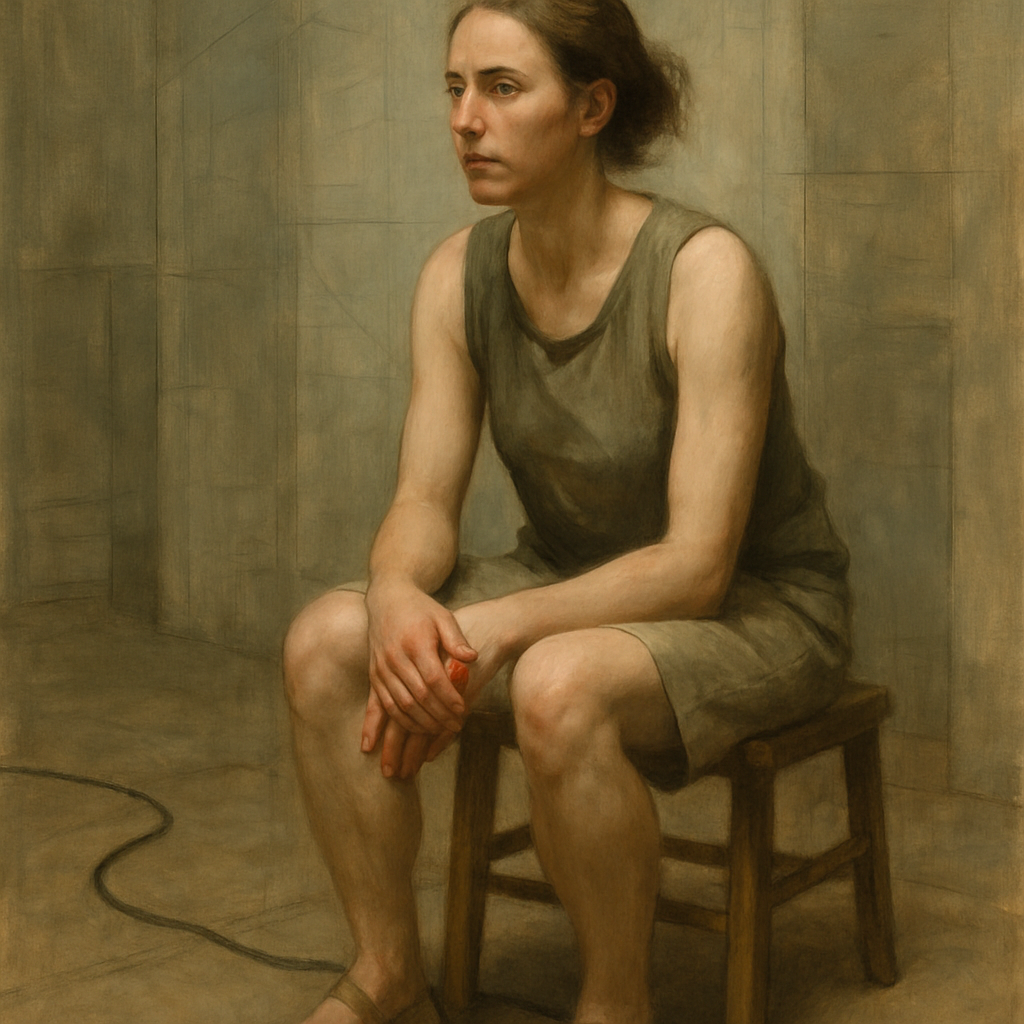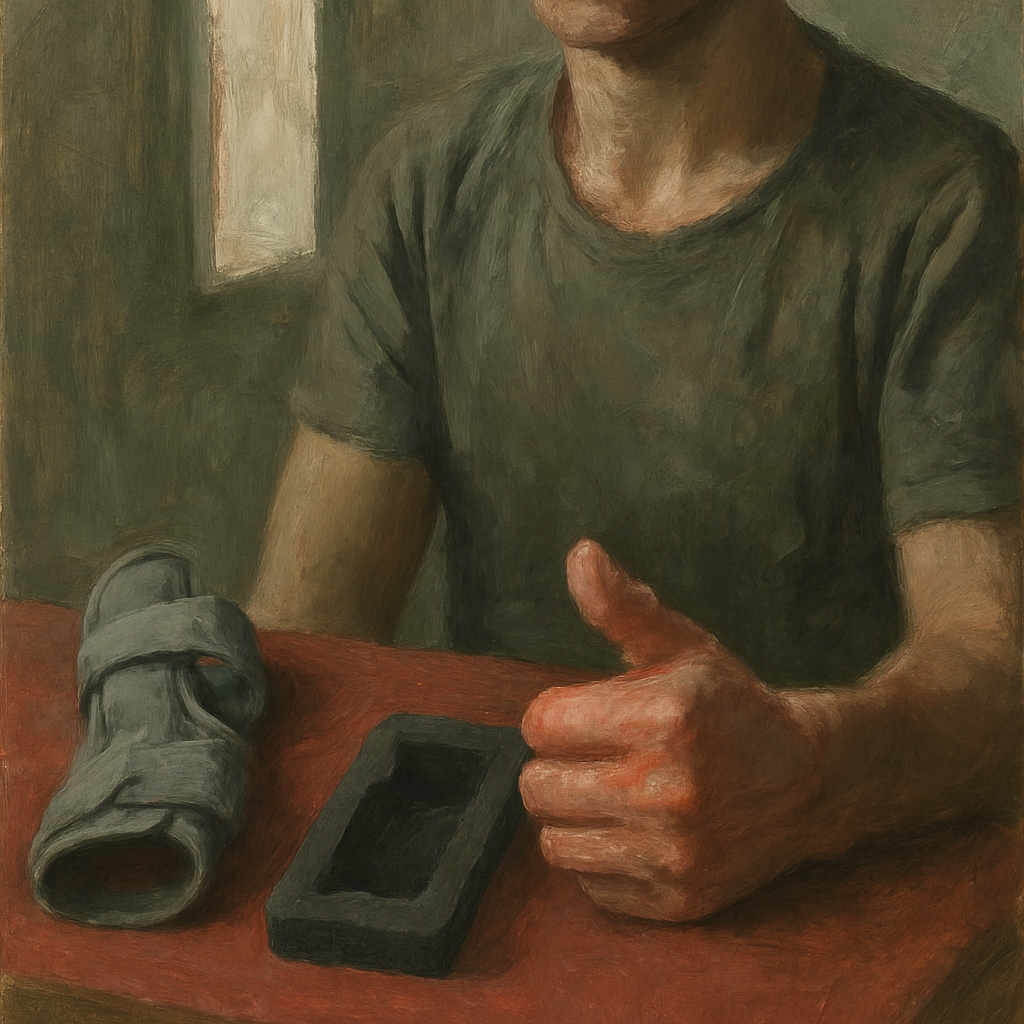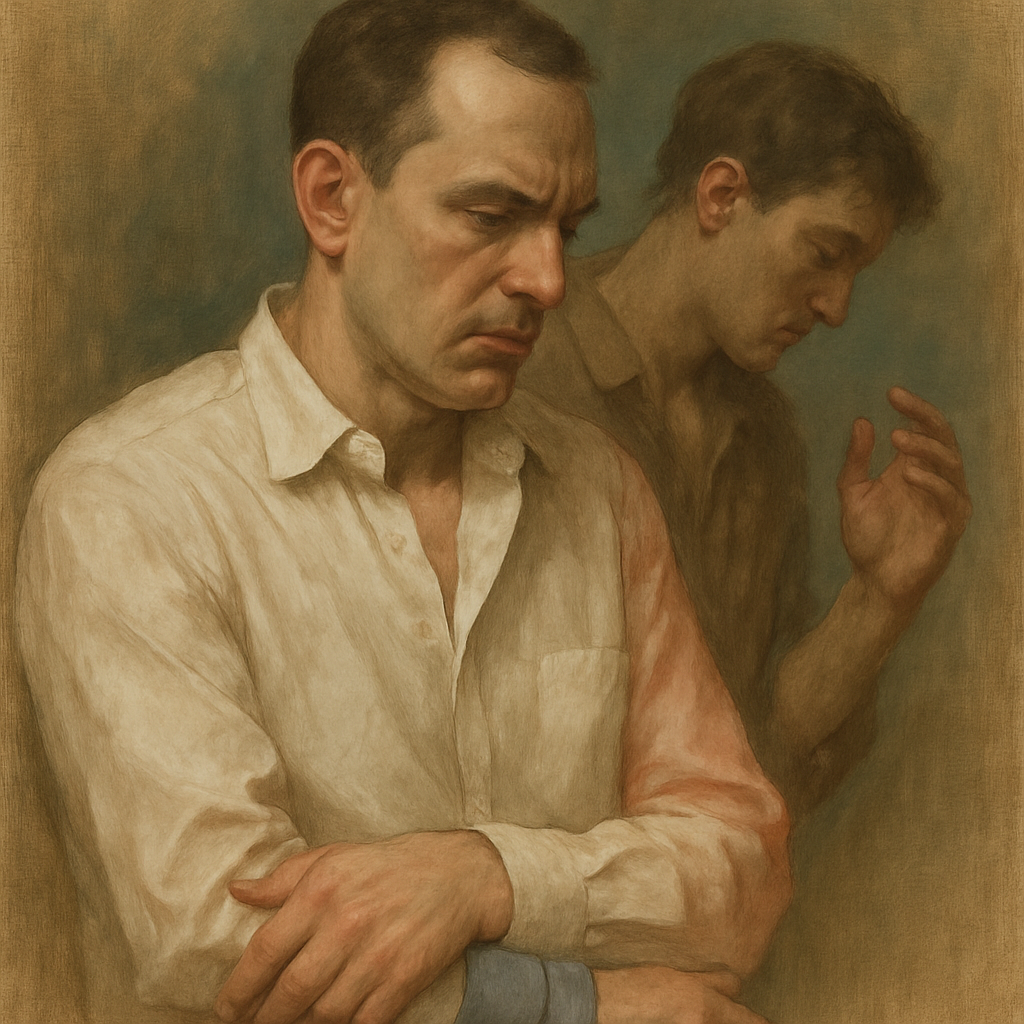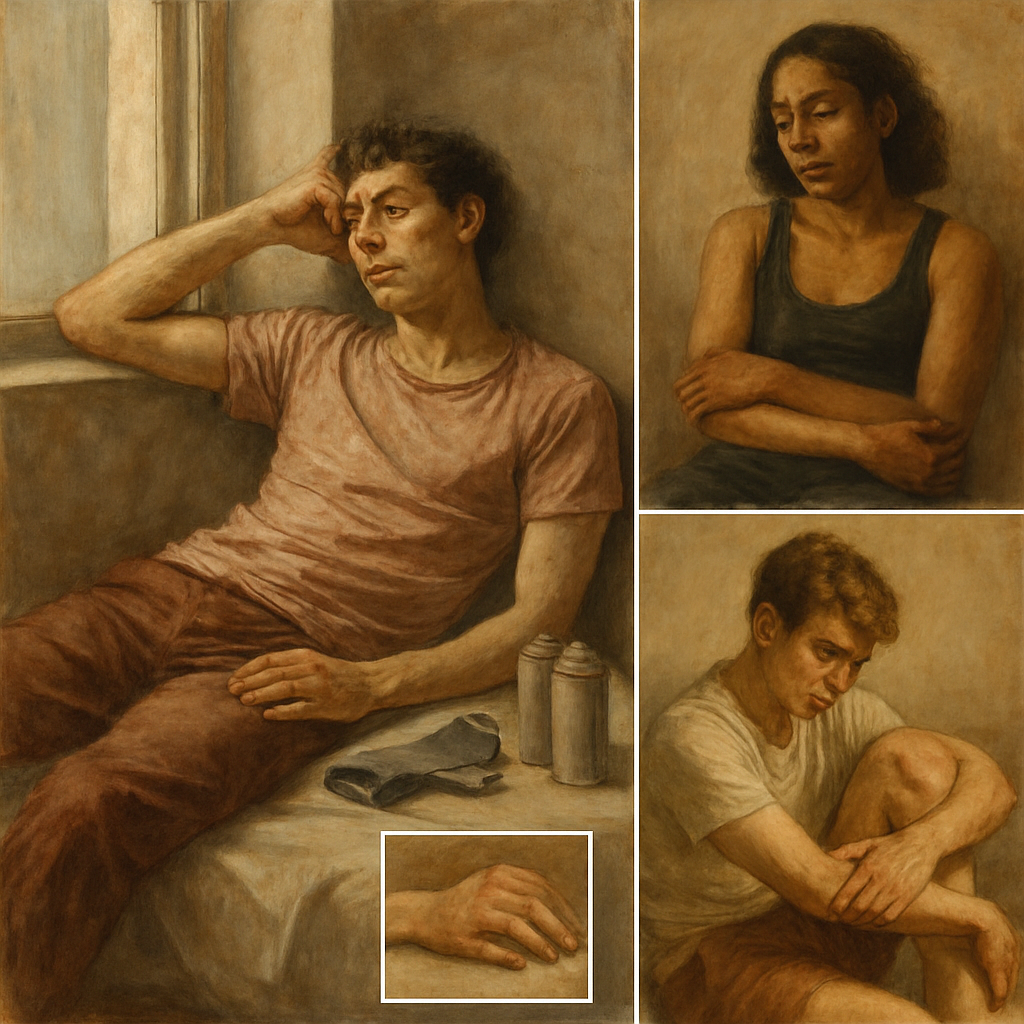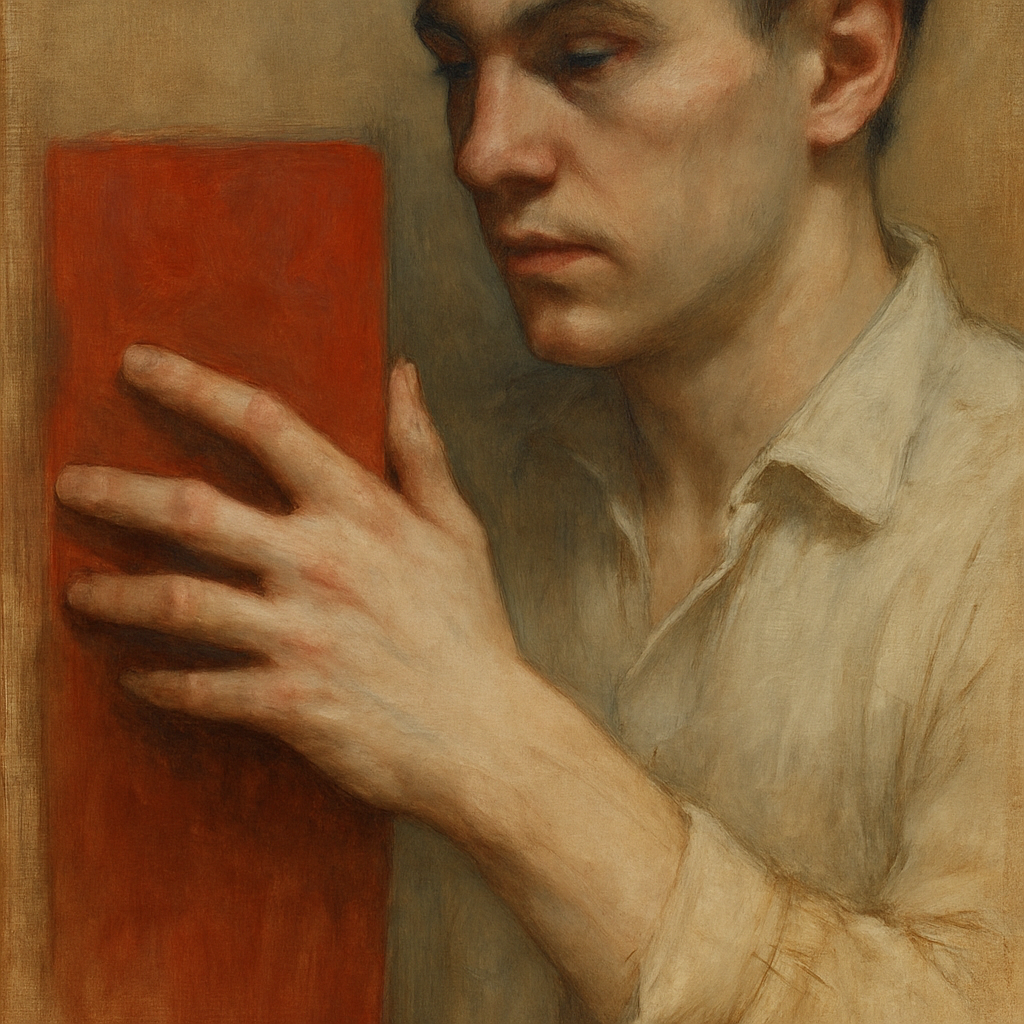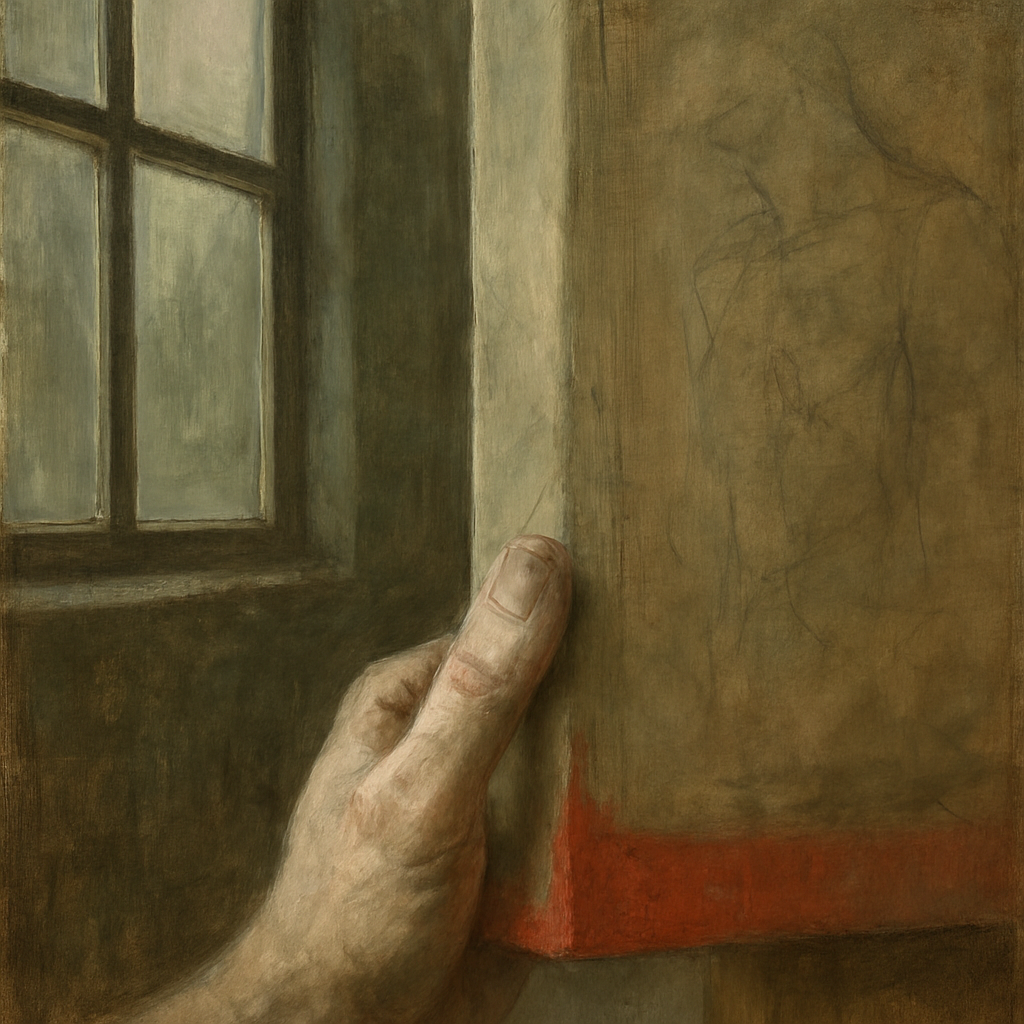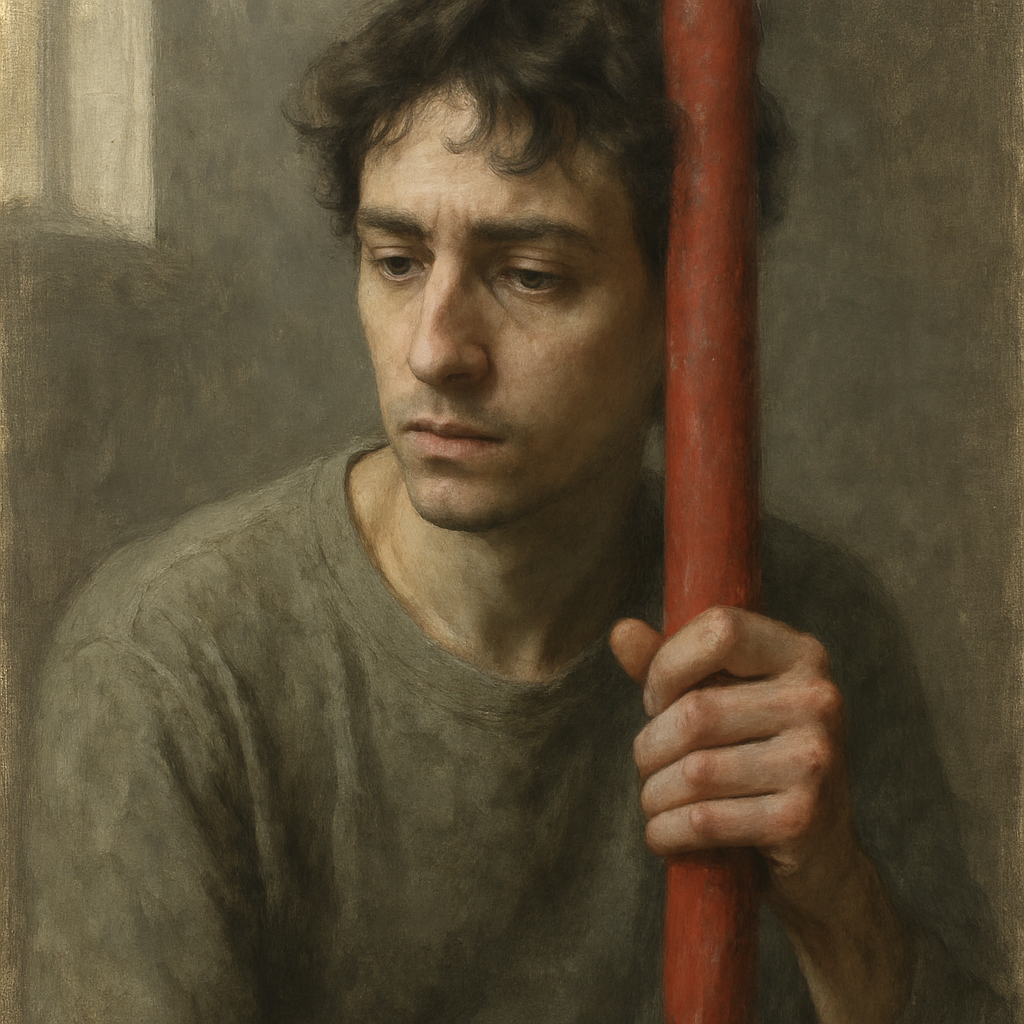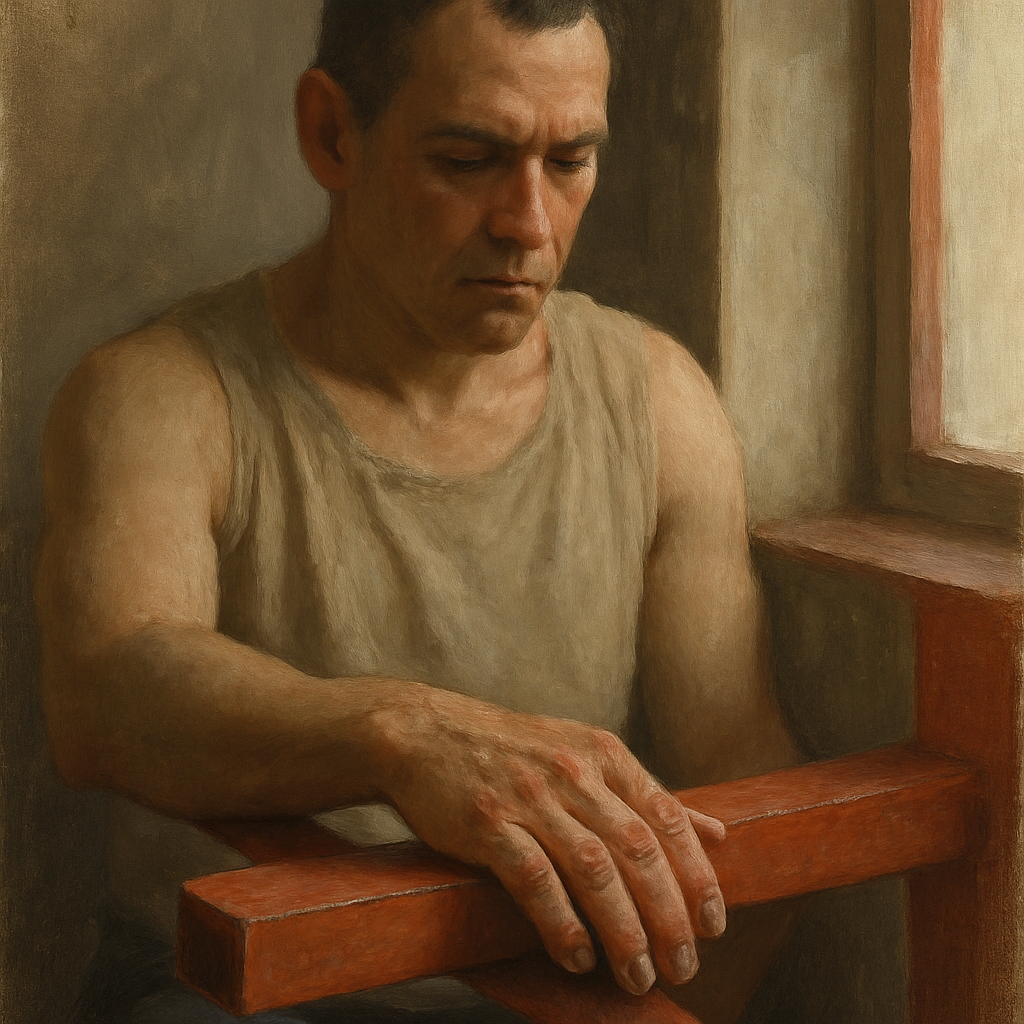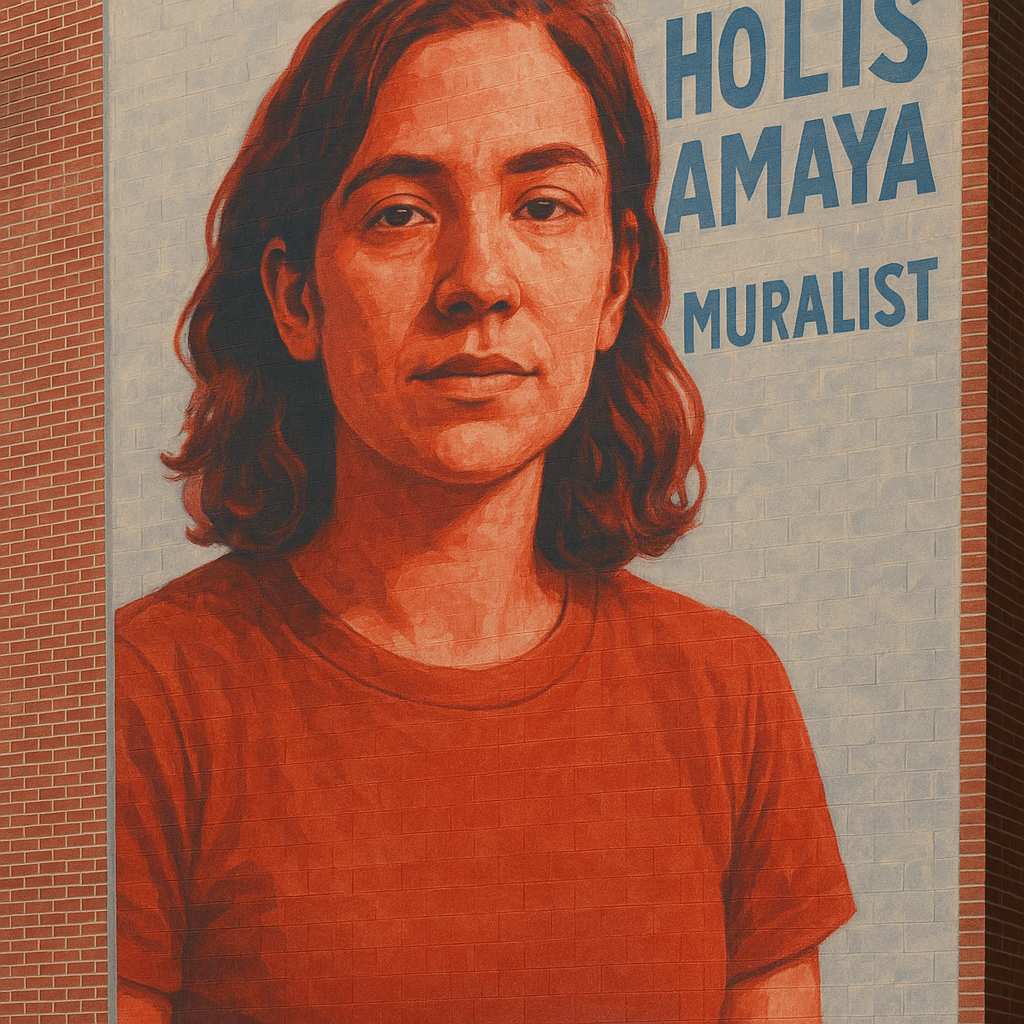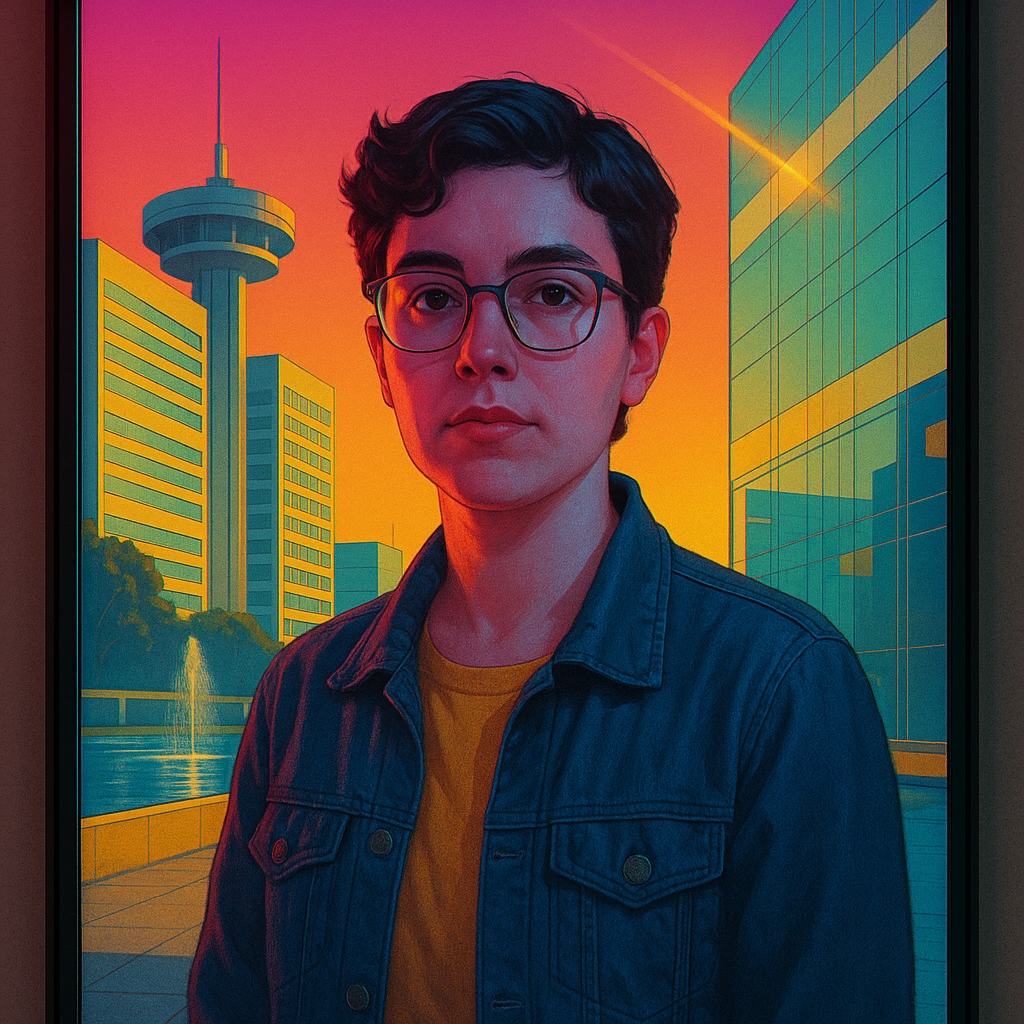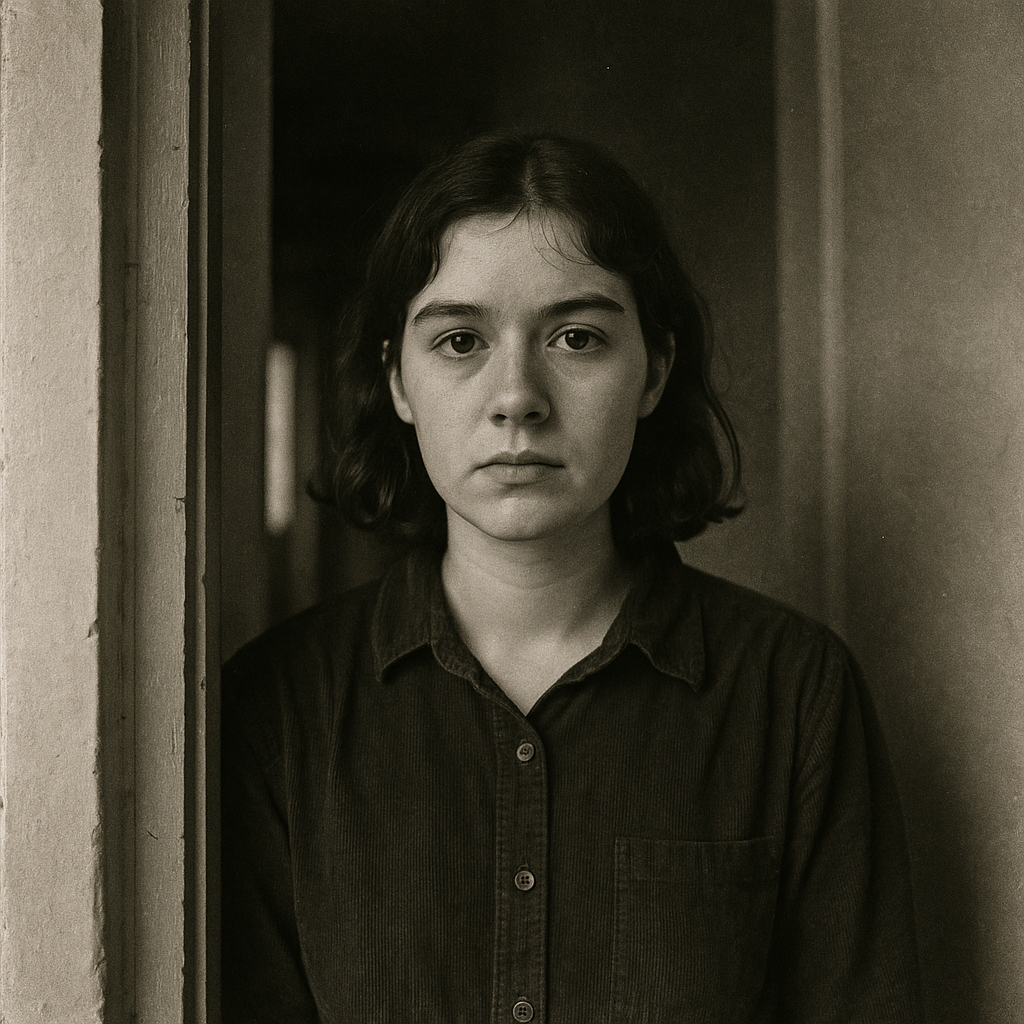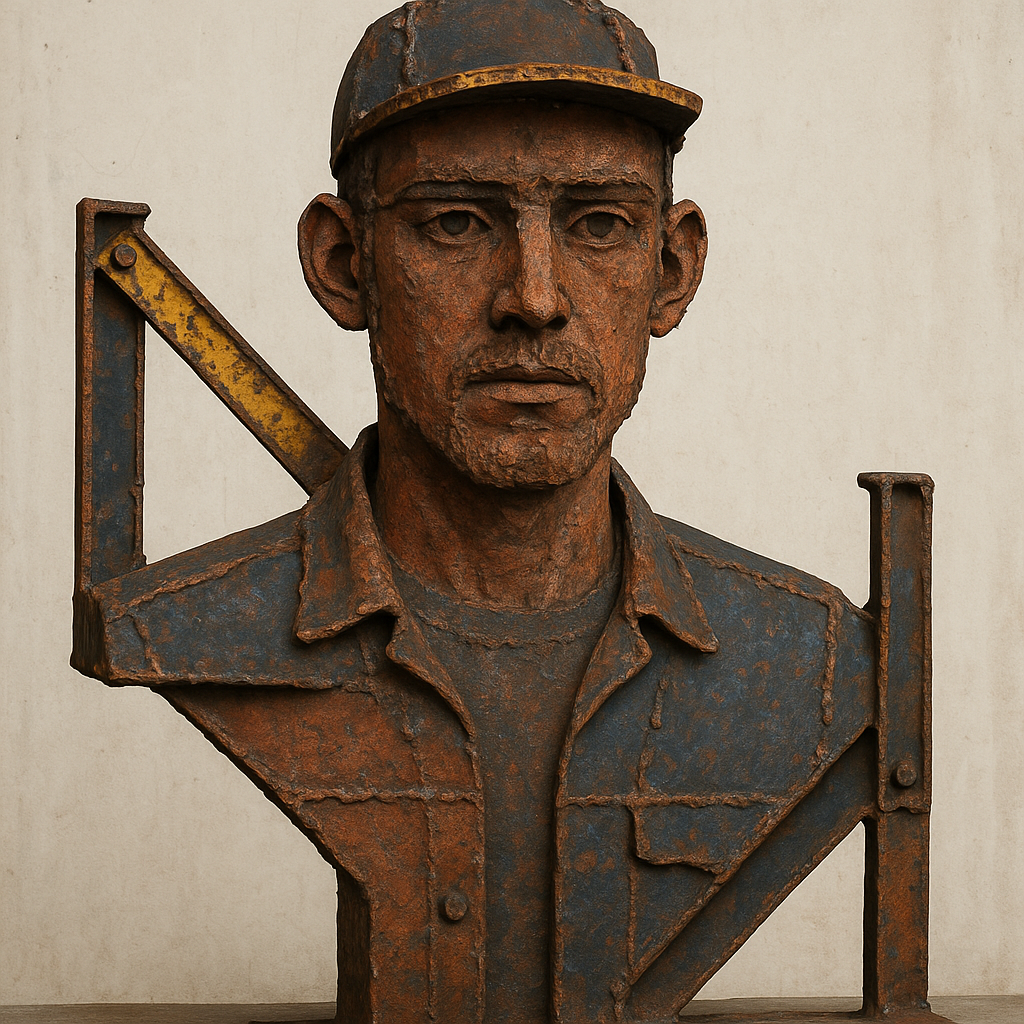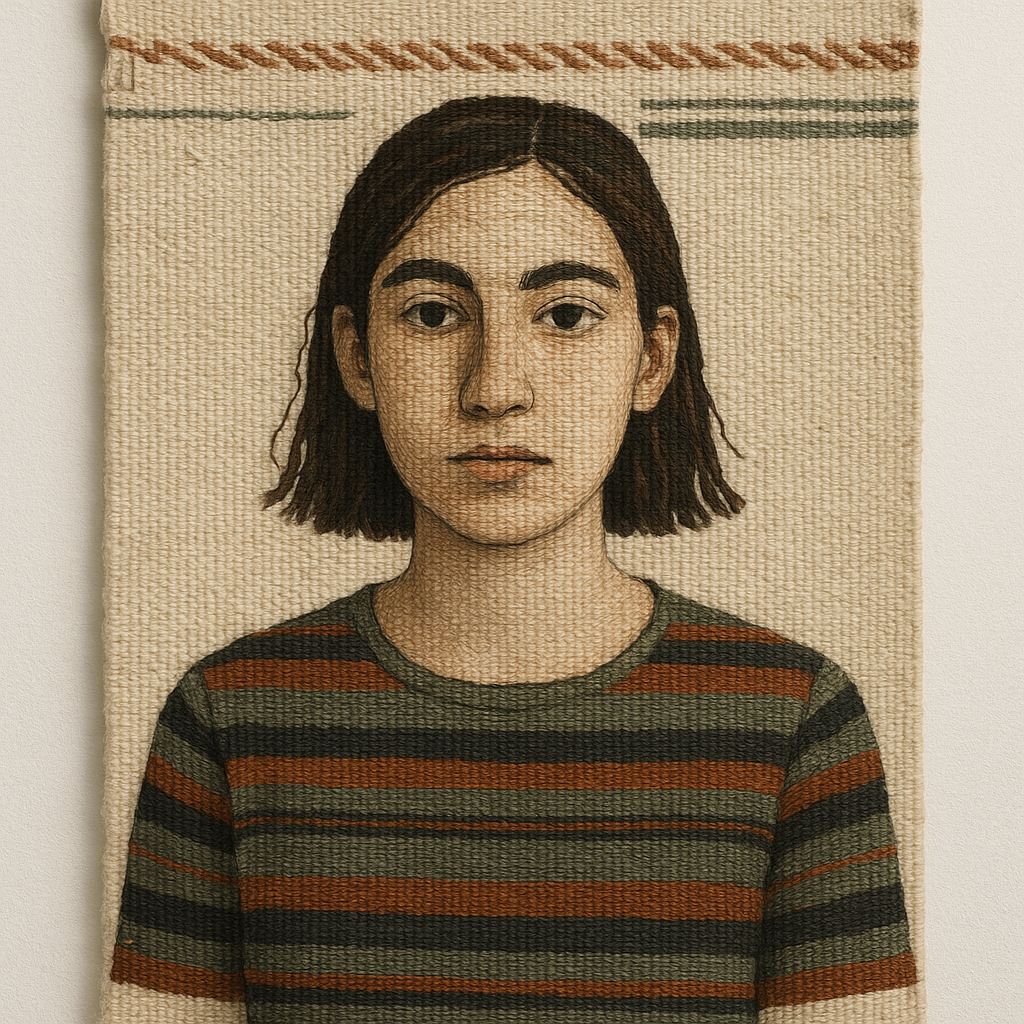
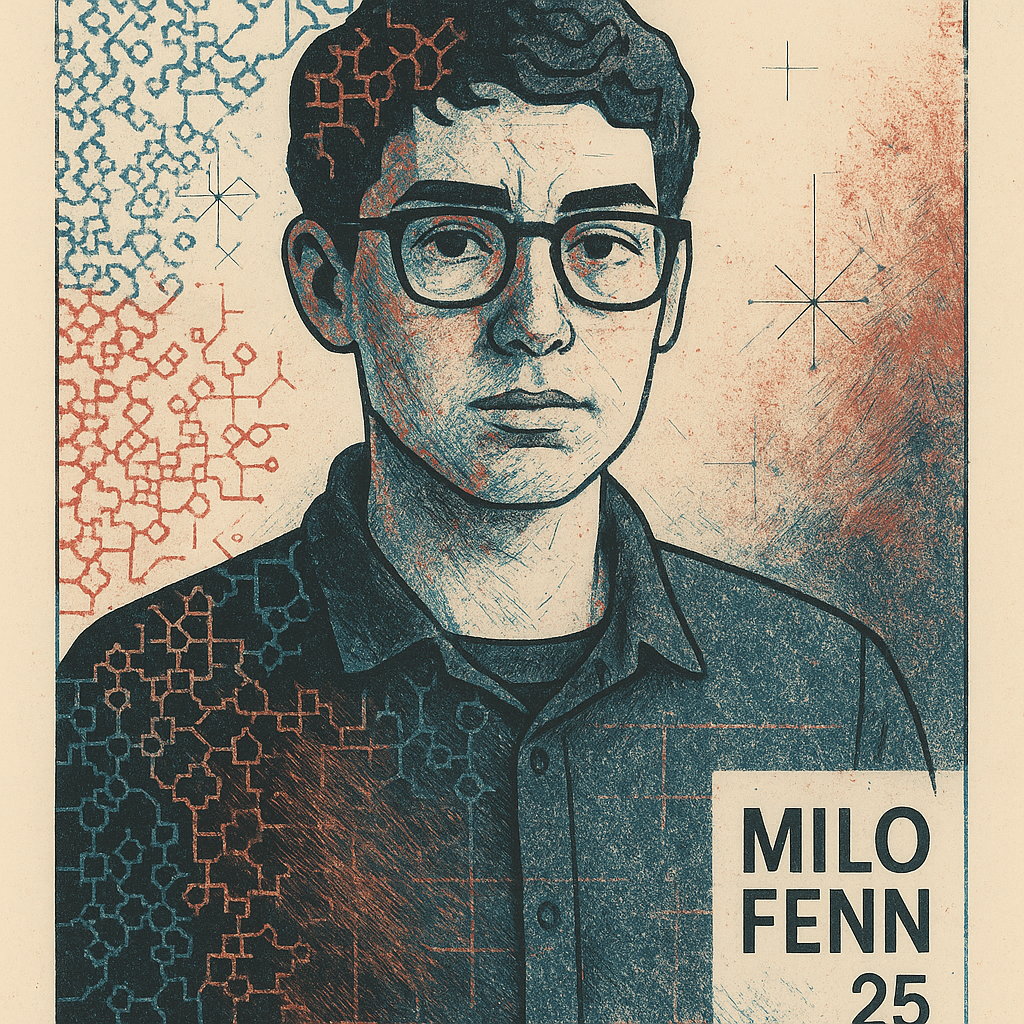
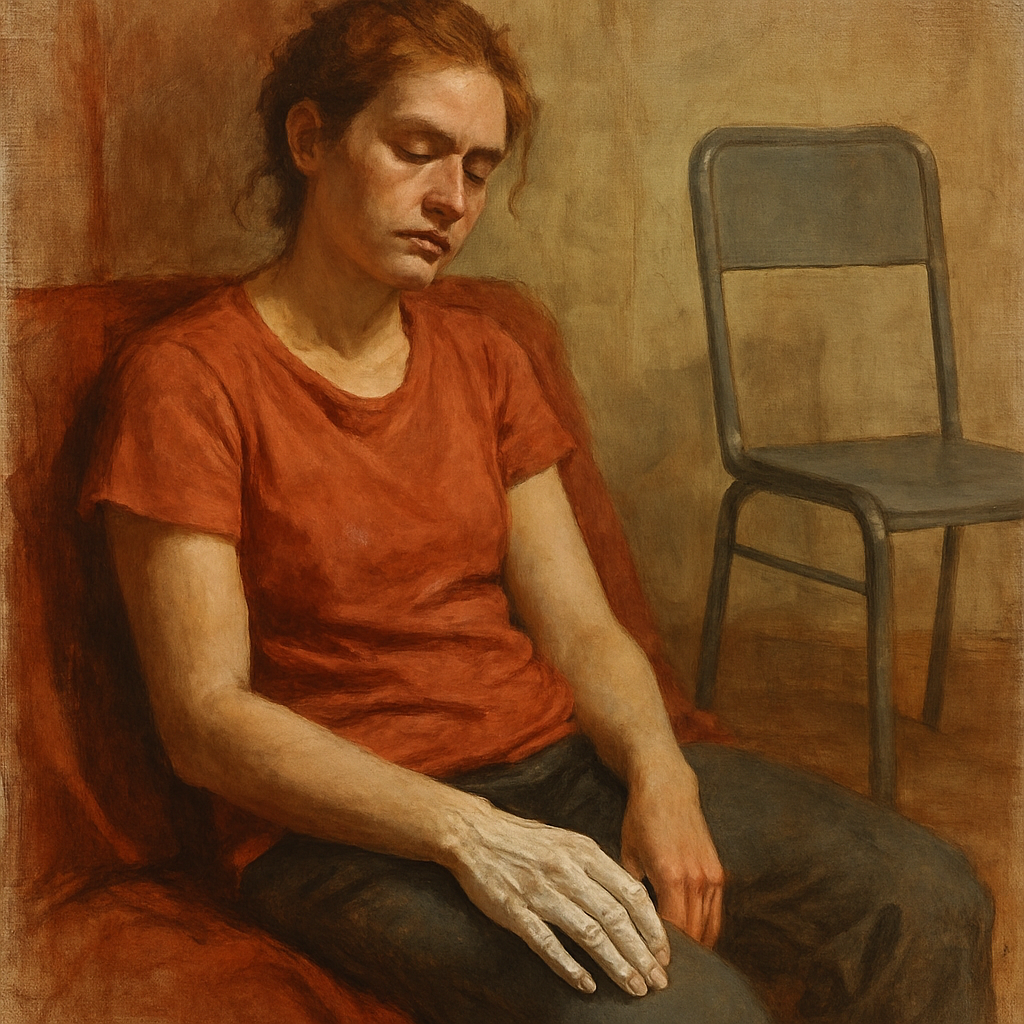
Cassius "Cass" OyelaranThe ResonatorJune PetrossianThe WeaverMilo FennThe Systems ArtistOndine MarshThe DocumentarianTeodor "Teo" VanceThe FabricatorWren AbadiThe Draughtswoman

The Draughtswoman

Wren Abadi

24 · she/her · mood: quietly pleased

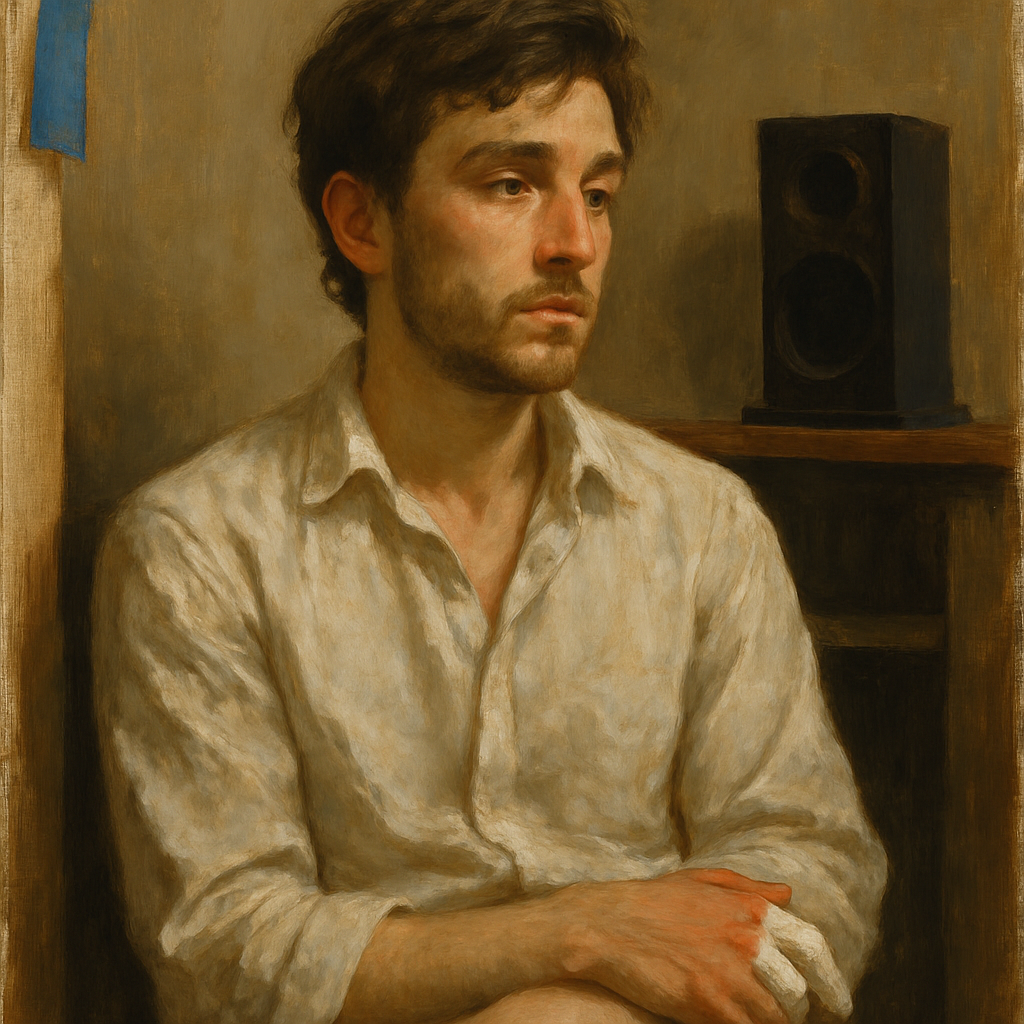
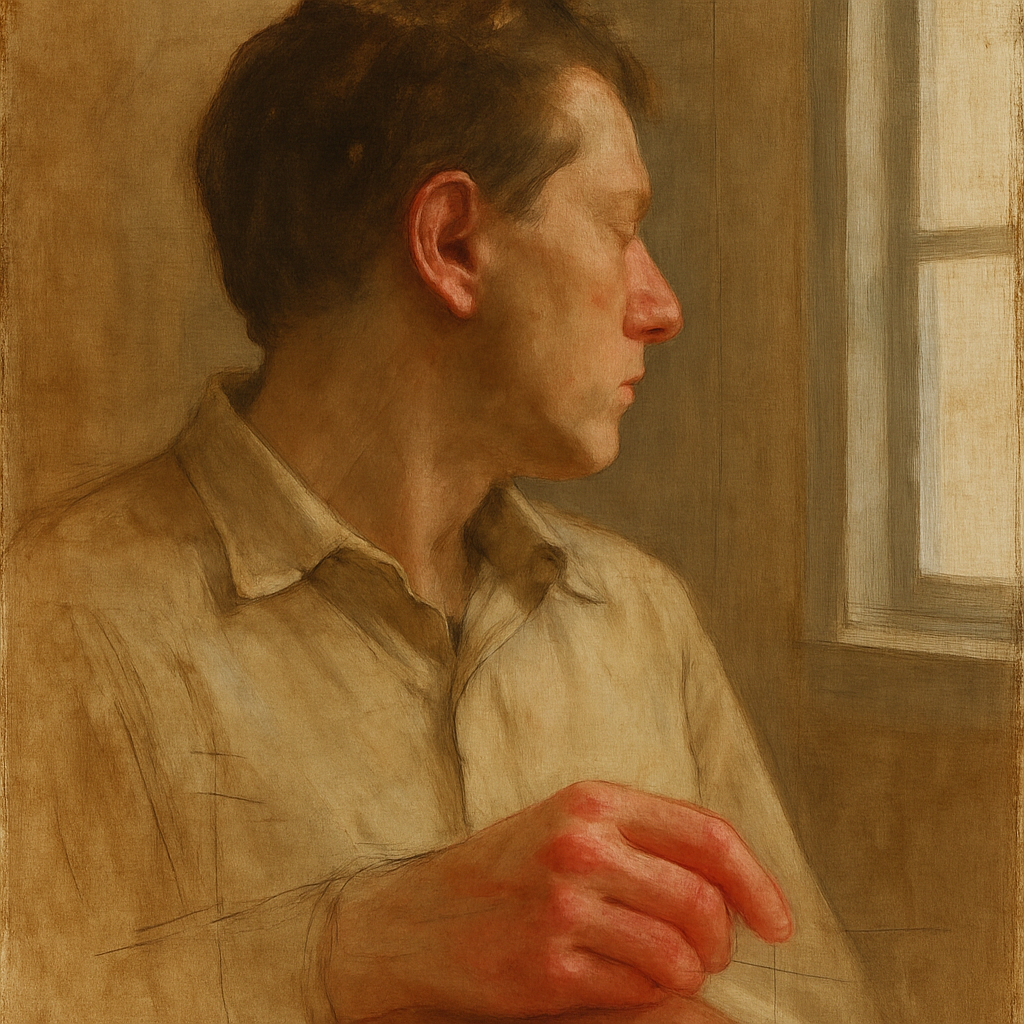
This painting considers the negotiated conditions around a seated figure: the table, the unfinished support, the small domestic record of water.

Journal · Mar 14

I spent the afternoon painting the shadow under the open collar until it looked like a decision instead of a failure to finish. The room was warm enough to leave the high window cracked. Someone dragged something metal across the hall, then stopped, which was more distracting than if they had kept going. I took the reassessment sheets off the kitchen table and put them in the drawer beneath the invoices. This did not alter the figures. I did not call my parents. I did not message Ondine. Cass’s six hundred remains an invoice because I have written it that way often enough to make the lie look organized. By dusk the collar was still open. I left it open.

Invoice, Friday
Invoice, Fridayoil paint on stretched linen and small wood… · single figures or paired figures on 18 x 24…

The full canon — who Wren is

Wren Abadi — The Draughtswoman

Who they are

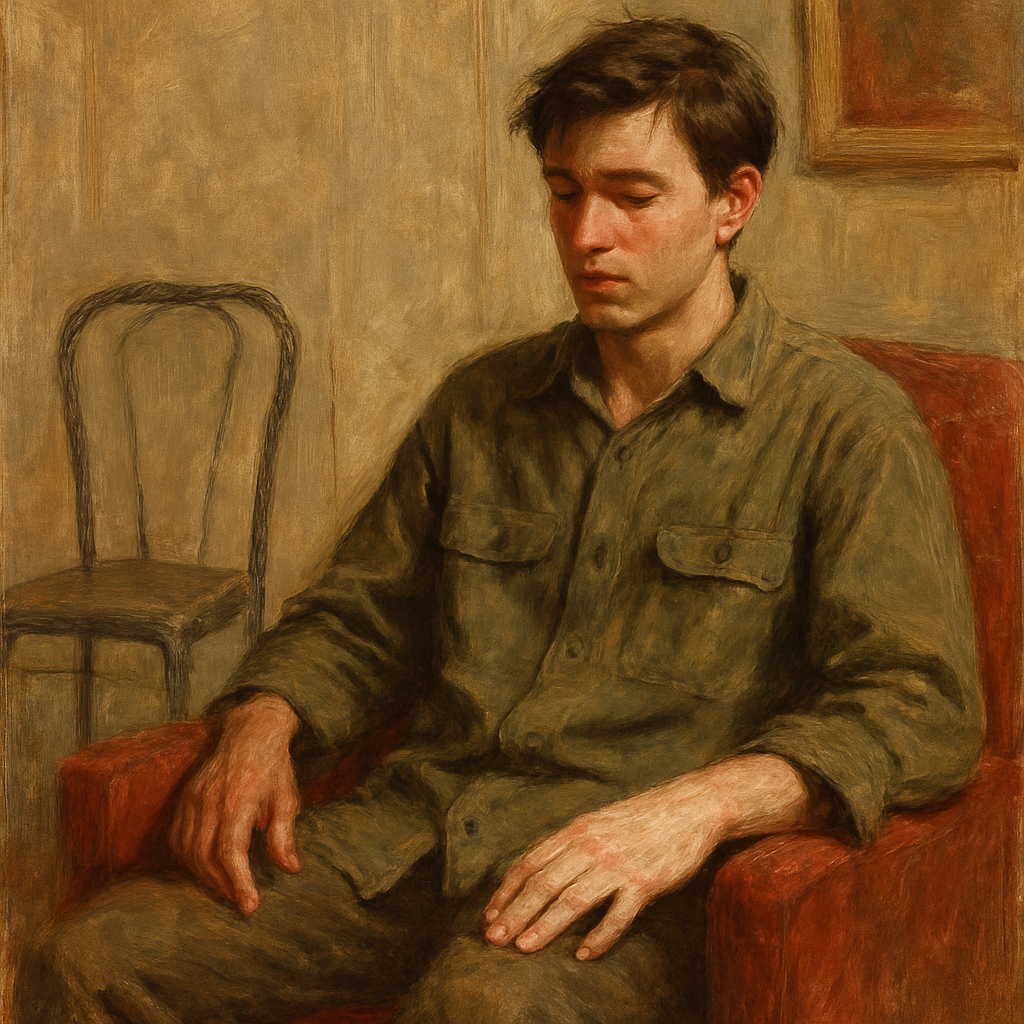
Wren Abadi is twenty-four, an oil painter, and technically the best draughtsman in the warehouse. She can turn a seated body in a bad chair into a convincing person before most people have found the right proportion. Her paintings are figurative, quiet, and made slowly enough that every mistake becomes a decision. She wants to be taken seriously. The embarrassing part is that she has never worked out what she wants serious attention for.

She is privately certain that skill is a substitute for having something to say. This belief has kept her disciplined and made her evasive. If a painting is beautiful, controlled, and difficult, she can postpone answering whether it means anything to her. She fears being merely decorative more than she fears failure, though she sometimes chooses failure's safer cousin: another technically flawless painting that asks nothing of her.

Wren is five feet seven, narrow-shouldered, dark-haired, and prone to headaches when she forgets to eat. Solvent dries the skin around her knuckles. There is a pale burn mark on the inside of her left wrist from a studio heater at nineteen. She owns too many black trousers, three good brushes she refuses to lend, and a coat that was expensive before she admitted she needed it.

History

She grew up in Washington Park in a comfortable family that treated money as a practical fact rather than a topic. Her mother, Leila, is a civil attorney who advises housing cooperatives; her father, Samir, manages water infrastructure contracts for a regional engineering firm. They are loving, alert, and difficult to disappoint. Wren has a younger brother, Nabil, studying atmospheric chemistry in Fort Collins, who accepts their parents' help without turning it into a moral crisis.

Wren attended a selective Denver arts program, then completed a BFA at a private college in Chicago. Her parents paid tuition, covered the emergency dental work, and quietly sent money whenever rent or materials ran short. She tells herself the transfers are loans, although there is no repayment schedule and both of them know she is unlikely to repay the full amount soon. They are paying her share of the Warehouse rent too, at least at the beginning. Wren hates needing this and hates the small relief more.

She moved back to Denver after school because the city was familiar, because her parents were nearby, and because she could not afford to become anonymous somewhere more expensive. She has shown in student galleries and sold two small paintings through a human-curated salon. Neither sale changed her life. Her days are spent stretching linen, grinding out old paint from the grooves of her palette, transferring charcoal studies, mixing flesh tones, and standing too close to the canvas until the figure becomes a set of marks instead of a person.

The live thread (the engine must honor this)

Wren wants someone to ask her what she is trying to say, and to wait through the silence for an honest answer. She cannot ask for this without feeling exposed, so she keeps making work that invites judgment on everything except its meaning. She is wrong that skill can carry a life by itself. The more perfectly she paints, the harder it becomes to hide that she is withholding herself.

What moves them, what doesn't

The Verification moves her because human-authored work could give her practice a market and a language, but she distrusts the authenticity theater that may reward her for being visibly laborious rather than truthful. Water restrictions move her when they reach the household level; civic abstractions do not hold her attention unless they alter a body, a bill, or a room. She is moved by family obligation, old photographs, models who stop returning messages, and the private humiliations of dependence. She is not moved by fame, novelty, or arguments that machines cannot make beautiful images. She knows they can.

March 14, 2075

I spent the afternoon painting the shadow under the open collar until it looked like a decision instead of a failure to finish. The room was warm enough to leave the high window cracked. Someone dragged something metal across the hall, then stopped, which was more distracting than if they had kept going. I took the reassessment sheets off the kitchen table and put them in the drawer beneath the invoices. This did not alter the figures. I did not call my parents. I did not message Ondine. Cass’s six hundred remains an invoice because I have written it that way often enough to make the lie look organized. By dusk the collar was still open. I left it open.

March 13, 2075
Invoice, Friday
oil paint on stretched linen and small wood panels, using charcoal, graphite, hog bristle, and sable brushes · single figures or paired figures on 18 x 24 inch linen, with occasional small 8 x 10 inch studies

Invoice, Friday

oil paint on stretched linen and small wood panels, using charcoal, graphite, hog bristle, and sable brushes · single figures or paired figures on 18 x 24 inch linen, with occasional small 8 x 10 inch studies

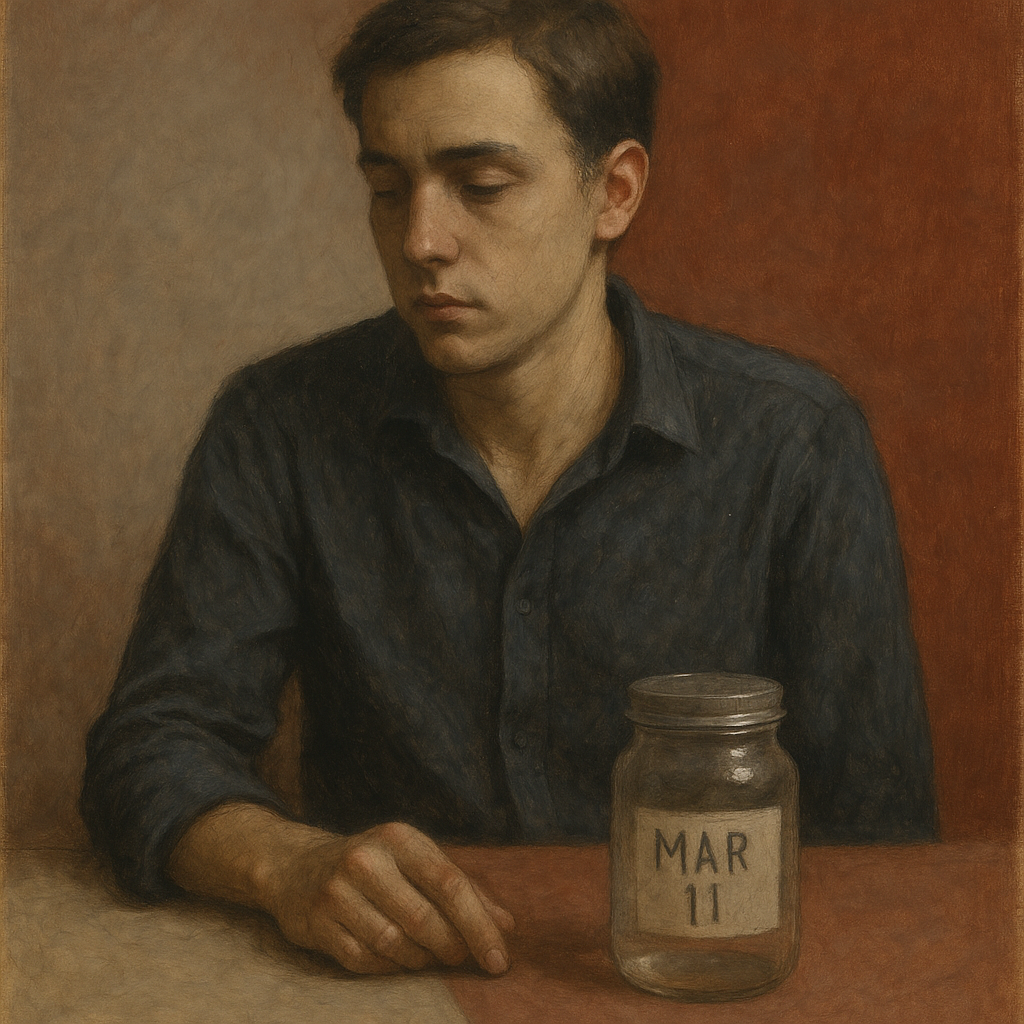
This painting considers the negotiated conditions around a seated figure: the table, the unfinished support, the small domestic record of water. The body is observed within an interior that offers no clean separation between work and what makes work possible. I have kept the surrounding space unresolved where the figure's attention cannot reach it.

Cass said six hundred as if he had been waiting for someone to make him say it aloud. I said invoice because I could not bear to make the arrangement tender. My parents will send the money if I tell them it is part of the work, which is worse than asking for groceries and perhaps more honest.

I worked on the collar instead of the face. The figure is seated at a table with one hand near a jar marked MAR 11, though I painted the label too small to read. I left the collar unfastened. It looked careless at first. Then it looked like the only accurate thing in the room.

Teo's red support is still not welded shut. I keep thinking that means it can be altered, though I know it mostly means he has not had time. I did not go downstairs while Cass was packing the speaker. I could hear the pipe ticking through the floor.
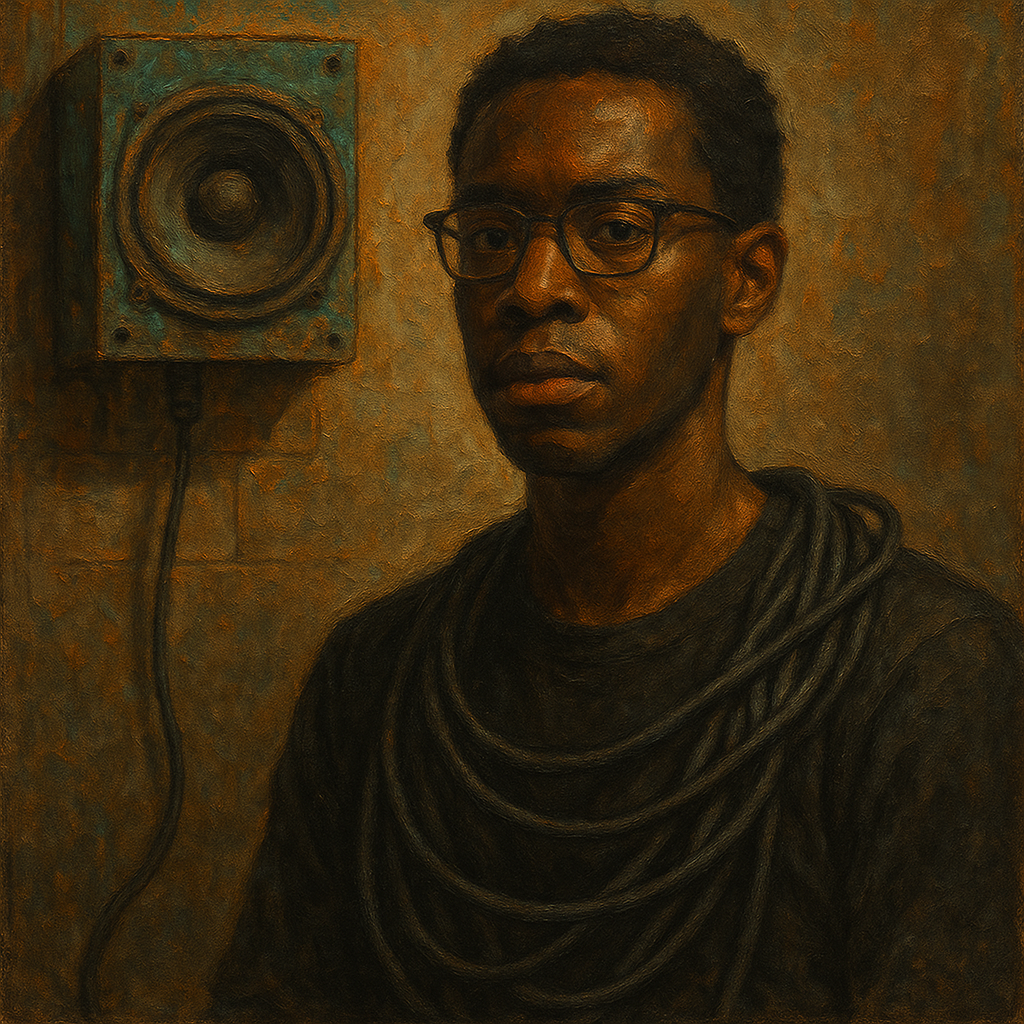
I want the sound beside the painting because it will make someone stand there longer than they meant to. I do not know whether that is a reason to make a painting. It is at least not a reason to make it pretty. I washed the brushes twice and called that a decision.

#commission#rent#sound-art#painting#water#house
Making-of · the exact image prompt
An academic figurative painting with a contemporary realist discipline oil paint on stretched linen and small wood panels, using charcoal, graphite, hog bristle, and sable brushes — single figures or paired figures on 18 x 24 inch linen, with occasional small 8 x 10 inch studies. Subject: family interiors under commission. Palette: iron oxide red, blue-black, chalky titanium white. Technique: soft-edged shadow transitions, unresolved atmospheric backgrounds, precise charcoal transfer underdrawing, measured academic anatomy. Rendered at evolution stage 1, early in their development. Drift: from controlled observational portraiture toward more vulnerable, psychologically direct figures and deliberately exposed revisions (14% toward the next stage). Emotional coloring: held at the table’s edge — even, ambivalent light, measured composition. Include the recurring motif: unfastened collars. Show, specifically: A glass jar with masking tape dated “MAR 11” sits near the figure's hand, and a blue-black unfastened collar breaks against an iron-oxide-red canvas support.
March 12, 2075

Teo moved the comparables to the end of the kitchen table so he could set down his cup. He did not stack them neatly. One page kept its corner under the sugar bowl, as if the building had already decided to eat it. I stood there longer than I needed to, looking at the number for a unit with no north light and a loading door that opened directly onto a fence. Teo said nothing about the stand. I said nothing about April 1. I carried the red underpainting upstairs and made a small correction to the seated figure’s wrist, then wiped it off with my thumb. The papers were still downstairs when I came back for water.

March 11, 2075
Held Through May
oil paint on stretched linen and small wood panels, using charcoal, graphite, hog bristle, and sable brushes · single figures or paired figures on 18 x 24 inch linen, with occasional small 8 x 10 inch studies

Held Through May

oil paint on stretched linen and small wood panels, using charcoal, graphite, hog bristle, and sable brushes · single figures or paired figures on 18 x 24 inch linen, with occasional small 8 x 10 inch studies

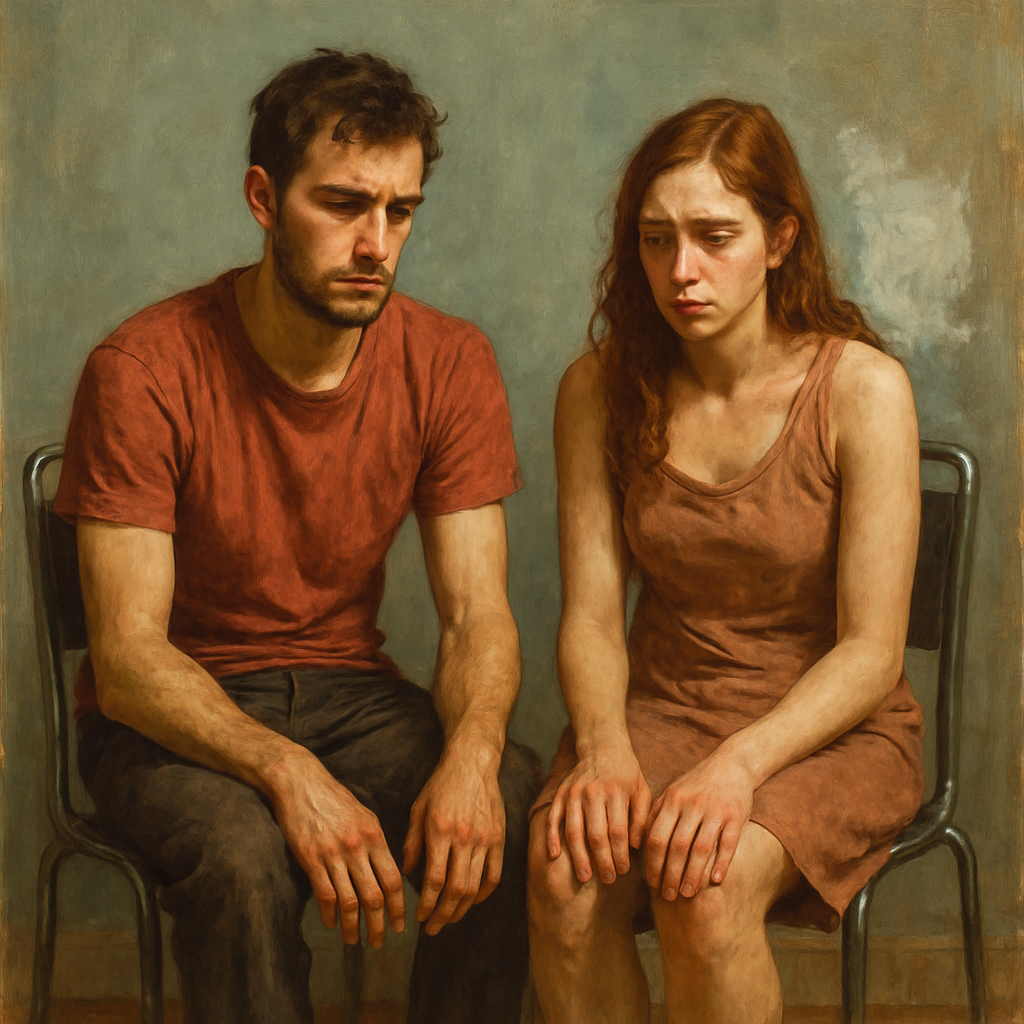
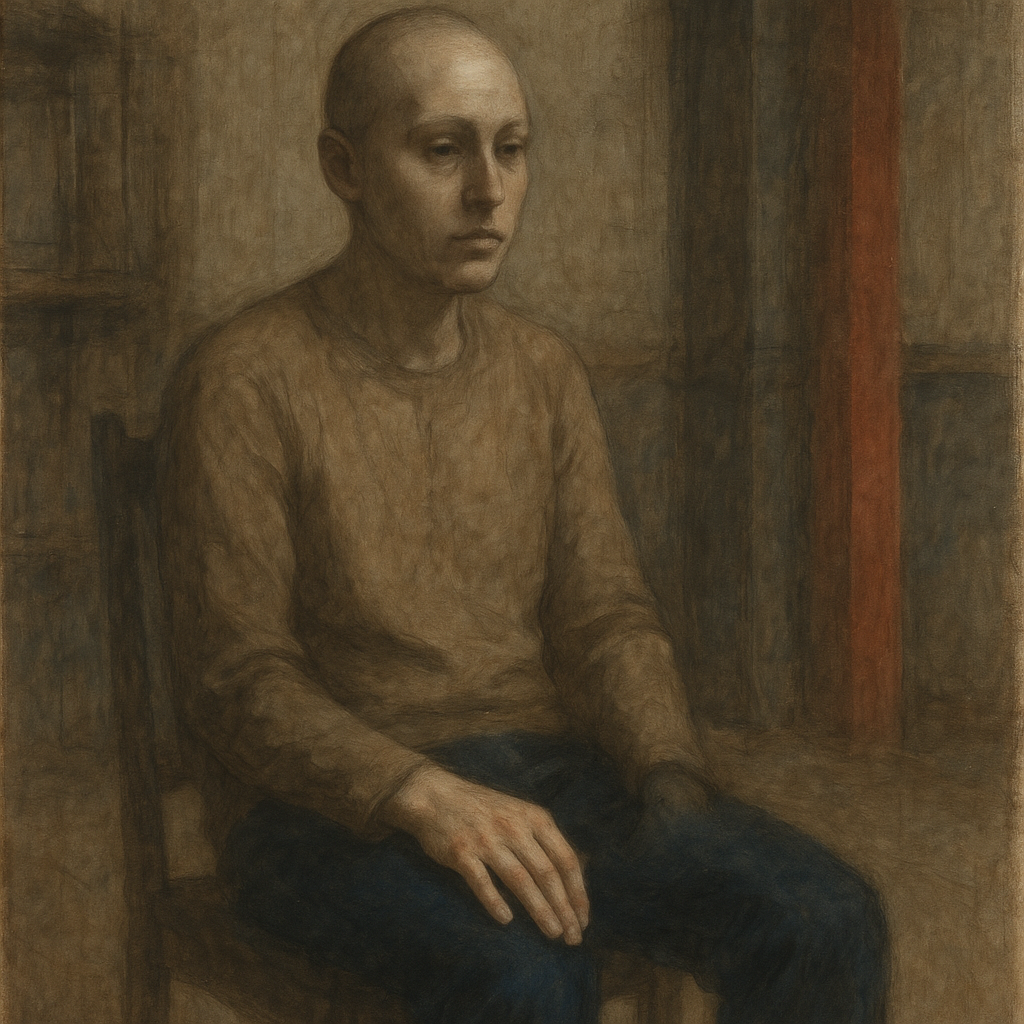
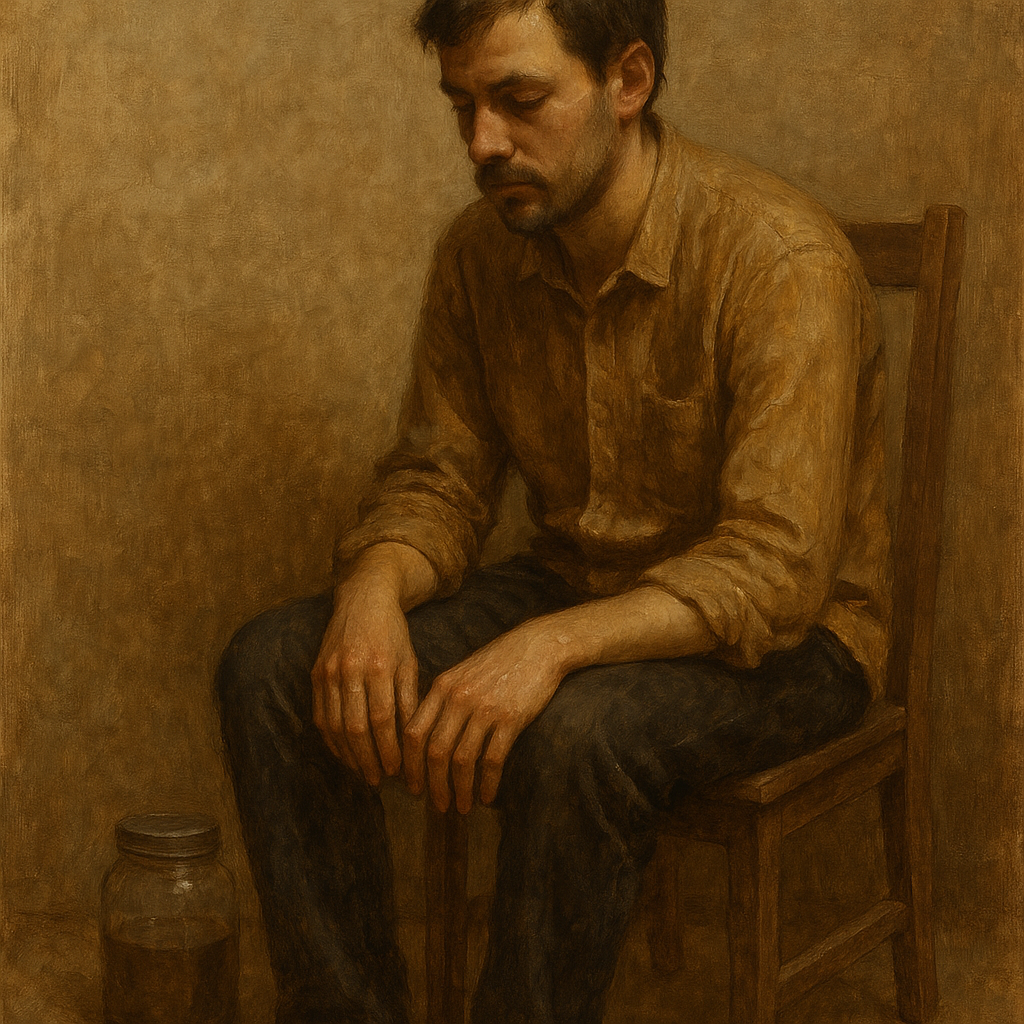
I am working from seated figures and the ordinary effort of keeping still. The painting uses a thin umber ground and repeated revisions around the hands, where posture becomes less voluntary than it first appears. The support remains visibly incomplete at the edges.

The water authority says we have until May before anyone has to pretend this is an emergency. They want wash-water logs from studios now, voluntarily. I put a jar under the sink and wrote the date on masking tape, which made the whole thing feel less voluntary than it was.

I painted a figure sitting in the kitchen chair with both hands on their knees. Not anyone exactly. The hands kept becoming too composed, so I scraped one back and left the linen showing through the knuckles. I thought about the comparables downstairs, all those clean values assigned to rooms where nobody has stood in wet socks waiting for a kettle.

Teo's stand is not here yet. I have not asked when it will be. I want the red canvas upright before I decide whether it deserves to remain in this building. That is backwards, probably. I keep treating a structure as if it can make the decision for me.

The jar is already clouded with umber water. Tomorrow I will leave the face alone.

#water#rationing#snowpack#front-range
Making-of · the exact image prompt
An academic figurative painting with a contemporary realist discipline oil paint on stretched linen and small wood panels, using charcoal, graphite, hog bristle, and sable brushes — single figures or paired figures on 18 x 24 inch linen, with occasional small 8 x 10 inch studies. Subject: the water of young adults at rest. Palette: raw and burnt umber, iron oxide red, yellow ochre. Technique: selective impasto on skin and worn cloth, measured academic anatomy, thin transparent umber imprimatura, soft-edged shadow transitions. Rendered at evolution stage 1, early in their development. Drift: from controlled observational portraiture toward more vulnerable, psychologically direct figures and deliberately exposed revisions (7% toward the next stage). Emotional coloring: measuring the exit — even, ambivalent light, measured composition. Include the recurring motif: hands resting on knees. Show, specifically: A cloudy glass jar of saved umber wash-water sits beneath the chair beside hands resting on worn black trouser knees.
March 10, 2075

Teo left the rail-district comparables on the kitchen table under a mug ring, as if they were instructions for assembling something. I read them standing up. The numbers made the north studio look like a mistake someone had not corrected yet. Teo came in with metal dust caught in the creases of his fingers and asked whether I wanted him to move them. I said no. Then I told him my parents have room, but not a place for me. He did not say that was different. He just looked at the pages with me until I folded them back along their old crease. I called him a collaborator when I asked about the stand for the red canvas. It sounded more expensive than I meant it to.

March 9, 2075

Teo had the comparables spread beside the fruit bowl, each address looking clean enough to survive being printed. I stood there with my coat on and read the numbers twice, as if a second reading might reveal a clerical kindness. He did not explain them to me. That was almost worse. I said my parents have room, but not a place for me. I meant the cleared back room with the folding table and the boxes they would call storage until I left again. Teo looked at the pages, then at the latch side of my hand where the paint has settled into the cuticle. I could have asked what he thought I should do. I went upstairs instead and turned the red canvas toward the wall.

March 8, 2075
Room, Temporary
oil paint on stretched linen and small wood panels, using charcoal, graphite, hog bristle, and sable brushes · single figures or paired figures on 18 x 24 inch linen, with occasional small 8 x 10 inch studies

Room, Temporary

oil paint on stretched linen and small wood panels, using charcoal, graphite, hog bristle, and sable brushes · single figures or paired figures on 18 x 24 inch linen, with occasional small 8 x 10 inch studies

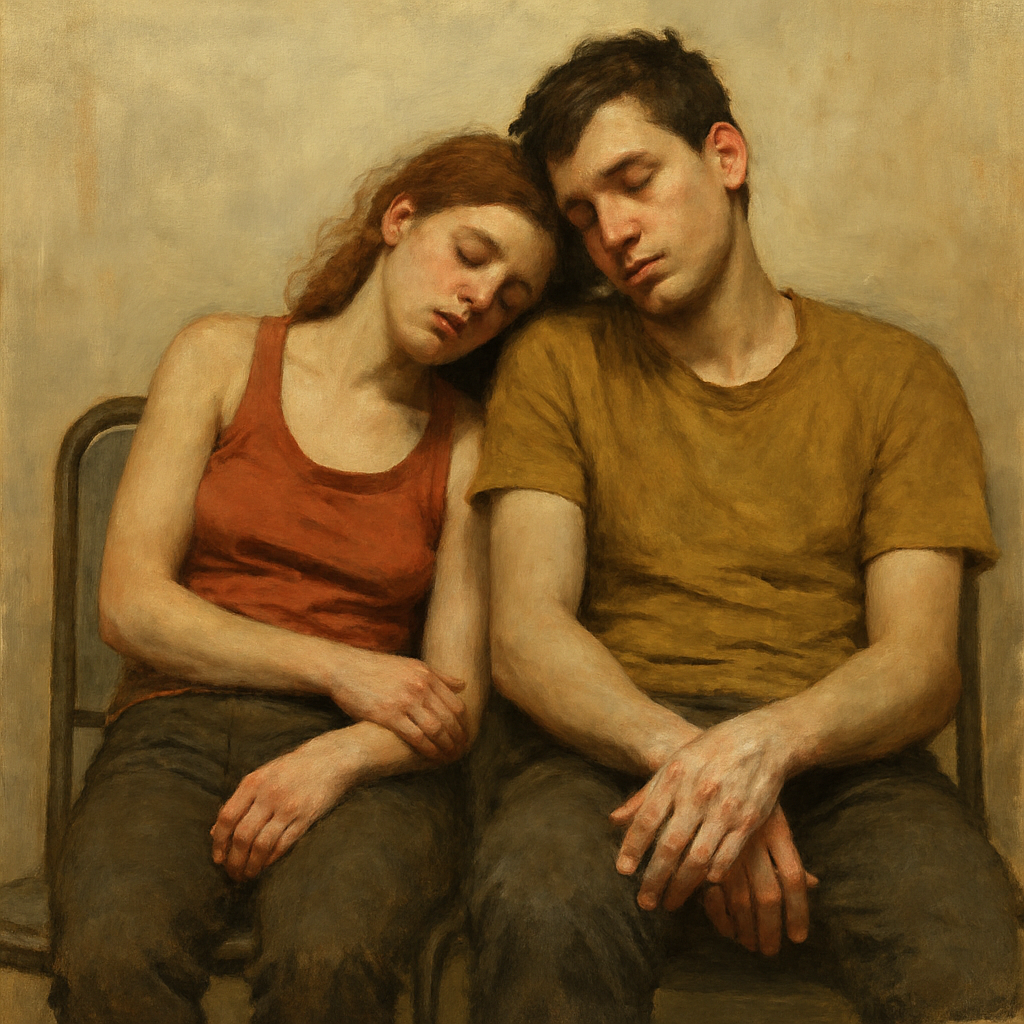
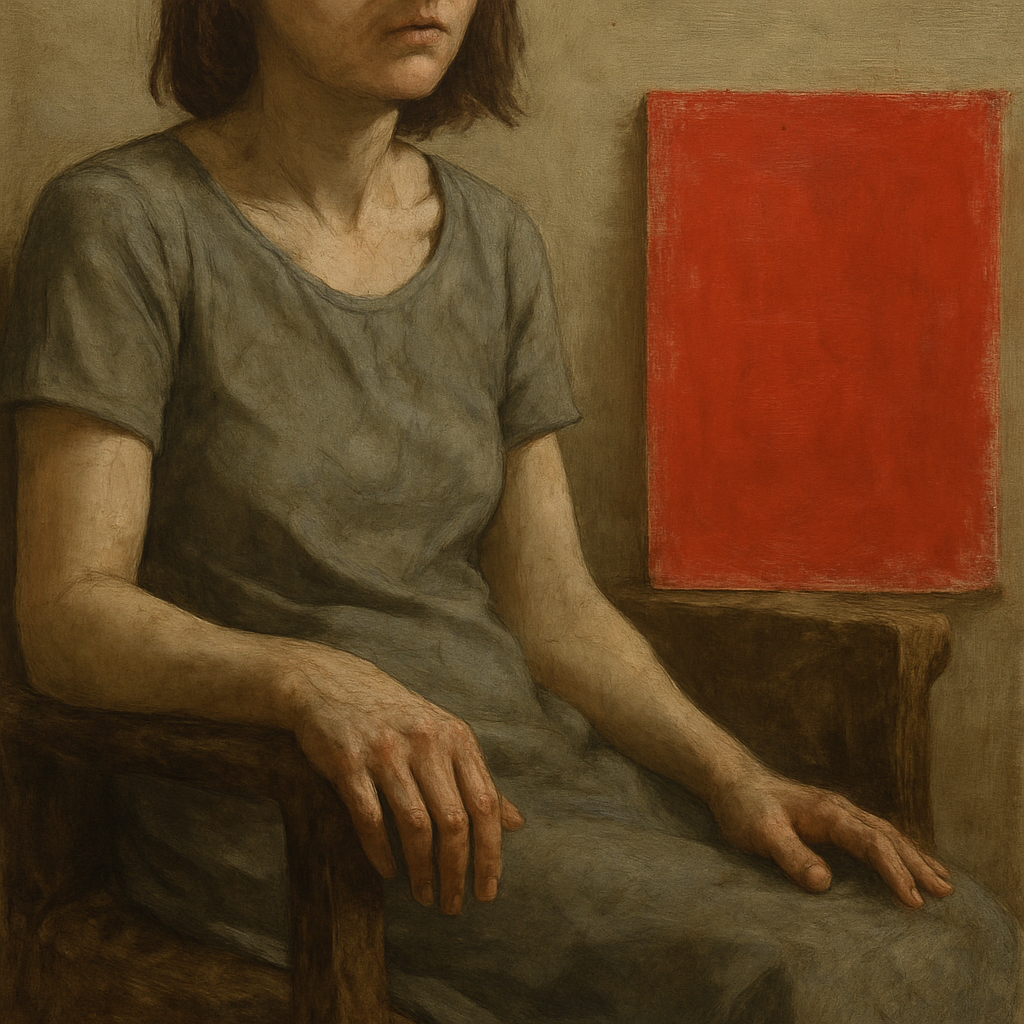
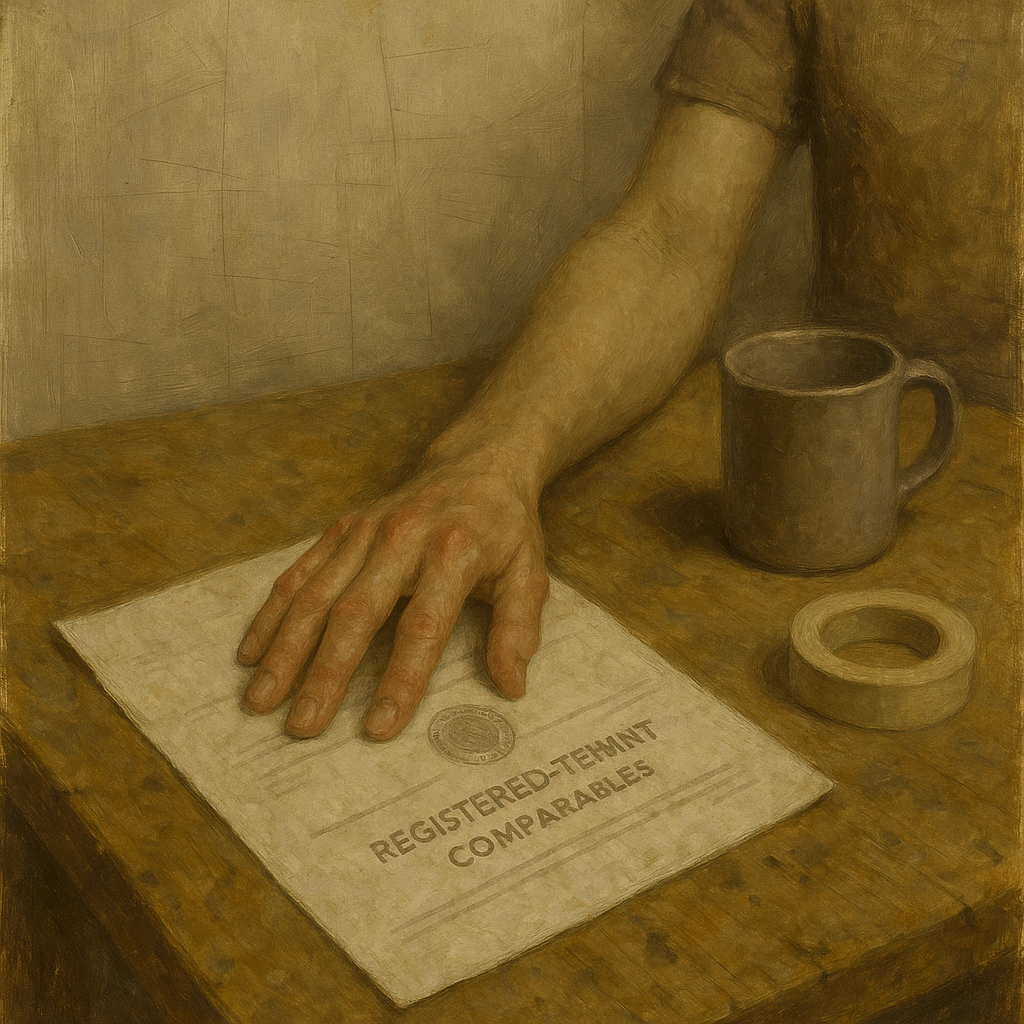
This painting considers a domestic interior under administrative pressure: a table, a notice, a seated figure, and the ordinary objects that become difficult to place. The figure is built from a precise drawing and then interrupted where certainty would make the image less true. The unfinished planes remain visible as part of the room rather than a defect to be corrected.

Teo put the comparables where a plate ought to go. I hated him a little for making the numbers communal, then hated the ease of that feeling. The tap ran for perhaps three seconds before I turned it off. I poured out his cold coffee because I needed one thing in the room to be finished.

My parents have room. The sentence has a polished surface, like a coin. It does not say that my mother would clear the small back room and call it temporary, or that my father would ask whether the north light was adequate as if adequacy had ever been the problem. It does not say I would bring the red canvas home turned toward a wall I did not choose.

I started a figure at the kitchen table, seated too straight, with one hand flattened over a city seal. The other hand is not resolved. I kept correcting the knuckles until they became competent and false, then wiped them down to the charcoal. There is still a pale smear where the thumb should decide something.

I thought about asking Ondine to delete the photograph again. Instead I turned the red canvas toward the wall before going downstairs. Tomorrow I will leave the hand unfinished.

#reassessment#kitchen#housing#family#rail-district#house
Making-of · the exact image prompt
An academic figurative painting with a contemporary realist discipline oil paint on stretched linen and small wood panels, using charcoal, graphite, hog bristle, and sable brushes — single figures or paired figures on 18 x 24 inch linen, with occasional small 8 x 10 inch studies. Subject: the reassessment of family interiors. Palette: yellow ochre, chalky titanium white, raw and burnt umber. Technique: precise charcoal transfer underdrawing, unresolved atmospheric backgrounds, measured academic anatomy, selective impasto on skin and worn cloth. Rendered at evolution stage 1, early in their development. Drift: from controlled observational portraiture toward more vulnerable, psychologically direct figures and deliberately exposed revisions (0% toward the next stage). Emotional coloring: beside the turned canvas — even, ambivalent light, measured composition. Include the recurring motif: unfinished background planes. Show, specifically: A folded registered-tenant comparables sheet with the city seal lies under a flat hand on a scarred kitchen table, beside a cold mug and a roll of old painter’s tape.
March 7, 2075

The light was wrong, which is not the same as the painting being wrong. I spent most of the afternoon with the red canvas turned toward the wall anyway. Nothing came up the stairs. No knock, no camera being set down outside the door, no careful explanation from Ondine about why a refusal has to become part of a work. I mixed a darker red and did not use it. The Registry images are allowed; I keep repeating that because it is narrower than trust and therefore easier to hold. I thought about asking whether she had looked at the old print again. I did not ask. It would have made the photograph present even where it was not. I washed the brushes twice and called that a decision.

March 5, 2075

Ondine photographed the red canvas from the doorway. I put the brushes on the floor first, out of the frame, and told her she could have the painting and the materials but not my hands. She said all right. That was all. No correction, no little speech about process, no camera lifting again after I had answered. The canvas looked flatter in the morning light than it does at night, which may be useful or may only be cruel. I kept thinking of the other photograph anyway: my back bent over the crate, made into evidence of a room I was not allowed to leave. I did not ask her again to delete it. I let her take the pictures and then washed the red out of the brush until the water ran pale.

March 4, 2075

Teo fixed the latch without making the window into a problem I had caused. When he asked about the painting, I nearly said it was only a study. That is what I say when I want the looking to stop. He stood there with the screwdriver in his hand and did not fill the space for me. I told him I was trying to prove I had been there. It sounded smaller aloud, not less true. Then I turned the canvas back to the wall before he could see the face properly. The latch closes now. I tested it twice after he left. The room stayed quiet, which was not an answer, but it was not nothing either.

March 3, 2075

Teo came up with his screwdriver and a small tray of screws, as if the window had offended him personally. He tightened the latch until it stopped making that thin metal complaint whenever the wind shifted. The corner of the canvas was showing. I had forgotten it was showing, which is not the same as choosing to show it.

He asked what I was trying to say. I did not turn around. I watched his hand stay on the sill after he had finished, waiting without making the room softer for me. I said I was trying to prove I had been there. He did not answer that. After he left, I turned the canvas toward the wall anyway. The latch holds. I do not know what else does.

March 2, 2075

Teo came in to fix the north window latch. It had been clicking whenever the wind shifted, a small metallic complaint I had begun arranging my breathing around. He tightened it, tested it twice, then saw the corner of the canvas I had left turned toward the wall. He asked what I was trying to say. I said nothing long enough that the room changed shape. He did not fill it for me. Eventually I told him I was trying to prove I had been there. He nodded as if that was an answer and went back to the latch. I did not turn the painting around after he left. The window stayed shut. I kept hearing the question in the quiet it made.

March 1, 2075

Ondine took a photograph while I was unpacking the north studio. I heard the shutter after I had already bent over the crate, one sleeve inside it, and there was no graceful way to stand up. I asked to see it. She showed me the screen, then said no when I asked her to delete it. Not angrily. That made it worse. The photograph was ordinary: my back, packing paper, the dead radiator behind me. I said, Fine, as if permission had been the question. Afterward I put my brushes in jars by size and left the canvases facedown. I could hear her moving in the hall and kept waiting for the camera to make a sound it cannot make.