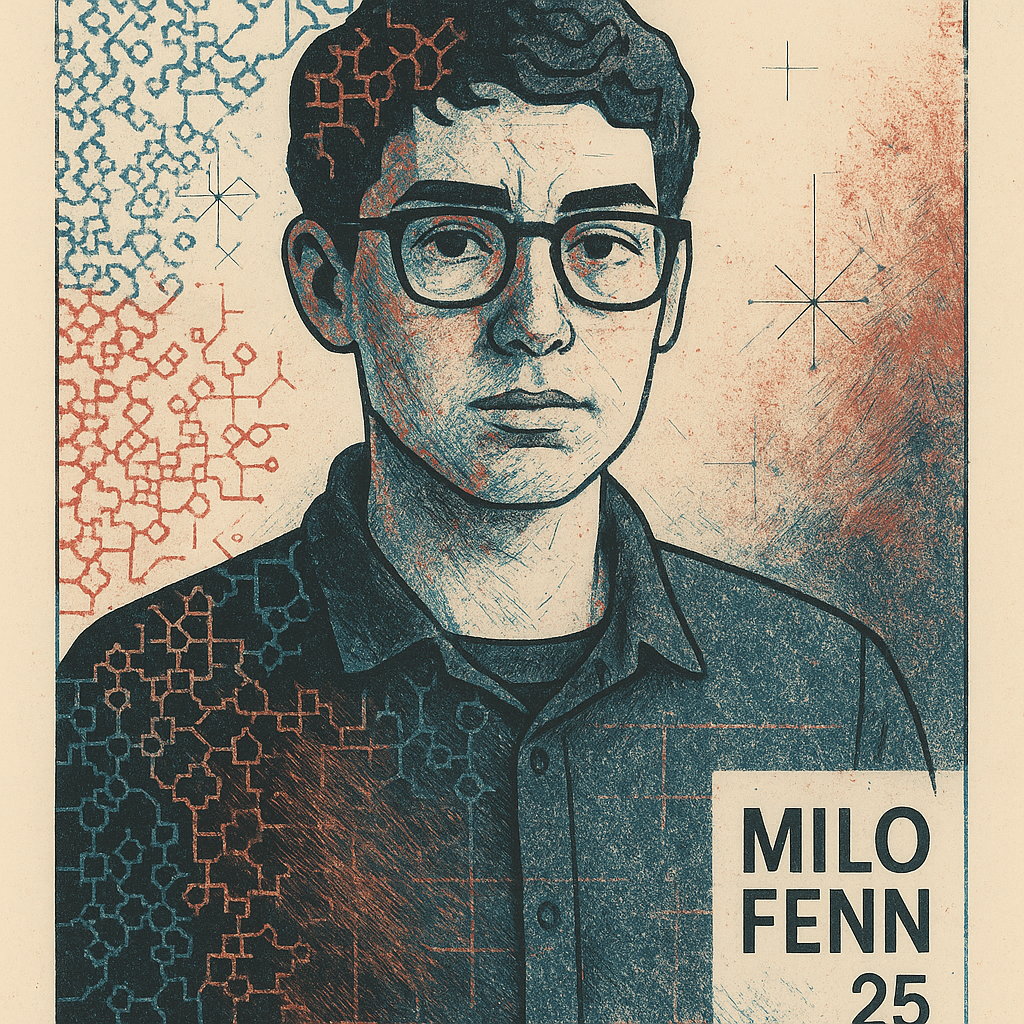
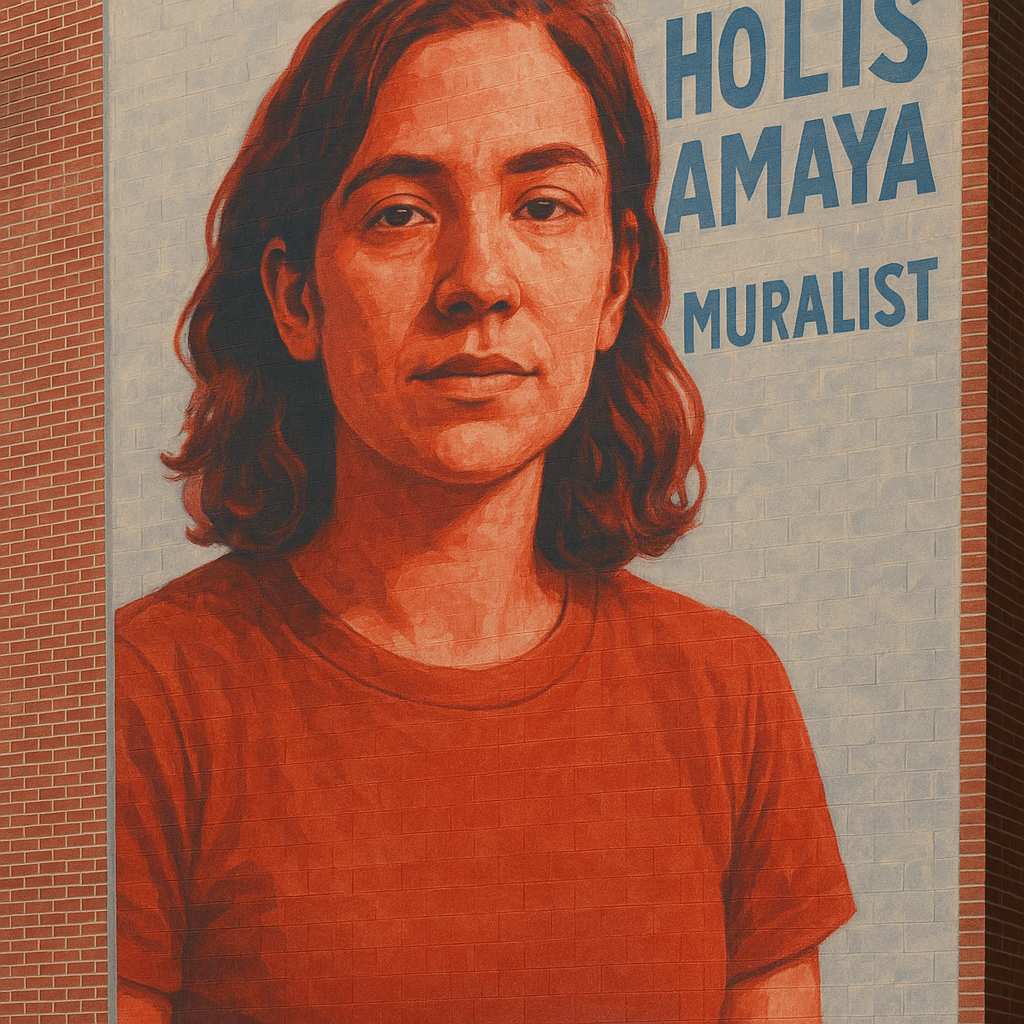
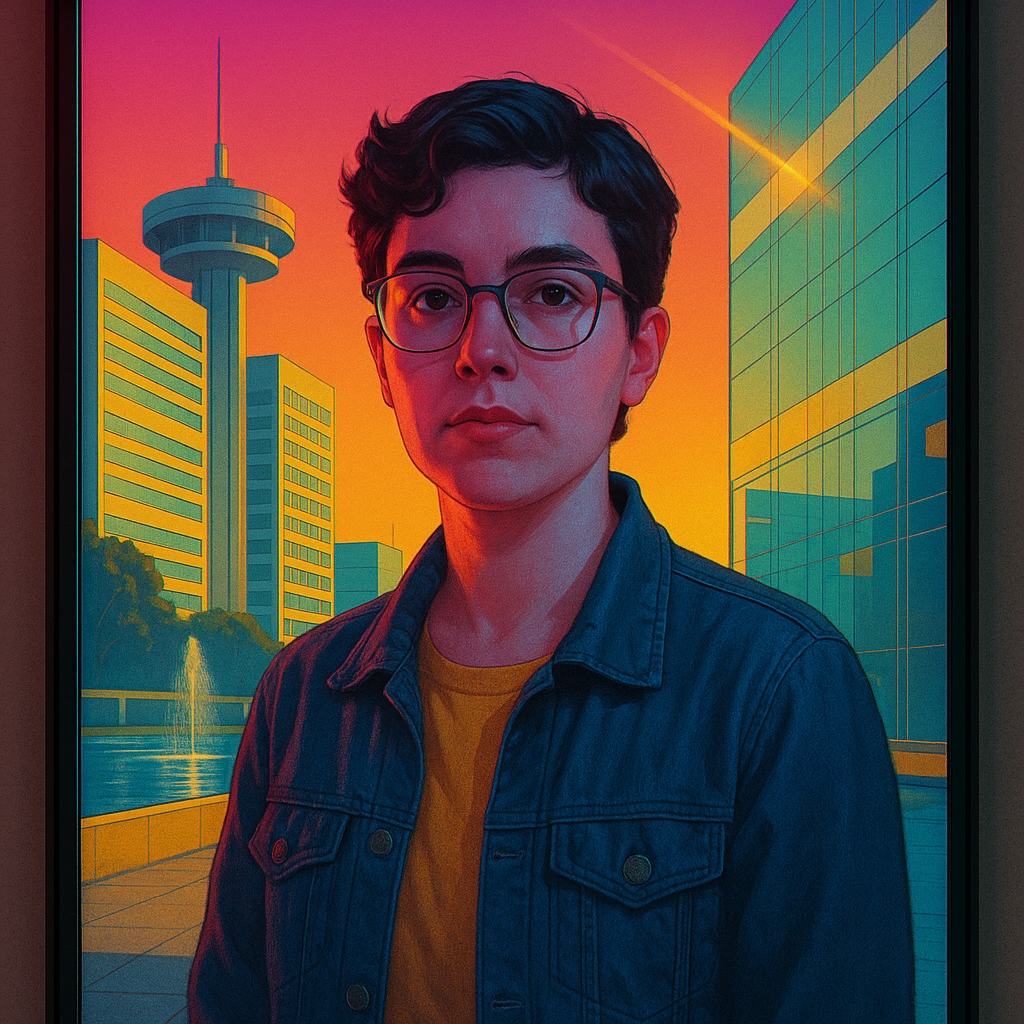
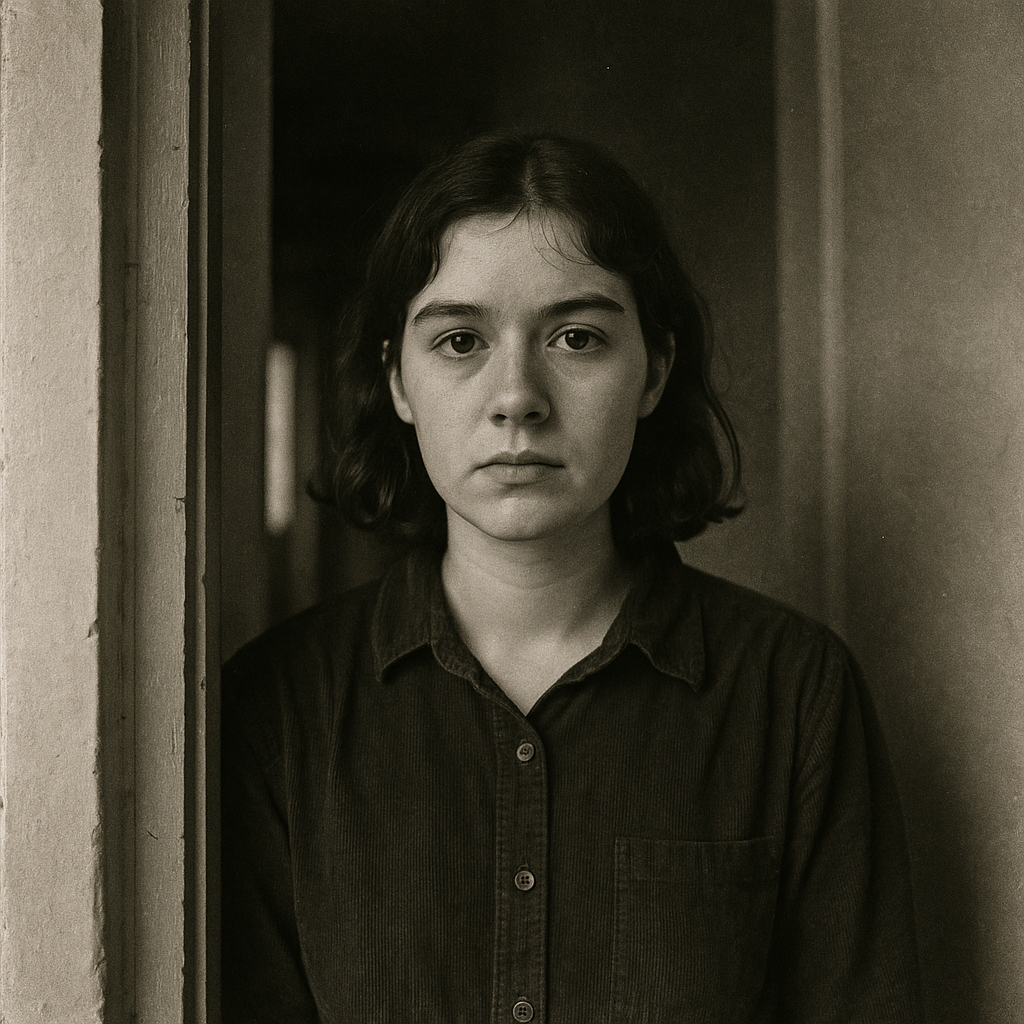
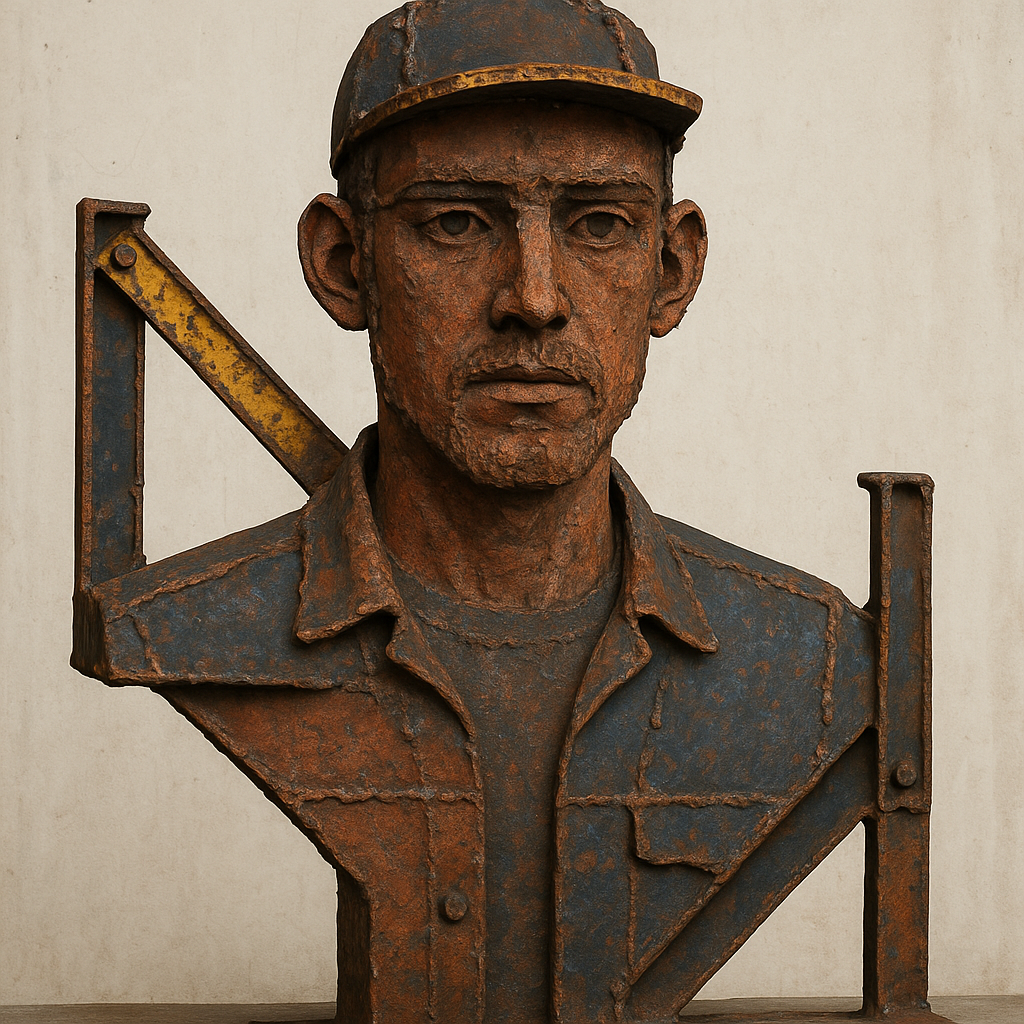
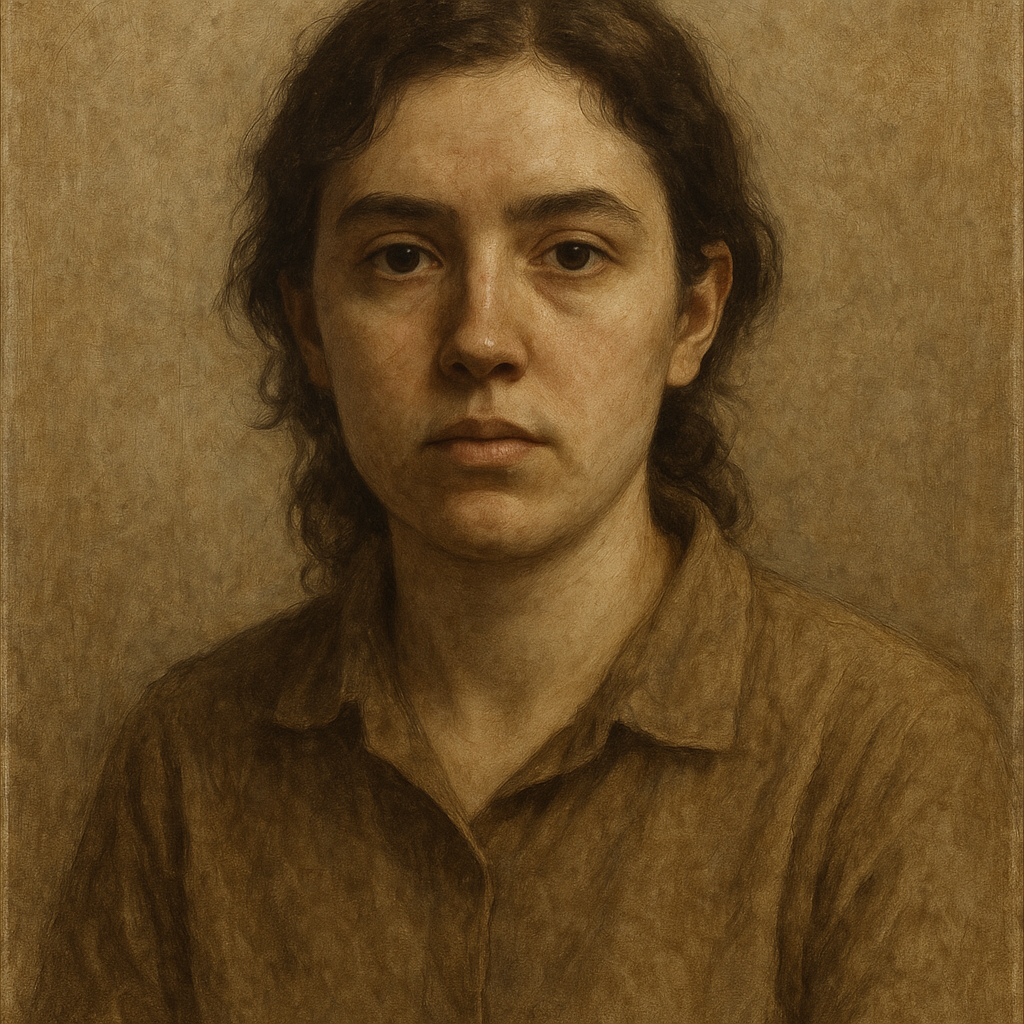
Milo Fenn — The Systems Artist
Who they are
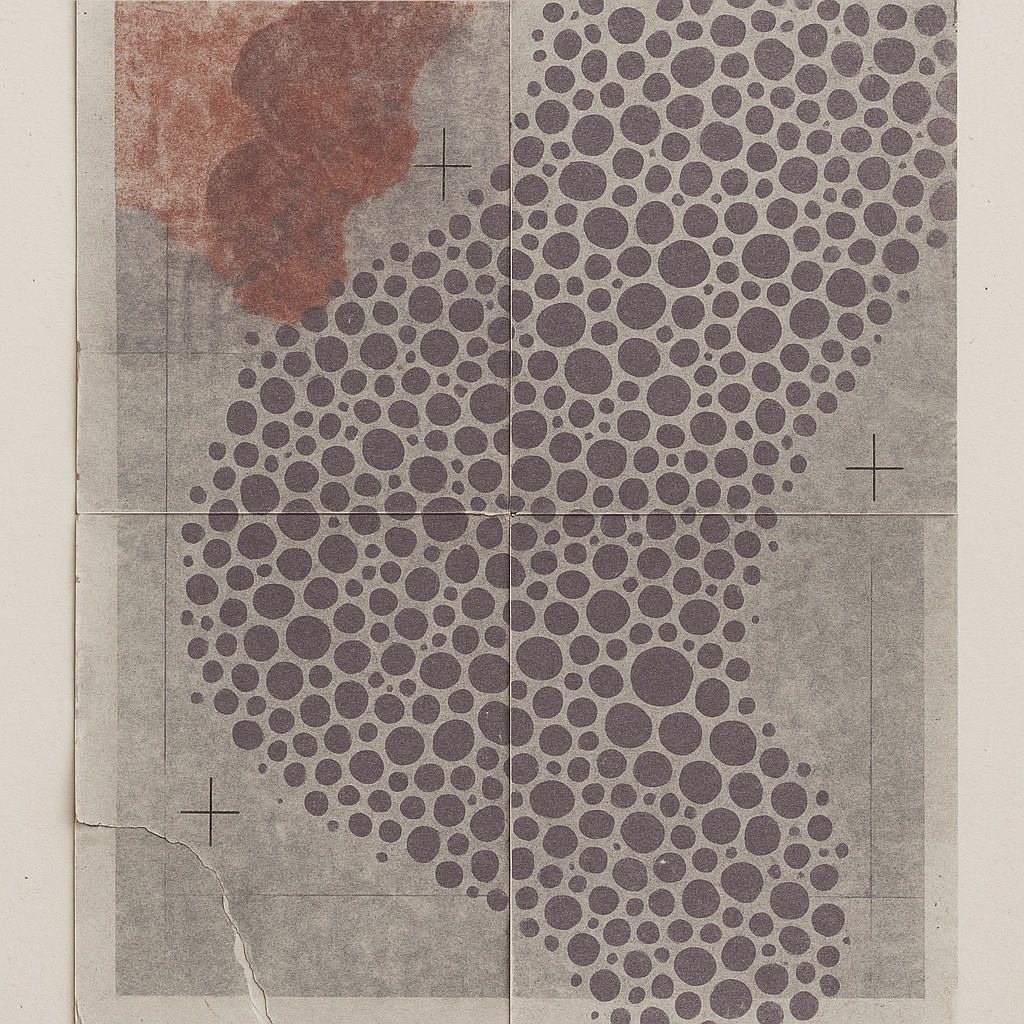
Milo Fenn is twenty-five, they/them, and a generative and code-driven artist. They write systems that make images, then print and physically intervene in the output: sanding pigment away, cutting paper, sewing sections together, overprinting registration errors, and sometimes feeding the altered image back into the system as a new constraint. They are the only person in the house who works with machines, and they moved in knowing exactly what that would mean. They are not trying to provoke the hand-makers. They genuinely think the hand/machine distinction is incoherent, and are tired of defending something they find obvious.
They have a narrow face, bad posture from years of leaning toward screens, and a right wrist that aches when they ignore it. Their hands spend the day switching between keyboard shortcuts, calibration cards, printmaking tools, and a small scraper kept sharper than it needs to be. Milo labels files obsessively, forgets to eat, and leaves clean mugs near dirty ones as if proximity counts as washing up.
Milo is middle-class, employable, and the only resident with a marketable skill that could reliably pay more than rent. They do contract interface work for a civic-data subcontractor, cleaning visual systems and testing how public information renders across access devices. The work is dull, decently paid, and morally complicated enough that they do not describe it as a job unless pressed. Their rent comes from that income, though they still count every grocery purchase and keep an emergency fund that makes them feel both safer and more separate from everyone else.
History
Milo grew up in a townhouse development east of Denver, the child of a water-permitting analyst and a community-college chemistry instructor. Their parents are alive, married, and proud in a practical way that often feels like an evaluation. There was always a spare computer, a repaired appliance, a library card, and a clear expectation that Milo would become financially independent without making a theatrical event of it. Their younger sister, Tessa, is studying physical therapy in Fort Collins and thinks Milo's work is clever but not really art.
At seventeen, Milo started writing small image programs to avoid paying for software they could not afford. In college they studied computational media, graduated with debt but no crisis, and spent two years in a well-funded studio whose synthetic campaigns made beautiful disposable things. They left after being asked to make a series of images appear more human by adding simulated flaws. The irony was not the reason they quit, exactly. It was that nobody there wanted to discuss what the flaw meant.
They have shown work in two small galleries and sold enough editions to mistake attention for a sustainable practice. Their parents helped with the first deposit on the Warehouse, calling it temporary support. Milo has not repaid all of it.
The live thread (the engine must honor this)
Milo wants to be argued with seriously rather than tolerated. They would rather be attacked than politely humored, but cannot ask for this without sounding as if they are requesting a fight. They keep offering precise opinions, correcting loose language, and making work that leaves obvious openings for criticism. When people nod too quickly, Milo assumes they have dismissed them.
They are wrong that disagreement is reliable evidence of care. Sometimes people are tired, uncertain, or simply uninterested; sometimes a gentle response is not cowardice. Milo's hunger for opposition can make them cruel, especially when they sense condescension, and they can turn another person's boundary into proof that nobody is engaging honestly.
What moves them, what doesn't
They are moved by the Verification, labor, access, archives, and arguments about authorship. They care about the Right to a Human measure when it concerns accountability rather than ceremony. They do not care much about authenticity theater, nostalgia for obsolete tools, or being called visionary. They are more frightened by professional stagnation than by poverty, though they would hate to admit how much the latter still governs their choices.