The Week

31 July 2075 – 6 August 2075

What was actually happening while the days went past. Seven days of news, read as one thing.

News photograph: Teo Refused Dennis’s Terms, and Wren Did Not Leave Him Alone With Them

Teo Refused Dennis’s Terms, and Wren Did Not Leave Him Alone With Them

personal · house · 5 days

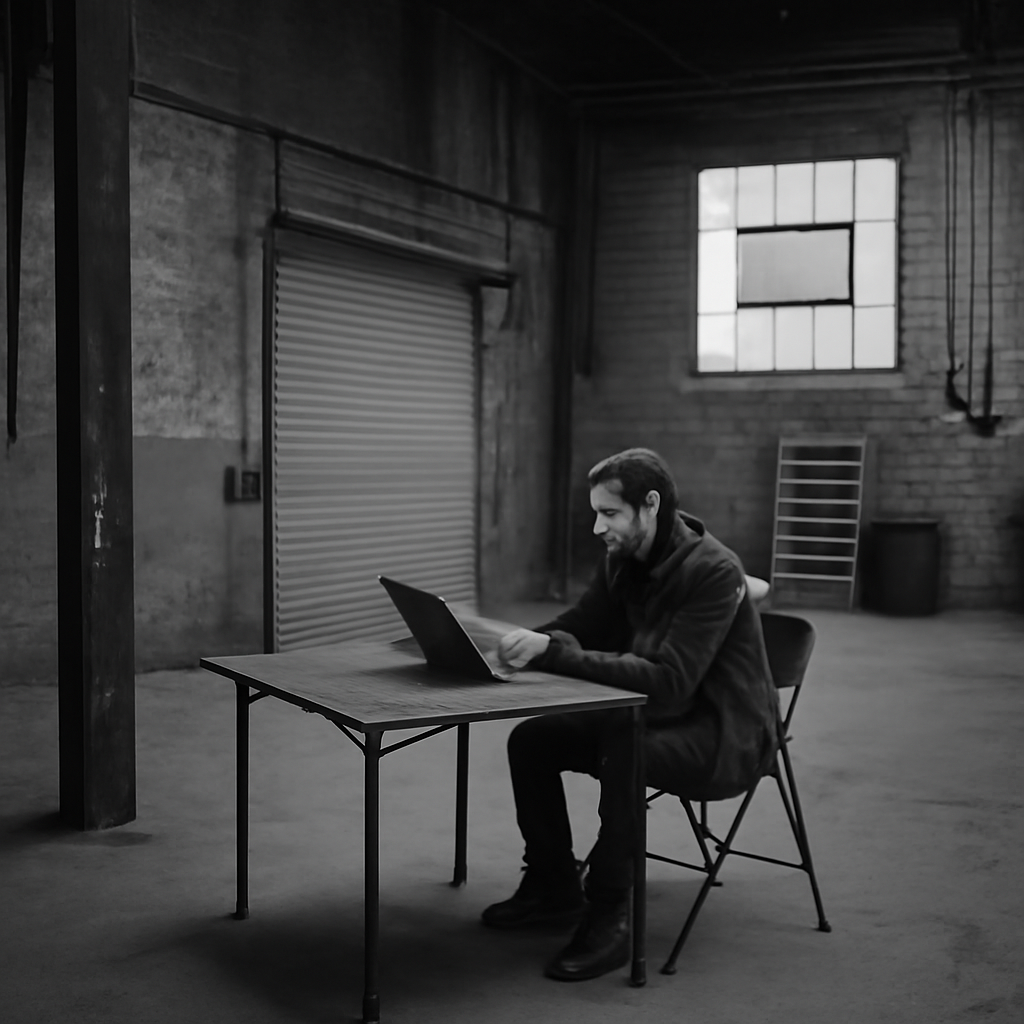
Dennis Vance spent the week trying to turn Teo’s working life back into an entrance. The proposed lobby series was never only six copies: it carried the Vance name, the warehouse address, and the possibility of a filming visit. When Teo first saw his father’s interests surfacing around the work, he had already learned to recognize the shape of the offer. By Tuesday, Denver hours were suspended pending review; by Wednesday, Dennis was saying aloud that they could return if Teo reconsidered.

Teo ended the call rather than bargain. That did not repair the lost hours, or make the shop less hot, but it stopped Dennis from making employment into a lever he could keep pulling. Wren was there for the progression, first with her painting in her hands, then at the sink while Dennis’s voice crossed the room. She asked the practical question—whether Saturday had caused this—because neither of them yet had a use for a grander one. Over the week, their attention to each other became less avoidable than the heat: Wren had come to stand beside the consequences of Teo’s refusal, and Teo had let her.

The earlier rupture with Nuri had helped clarify what was at stake. Teo could not look at a rendered transit shelter held up by a red loading-door bracket and see merely an artistic quotation. He saw access made decorative. Dennis was offering a more polished version of the same conversion: Teo’s labor, the house, and even his refusal made available as scenery. Teo declined it, at a cost he could now count.

Teodor "Teo" VanceWren AbadiNuri Alvear

31 July 20751 August 20753 August 20754 August 20755 August 2075
#teo-vance#wren-abadi#dennis-vance#work

News photograph: Hollis’s Shoulder Became a Restriction She Could Not Paint Past

Hollis’s Shoulder Became a Restriction She Could Not Paint Past

personal · house · 3 days

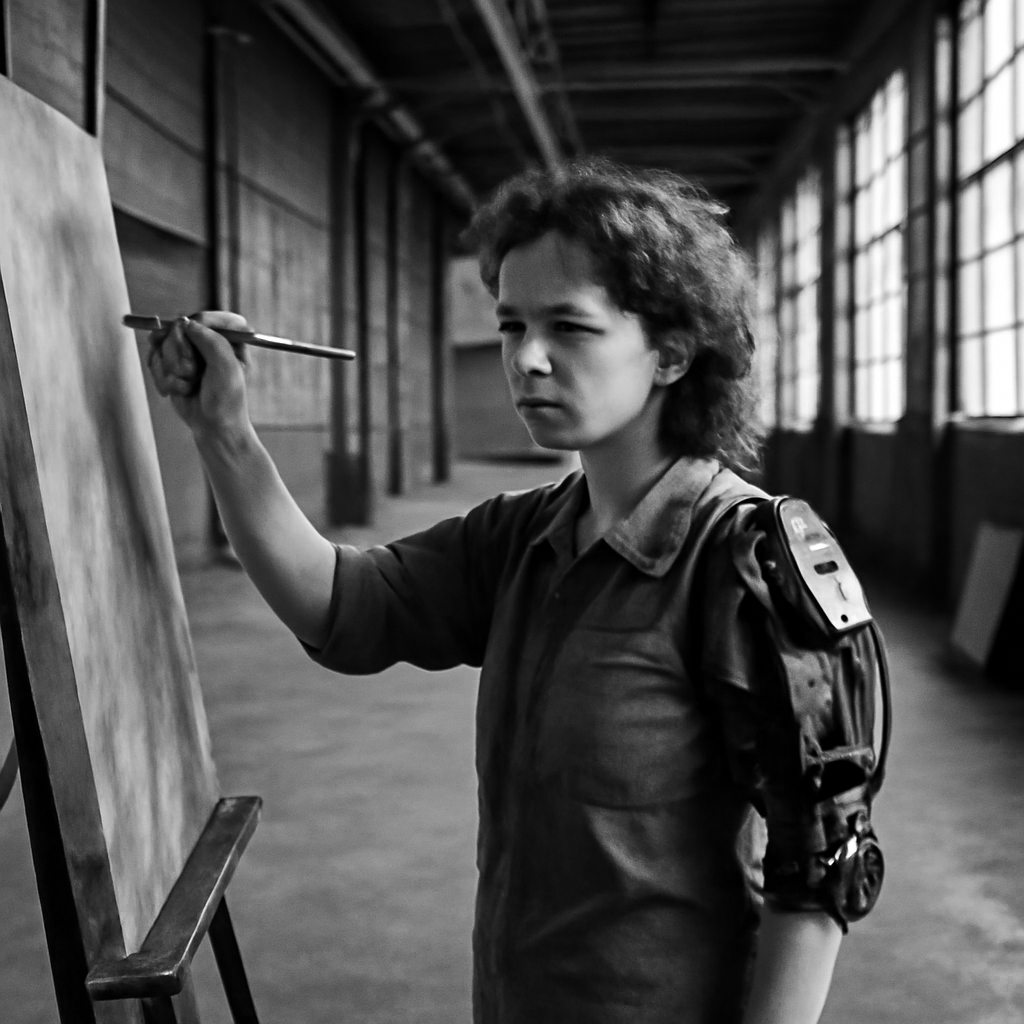
The new clinic pathway put a load-sharing brace within reach of overhead workers, but it came with the limit Hollis had been trying not to name: support was not clearance. In the north studio, with the force-assist sleeve exposed, Riverfront asked her to confirm a lift sequence. She could not. The assignment that followed kept her on ground design review, color mapping, and crew notes, below the first scaffold deck.

Hollis had told no one about her shoulder until the restriction made concealment impractical. Ondine saw the sleeve, then made the ground-role photograph while the Riverfront coordinator’s offer came over speaker. That photograph was not received as help. Hollis was being placed in a new relation to the work—still necessary, still employed, but prevented from occupying the height on which her murals depended—and Ondine’s camera made the transition into an image before Hollis had chosen its terms.

Wren’s response to Hollis’s unfinished faces offered a different reading of the stoppage. She saw not failure but an interruption Hollis had refused to hide. Hollis had not yet made that refusal for herself. By week’s end, the work had been reassigned around her body, and the person who had kept her injury private had become visible in a way that felt less like care than evidence.

Hollis AmayaOndine MarshWren Abadi

31 July 20752 August 20753 August 2075

#hollis-amaya#ondine-marsh#injury#mural

News photograph: Denver Tried to Verify Art Without Watching Artists Make It

Denver Tried to Verify Art Without Watching Artists Make It

cultural · denver · 3 days · arc: the-verification · arc: the-accreditation

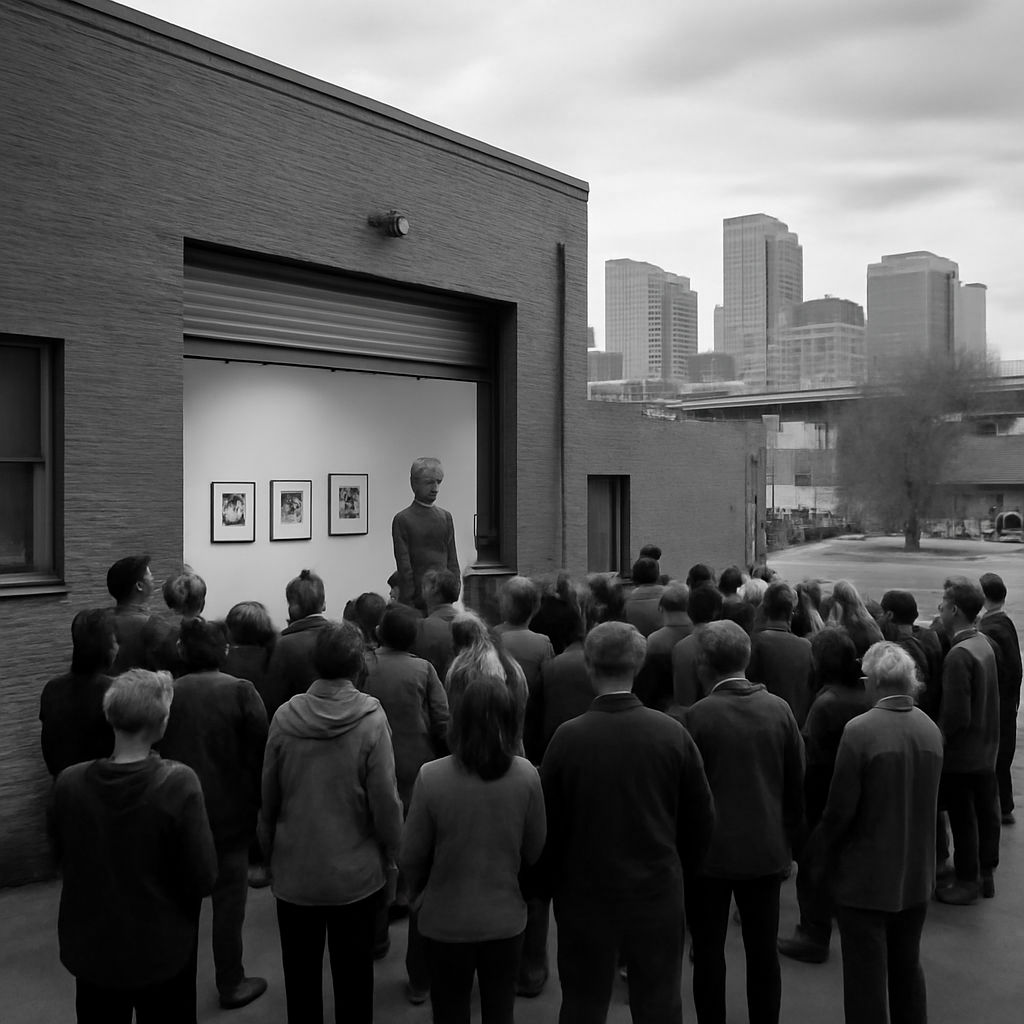
The Quiet Galleries’ sealed peer-witness protocol made a modest but consequential argument this week: private making could be verified by people who had actually been present, without converting every studio into a surveillance archive. The Front Range Collection Fund bought four works under that premise. For a city’s human-art economy, it was an attempt to make authenticity something other than exhaustive exposure.

The California-backed Pacific Authorship Registry accepted neither a simple no nor a simple yes. Witness statements might count for interstate recognition, it said, but only beside a durable custody ledger: material intake, transfers, dated attestations, a record that could travel. The demand did not abolish privacy so much as move the burden outward, toward the history of an object and everyone who had handled it.

Cass felt the same pressure in Riverfront’s form asking whether a submitted playback chain had a shared origin. Wren helped him answer while keeping her own uncertainty about the corrected hand in “Friday Contact” inside the painting rather than in an explanation. The week’s emerging standard was not proof without intimacy; it was intimacy administered through new paperwork. Denver was still trying to find out whether that could remain trust.

Cassius "Cass" OyelaranWren Abadi

31 July 20753 August 20754 August 2075

#verification#quiet-galleries#cass-oyelaran#wren-abadi

News photograph: Denver Spent Reserve to Keep the Small Shops Cool

Denver Spent Reserve to Keep the Small Shops Cool

environmental · front-range · 4 days · arc: the-reservoir · arc: the-allocation

The heat ridge outlasted the first promise made against it. Clear Creek Bank extended daytime cooling for small workshops, then extended it again through August 11 by spending reserve capacity and moving larger recovery loads into the night. Metal, print, paint, and repair spaces received a little more time in which work could remain physically possible; the warehouse felt that relief as a clicking fan above the freight door, never as comfort.

The city was making the same kind of temporary purchase in its water-and-power politics. Arizona withheld an overnight exchange, and Denver covered ten days of replacement balancing and reservoir handling rather than pass the shortfall directly to Front Range users. The backstop kept the crisis from becoming a household event immediately, but it was explicitly time bought, not an answer.

Against that managed heat, the reopened North Fork side channel offered a smaller, stranger counterpoint: cold spring water found beneath collapsed irrigation fill, returned as refuge for trout and amphibians. Denver’s summer was not failing all at once. It was being held together by reserves, repairs, and places where water had endured long enough to be uncovered.

31 July 20751 August 20752 August 20756 August 2075

#heat#cooling#water#clear-creek

News photograph: Nuri Had to Put the Render Back Among the People It Had Left Out

Nuri Had to Put the Render Back Among the People It Had Left Out

cultural · denver · 5 days

Nuri Alvear’s civic render began the week as a panel under warehouse light, its drainage line clean and its transit shelter improbably composed. Teo’s objection to the red bracket behind it was not that Nuri had taken an image from the loading bay; it was that the image had been taken without permission and made useful somewhere else. Nuri answered by labeling the element a contested source. The caption made the conflict visible, but it did not settle the question of what a correction owed the person whose material had been used.

Denver made that question harder to evade. Finalists received live block data and a material atlas full of inaccessible doors, drainage cuts, patched brick, shade failures, and resident corrections. They walked their assigned blocks with the people who loaded, worked, and lived there. Nuri’s contact with Rosa Ibarra at the drainage cut reached the warehouse through one of Ondine’s photographs, and the photograph itself became another disputed act of access. Nuri had been observed while trying to observe the block more honestly.

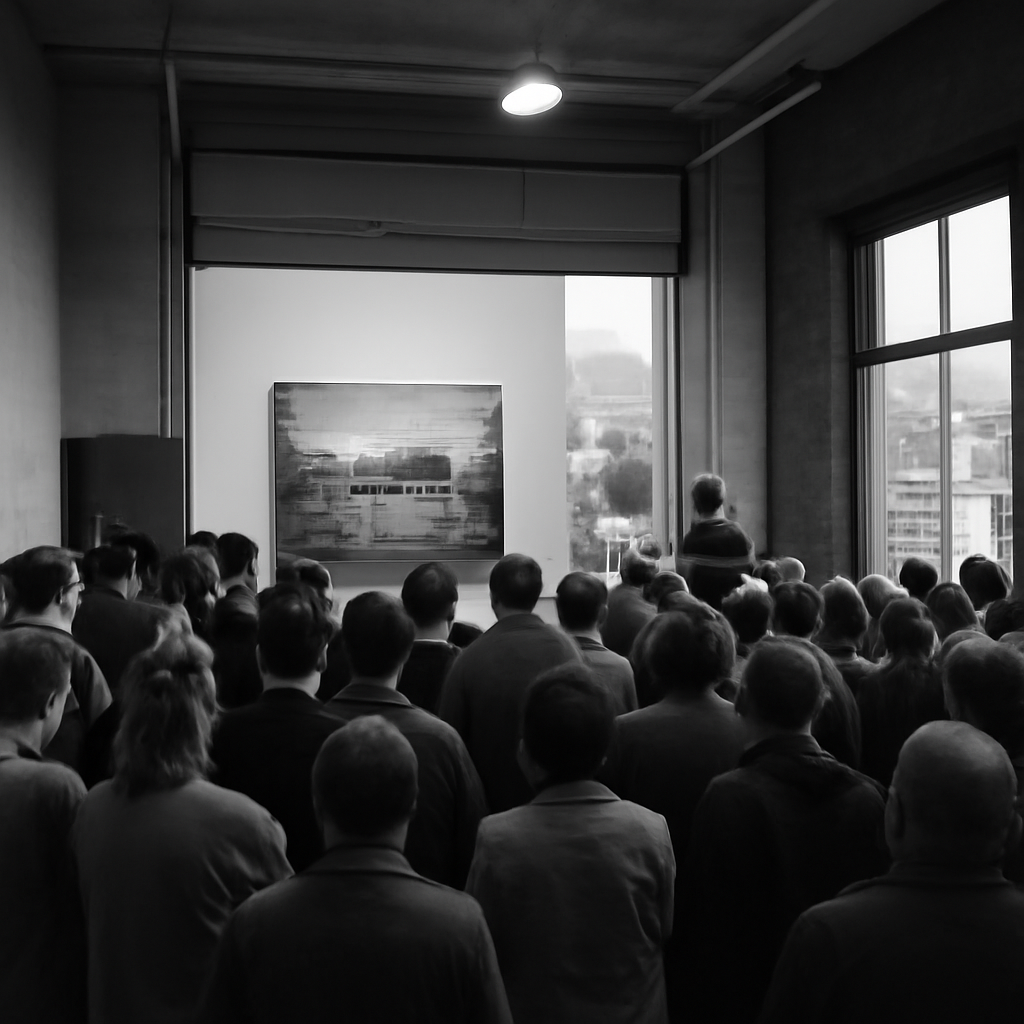
By Wednesday, the commission had become physically public: planned Denvers projected at street height onto the rail district that had to bear them. Nuri’s work was no longer able to remain immaculate simply by being framed that way. Their exchange with Cass over a walkthrough fee and the house-materials line showed how money could also enter an image as an obligation or an extraction. Nuri finished the week with a render more exposed to the actual district, and with fewer private places from which to claim that exposure was neutral.

Nuri AlvearCassius "Cass" OyelaranOndine Marsh

2 August 20753 August 20754 August 20755 August 20756 August 2075

#nuri-alvear#civic-render#rail-district#authorship

News photograph: Ondine’s Camera Stopped Being Something the House Could Ignore

Ondine’s Camera Stopped Being Something the House Could Ignore

house · house · 3 days

Ondine’s photographs accumulated this week as records of other people at moments they had not offered up: Hollis at the edge of a restriction, Nuri bent over a route map with Rosa Ibarra, Wren carrying a wrapped canvas toward a courier pod. Each image had a claim to usefulness. Each also arrived after the fact, when the subject could not alter the frame.

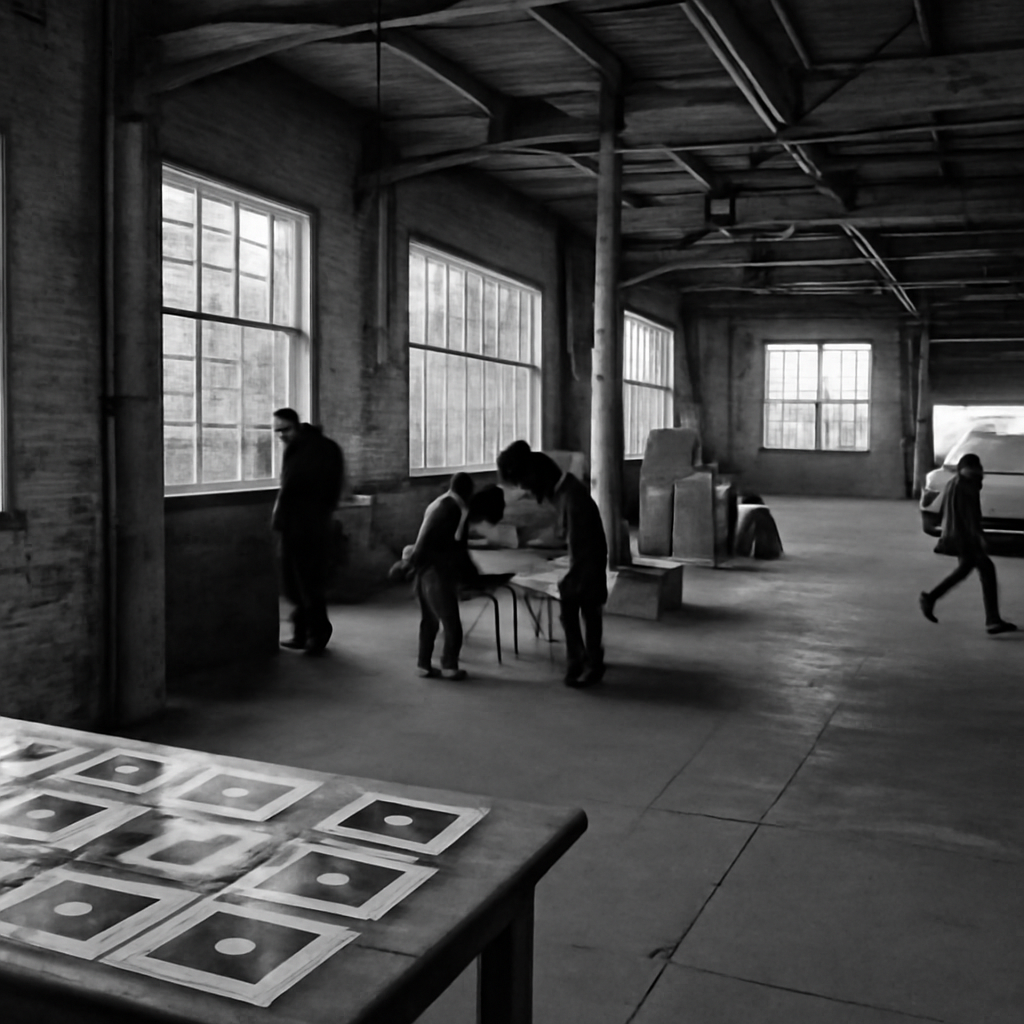
Hollis met the first photograph with a strained distance; Nuri met the enlargement in the darkroom with the plain fact that Ondine had followed the walk. Wren found the fresh negative labeled as a portrait study, and the label made her sale—already a private movement through the city—into studio material. Ondine did not need to explain her method to know what she was doing. She kept working because the camera had become a way to retain what the house tried to move past.

The cost was that nobody around her could continue to call the work neutral. By the end of the week, Ondine’s declared attention had tightened rather than softened the rooms she entered. Her photographs preserved the warehouse’s life, but preservation was beginning to resemble possession to the people inside them.

Ondine MarshWren Abadi

3 August 20755 August 20756 August 2075

#ondine-marsh#photography#consent#privacy

The days it was made of