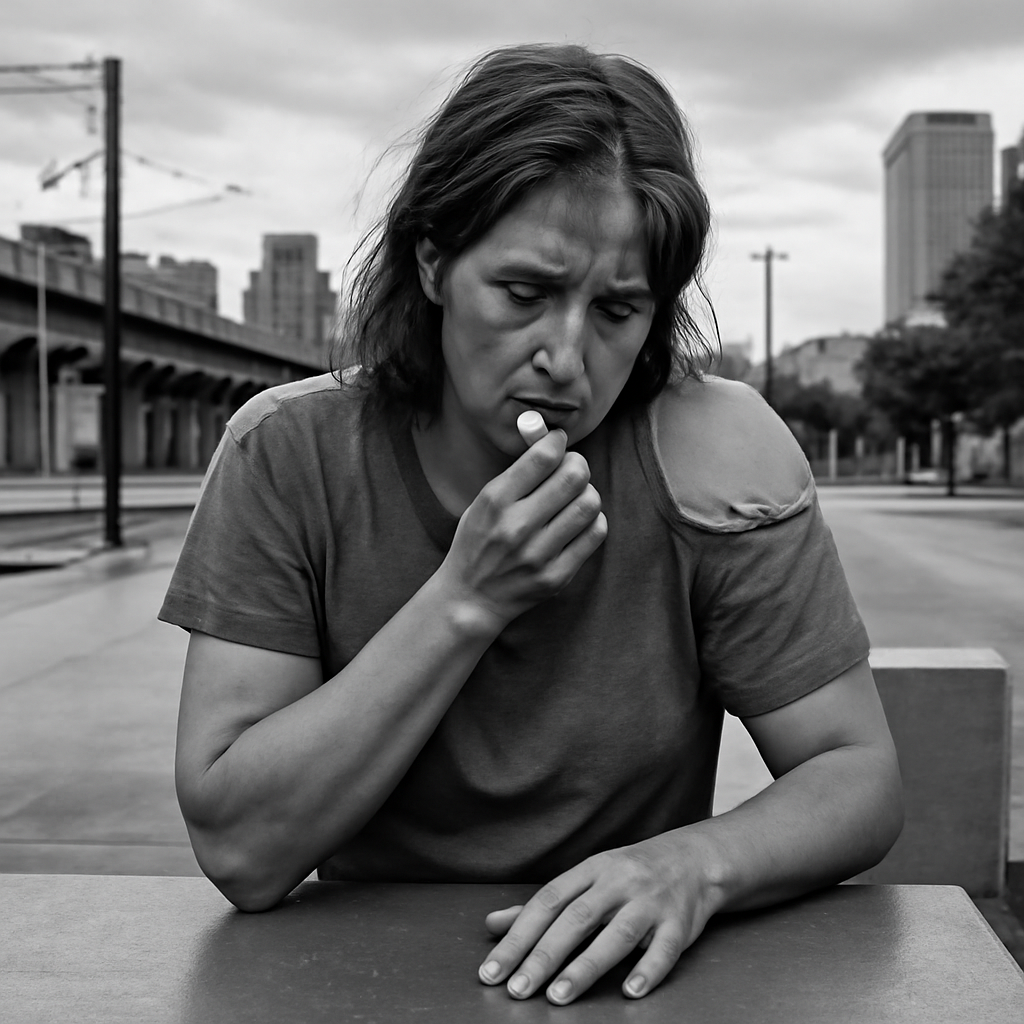
Hollis Amaya had concealed the failing shoulder long enough to learn the practical humiliations of concealment: peeling a support strip with her teeth, using the good hand at the counter, letting pain look like impatience. Cass saw the dusk-clinic appointment on June 19 and did not let her turn it into nothing. Denver was simultaneously making it easier for exterior workers to be treated without abandoning their walls—dusk imaging, support fitting, tendon maps, load-limit plans—and Hollis had access to that care before the heat made the need impossible to deny.
Her answer was still work. She submitted Cass for an evening slot beneath the 38th Avenue viaduct, where small performances could happen without sales or a record, and then Denver’s 101-degree day pushed Wall Commons crews toward sundown and shade. The nomination did not make a lasting intimacy between them. Their reciprocal connection ended across the week. But it recorded a brief, precise recognition: Cass could see the cost in her body, and Hollis could imagine his sound belonging in public without being made useful in the ordinary way.
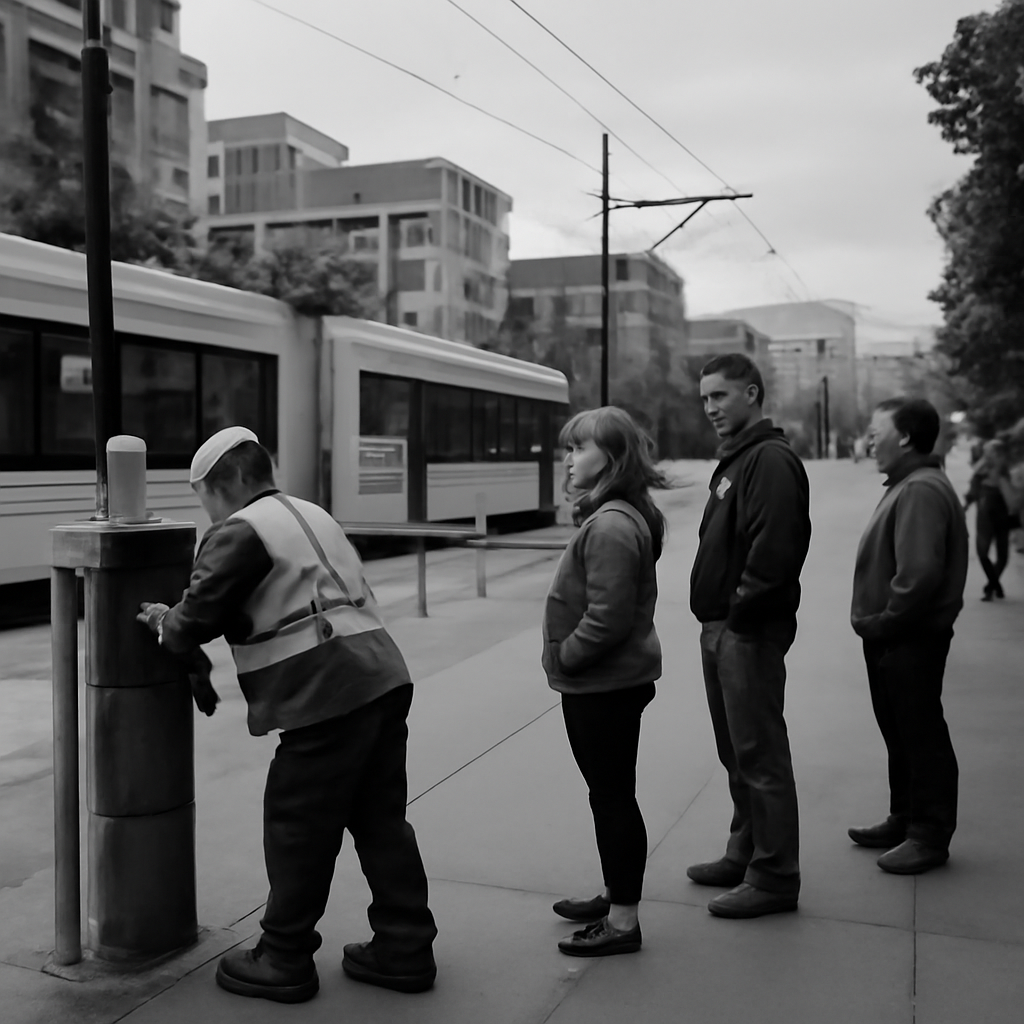
Denver’s first Human Review Corps case did not abolish automated eligibility or settle the larger argument over civic systems. It did something smaller and more durable: it ordered the Regional Transit Authority to restore a disputed mobility credit because the authority could not adequately explain its revised risk score. The credit would remain active while the appeal path was rebuilt.
For a city accustomed to systems that mostly work and sometimes simply pronounce, the consequence was a new status for objection. A human appeal had permanently altered an automated outcome. It arrived in the same hot, administratively dense week as water access was preserved for small users through July, reminders that the city’s protections were often narrow, conditional, and nonetheless real when somebody could make them answer.
personal · house · 4 days · arc: the-accreditation
The gallery had given Ondine Marsh a clean bargain: her exhibition could proceed without naming its subjects, but Wren Abadi’s consent was required by Monday morning. By Sunday night, Wren answered no. She did it at the kitchen terminal while Ondine rinsed an unused tray, and the refusal was not softened into a discussion about art or friendship. Wren had spent the week making her own work hold what her injured hand and then her repaired studio wall could hold; she would not have Ondine make a document out of her reluctance.
Ondine still had the negatives. On Monday, under the red safelight, she held the small sequence in which Wren stood pale in the north-studio window and cut it rather than turn it into an argument Wren would have to keep having. The act did not restore the relation between them. By week’s end, their mutual connection had ended, with the new, official bracket above Wren’s painting making the studio safer and no less exposed. What Wren refused was not merely a caption. It was the conversion of a private presence into provenance at the moment Denver’s galleries were learning to treat witnesses as a substitute for private proof.
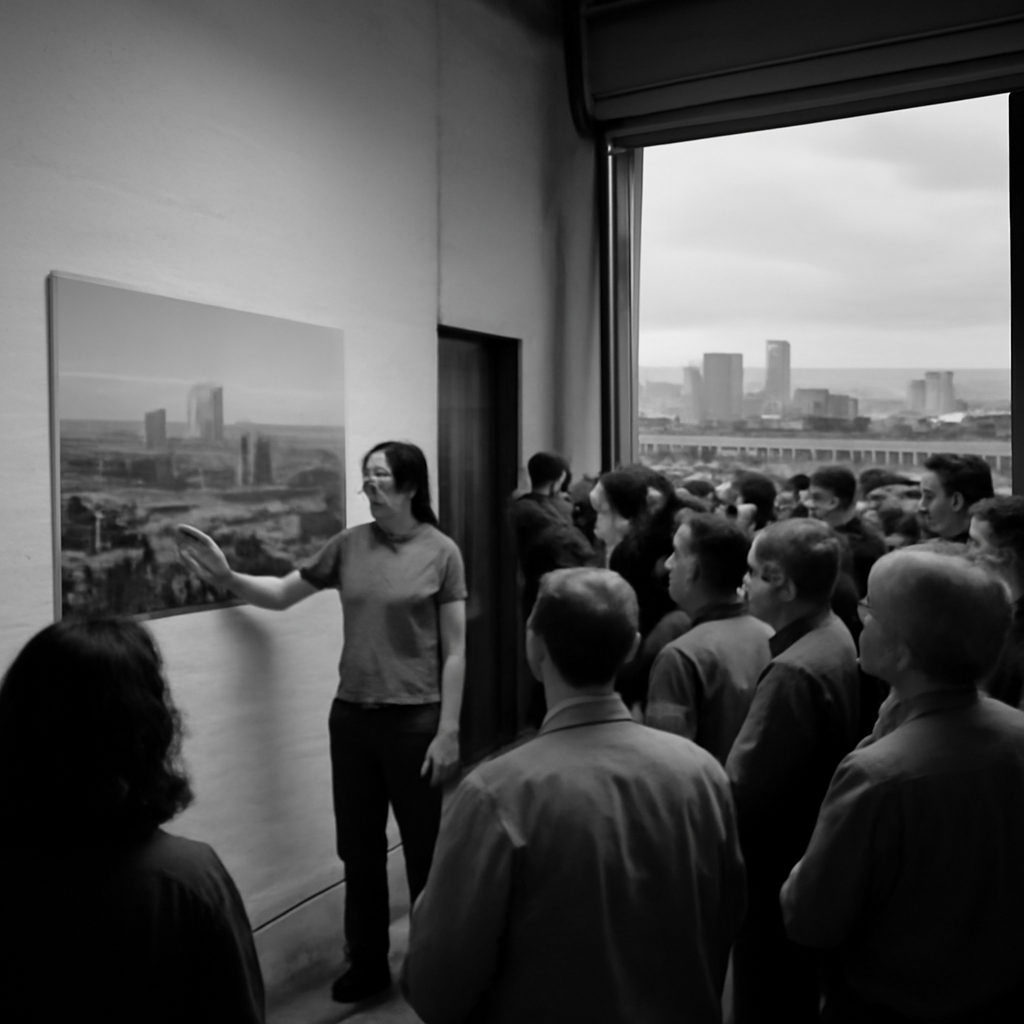
Nuri Alvear’s municipal work had always depended on the persuasive chill of an image: a Denver rendered immaculate enough to be funny, or perhaps alarming, before anyone could decide which. This week Riverfront Designs first placed Nuri among twelve shortlisted names and then among the three finalists. The commission’s final test would not be another polished flythrough. It would be a paid, full-scale dusk panel, viewed against actual river traffic, heat haze and pedestrians.
That requirement made the city’s interest unusually exacting. Nuri was being asked to let a civic fantasy meet the hour when its seams showed. Cass, sitting beside dead equipment in the cooling room, understood the rude scale of the money before Nuri could quite take it in. Ondine did not join the moment: her municipal-presentation credential was cancelled, leaving her relationship with Nuri cold rather than celebratory. Earlier, Teo had watched Nuri present at Henshaw while Dennis Vance’s name was formally sealed away from the job; the strained room around the render made clear that professional access and personal permission were never the same thing.
Teo Vance had secured the narrow thing he had asked Henshaw for: Dennis Vance would remain only sealed compliance attribution, without calls, archive access, revision access or contractor contact. The message was clean enough to read aloud. It should have made the work legible again. Instead, Dennis’s next shift notice arrived in the old clipped language, offering double rate for closeout and directing, in its final line, that Oyelaran be kept after privately.
Cass had already become accustomed to his debt finding other people’s doors. This week it found the workroom too. Teo’s protection of the Henshaw arrangement did not protect Cass from becoming a separate channel through which Dennis could reach into the warehouse. The instruction made Cass useful in precisely the way he least wanted: not as an artist or a tenant, but as a person Dennis presumed he could hold back and address. The week ended with the request unanswered on the page, which was not the same as harmless.
By June 25, Wren’s painting was rehung on its licensed new bracket and the July lease balance was waiting in a narrow red column. Teo had helped make the room structurally ready again; Cass arrived barefoot with water and the particular expression rent gave him. None of that answered the blinking address field. Wren typed her parents’ street twice and deleted it twice.
The difficulty was not administrative. An address would make a direction of dependence visible, and Wren had spent the week refusing other kinds of exposure. Teo’s relation to her became declared in the same week, a fact that gave the kitchen scene a witness but not a solution. The house was still a place she could inhabit. July was asking where she meant to be answerable.