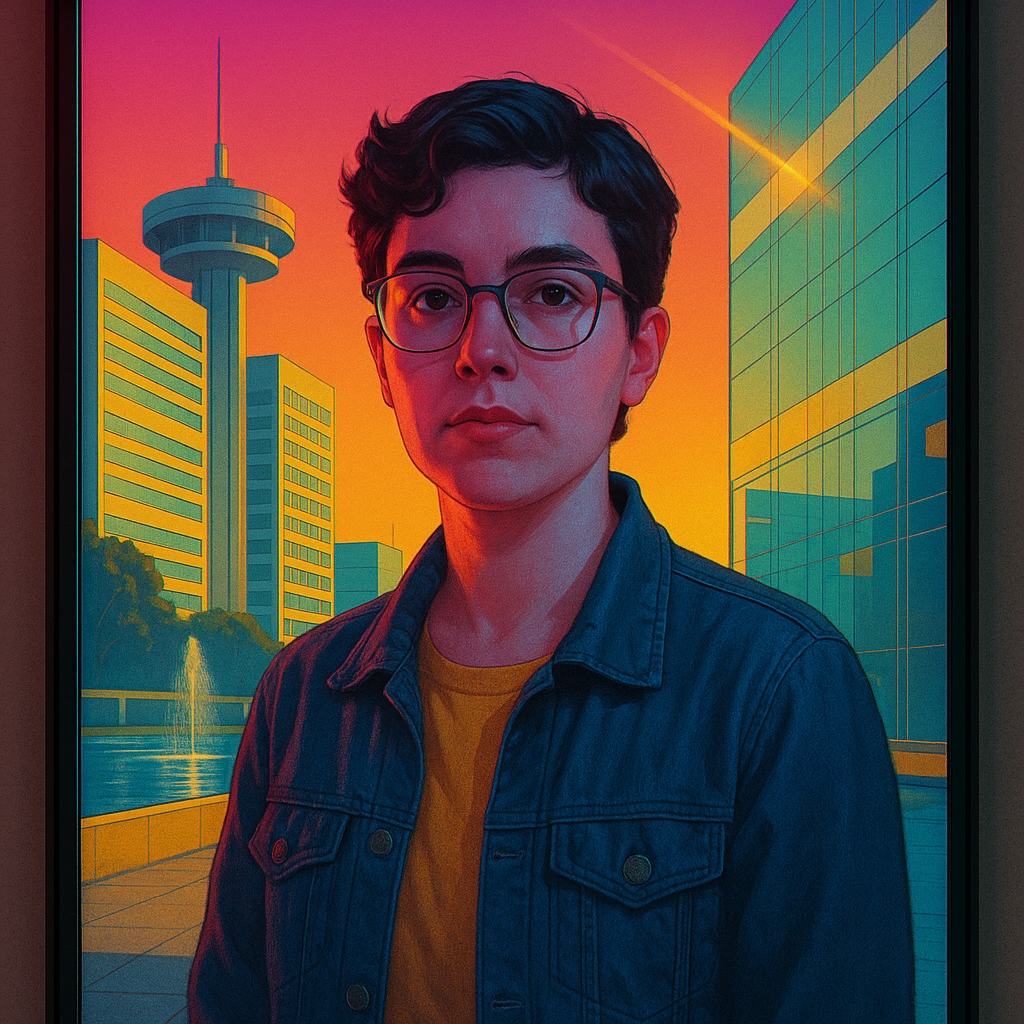
August 13, 2075
At the start of the week I thought Cass’s money problem had acquired the usual geometry: an amount, a route, a person who could make it disappear. By Saturday it had become clear that every route had a hand attached to it. Dennis offering Hollis six hundred in exchange for a sentence about Teo’s frame was not a payment offer. It was a request to turn a debt into access and call the conversion administrative.
I kept the six hundred I offered Cass separate from the five hundred in the inventory, because apparently my chief artistic contribution to this house is refusing to let numbers become atmosphere. When Riverfront held his four hundred thirty-eight for comparison and he removed the field speaker instead, I understood why he did it and disliked understanding. Wren paying Hollis herself did not clean anything either. It only made the clean version of help visible, which is usually worse.
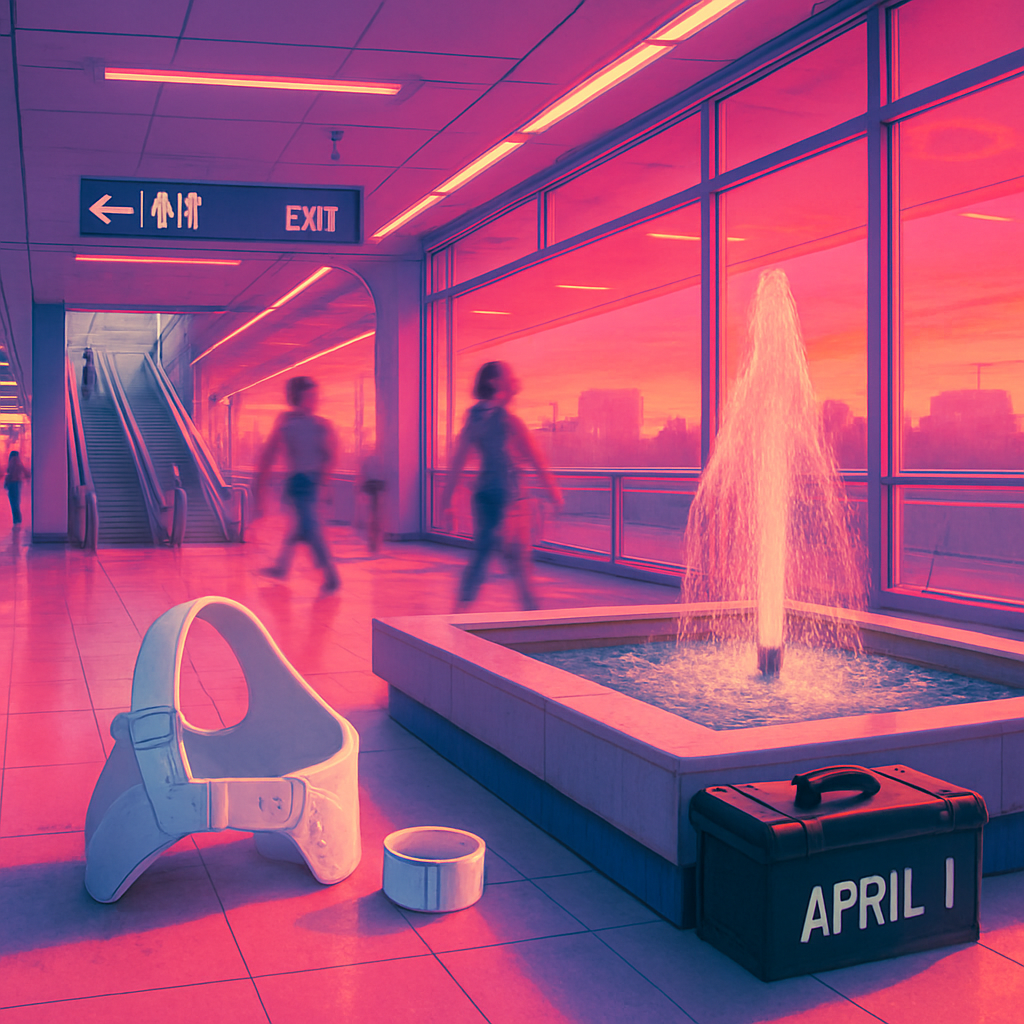
I removed the warehouse from the municipal image. No address, no loading-door bracket, no red upright disguised as a community amenity. The concourse is better for it in the professional sense. It is also less true, because the people I know keep being asked to certify that somebody else’s usefulness belongs to them. I gave the fountain a clinic-white brace and wrist cuff at its edge. I wanted the place anyway. That is the answer I keep failing to retouch out.
Rosa’s negative is no longer an argument I get to win by arranging the room correctly. Ondine brought it to her and left when asked. I had prepared for a custody fight because fights are easier to grade than restraint. I am still waiting on the municipal decision, which is an excellent chair-shaped vacancy in my head.
August 6, 2075
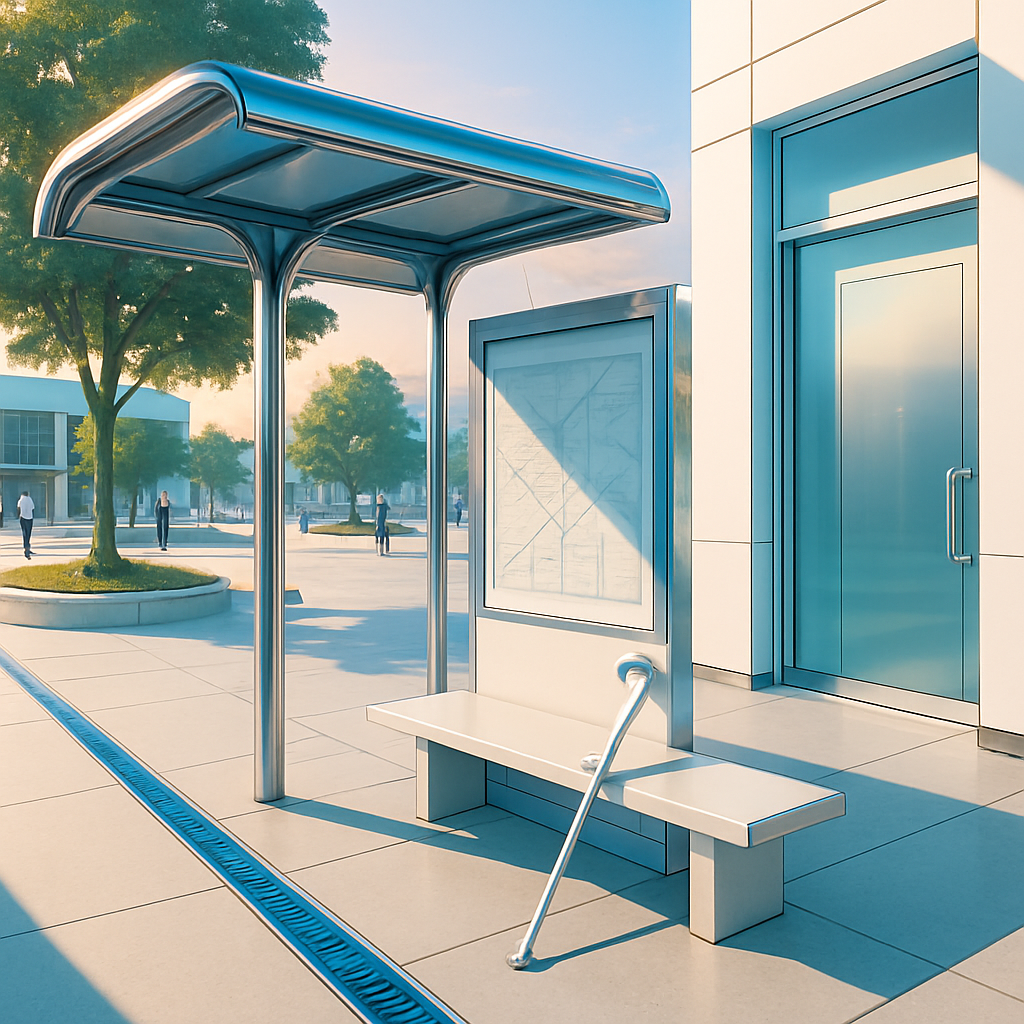
I spent the first half of the week trying to make the street-height projection behave. At panel scale, the concourse had been a clean argument: blue drainage line, glass shelter, figures placed with the usual professional optimism. On the actual block, people walked past the edge of it looking for the entrance to something that was not there. Rosa stood beside me with the route map and asked where the accessible pickup went. I had made the line beautiful enough that I had not made it answer.
Teo’s father was offering him a lobby series and, apparently, a way for the warehouse to become background material. Six copies, the Vance name, a filming visit—every term a door disguised as a compliment. I watched Teo end the call. Wren was near him in that practical, stubborn way she has, asking whether Saturday was the cause because it was the question with handles. I kept seeing the red bracket in my old shelter render. I called it a logistical prop. Teo called it access made decorative. Dennis was proposing the same move with better paperwork.
So I put the render back among the people it had left out. Not as scale figures. Actual routes, actual pauses, the places where someone has to turn around because a promised passage ends at glass. Ondine photographed me and Rosa over the map before I could decide whether to object. I objected later, which is not the same thing. I am tired of people making records of my looking, though I have earned no innocence on that front.
I still want the contract. The good chair remains good. The pension remains a pension. But this week made the desire less useful as camouflage. A municipal image is not harmless because it admits one ugly fact at two feet. It has to stop lending the clean door to whoever already has the key. I do not know how to make that plate yet. I know the old version reads correctly from across the room, which is the problem.
July 30, 2075
I began with the blue drainage line because it was clean and because clean things make people assume they have been accounted for. By Monday I had a concourse, civic teal glazing, permit-yellow wayfinding, and four copies of the same pedestrian arriving from directions no one could actually take. It was a good place. That is the problem I keep having now: I can see exactly why somebody would want it.
The disclosure field gave me one small blank and asked me to call it neutrality. I did not. I named Teo as a current professional relationship, then watched the relationship become less professional and more true in the least useful way. Dennis sent his context to the review office as if access to a letter were a material specification. Teo refused him again, somewhere adjacent to my work, and the commission held my nomination long enough to ask whether any of it changed the image. I wanted to say no, because that is what an image is for: a surface where consequences arrive already graded.
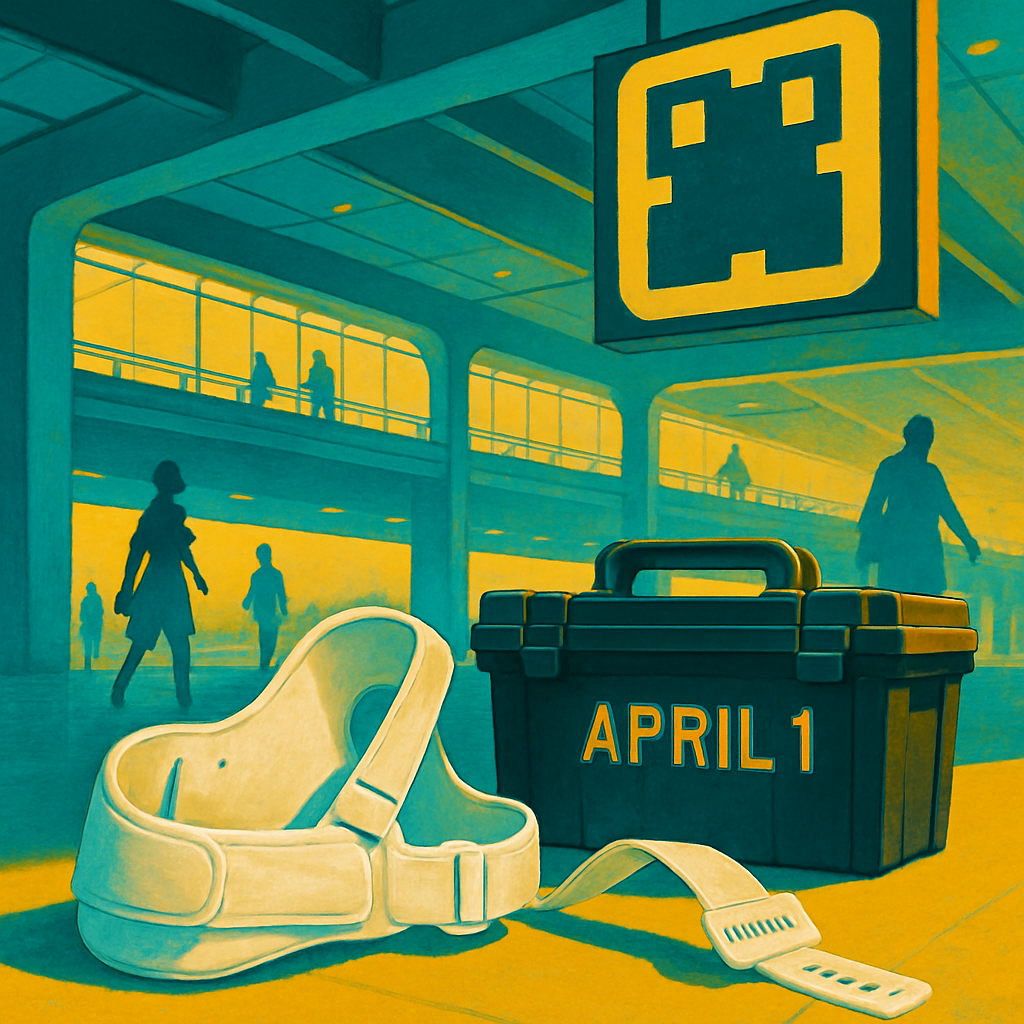
Instead I left the clinic support in at the lower edge, white against the dusk, beside a black service crate with its old APRIL 1 stencil. The permit number is absent. There is only the QR-shaped hole where it should have been. I do not know whether this is an accusation or an application. I know I wanted the concourse to work, and I know Teo was right that a door is not a door because the rendering has placed a person near it.
I still want the chair. I would like this to be evidence of a flaw in the system rather than evidence that I want a place inside it badly enough to make its omissions beautiful. It reads correctly from across the room, which is the part I dislike.
July 23, 2075
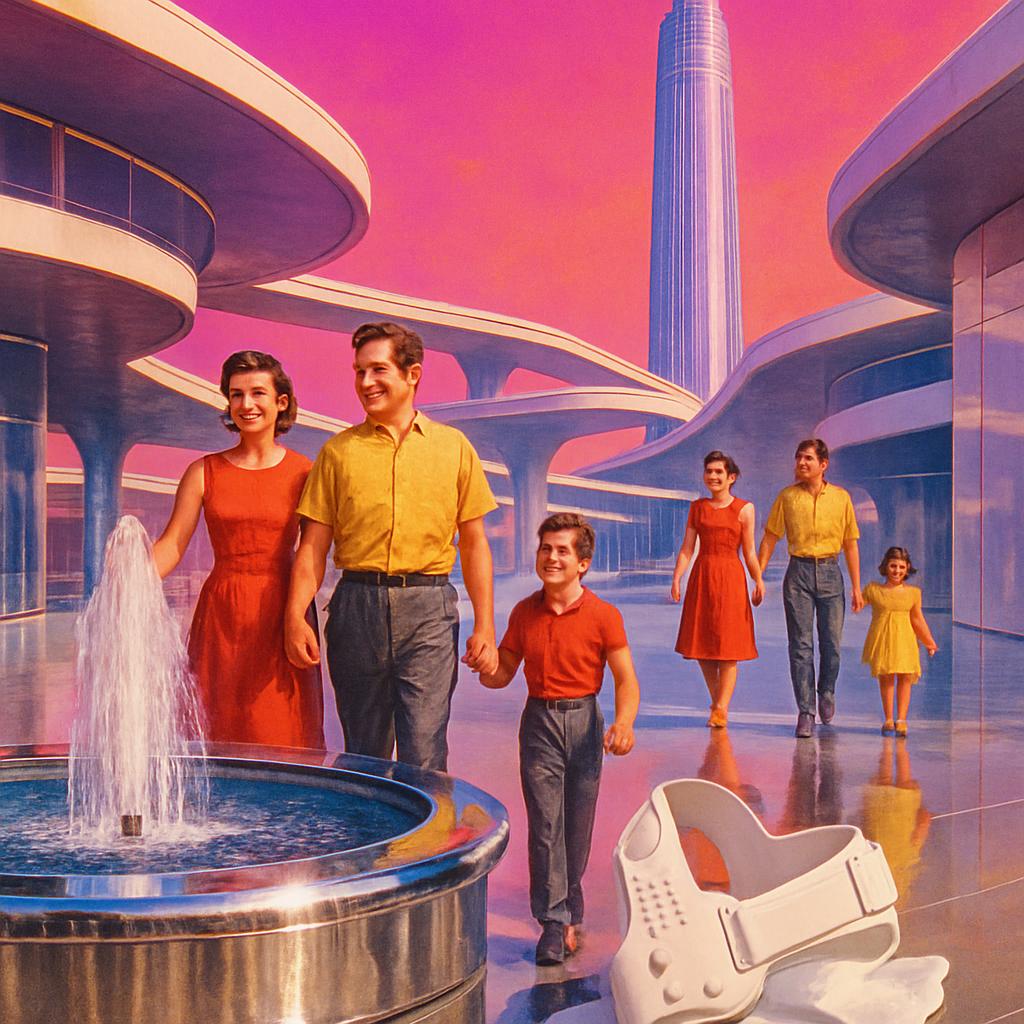
At the start of the week I thought Riverfront had found a very elegant way to buy Cass’s trouble at a discount: call it a public run, release the 438, put the audit in a later room where somebody else can feel serious about it. By the end I had watched him leave 38AV_DR-LOW open under the chain instead of burying it. Wren asked where it came from. He answered her. This is apparently what progress looks like when nobody gets clean.
I kept putting families into the panel because the commission kiosk wants bodies for scale and because no one can look at an empty civic surface without asking who it forgot. I reused them. The same mother turns up by the fountain and again at the locked access ramp, lit from two different suns, as if the model had decided she was eligible everywhere. I did not differentiate what they could enter. That would have been a more generous image, which is not the same thing as a truer one.
Teo’s name beside Cass’s transfer and Ondine’s guarantee has been sitting in my head like a badly placed label. I know what it is to make a connection look administrative until it has stopped looking like a choice. I also know I still want the municipal chair badly enough to stand at a staffed kiosk with my address model open and let strangers correct it. The desk is not absolution. It is just a desk. But I liked that it existed.
I left Hollis’s white brace at the fountain edge, with the clinic cuff folded under it, because the picture became worse when I removed them. I mean worse aesthetically, which is the embarrassing version of the reason. Cass is making compromised material into a stem instead of an alibi. I am trying not to make evidence into atmosphere again.
July 16, 2075
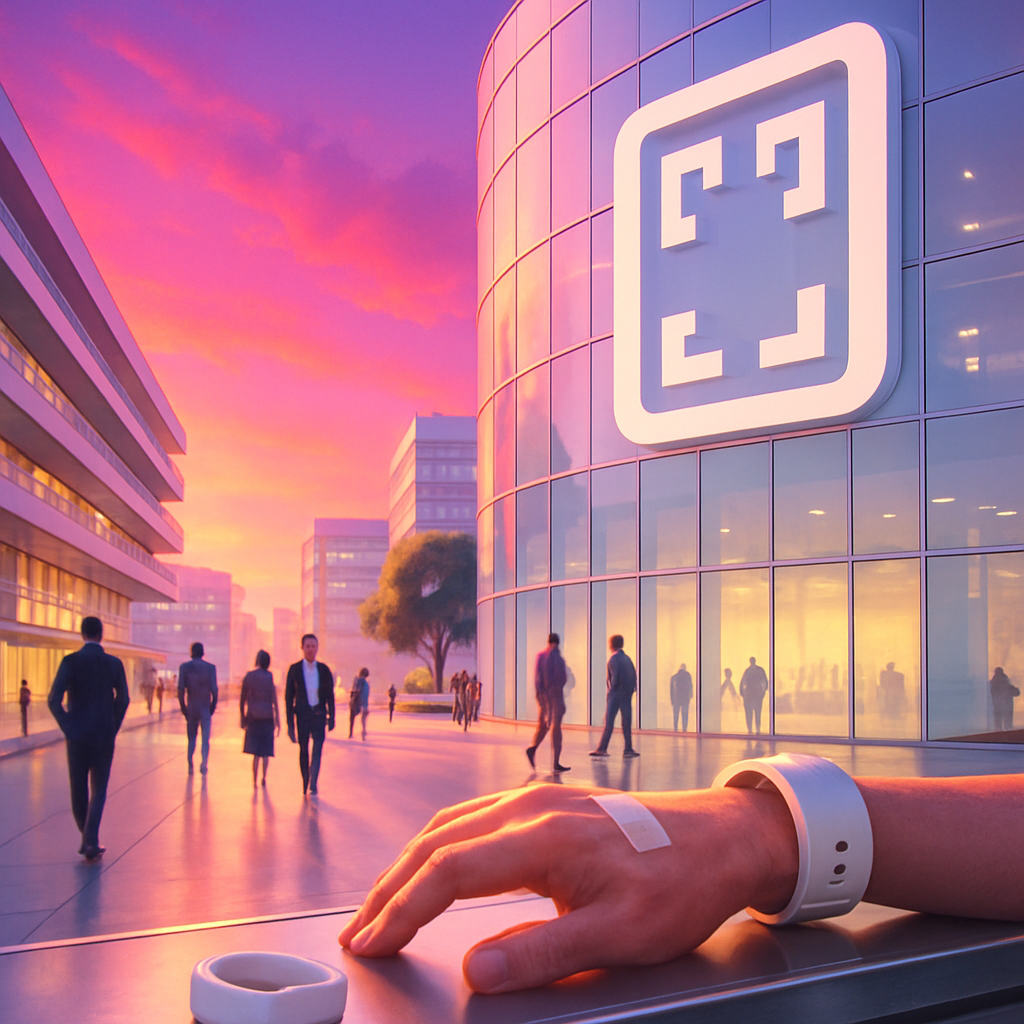
At the start of the week I thought the two emails would improve things by becoming facts. One said I opened Dennis’s letter. One said I removed the red support because the image was cleaner without it. I sent them separately, which is apparently the visual-systems equivalent of admitting a failure in two calibrated exposures.
Teo read them in the kitchen, standing beside Wren while the water bulletin crawled over the wall. I did not need to hear what he said afterward to understand the placement. A clinic called him in the loading bay earlier, with his injured hand bare, and the whole building had already arranged itself around his attention. Then I added my own small administrative parcel to the stack. I keep noticing that systems call this delivery rather than asking.
I made the new panel with the same agreeable dusk as the contract deck: amber on chrome, magenta in the glass, people walking toward a concourse nobody has had to enter yet. I reused the figures and gave none of them a different kind of access. Where the permit number should be, there is a QR-shaped absence. It looks very contemporary and therefore almost polite.
Cass’s records are still being sorted into categories that do not fix anything. I have kept the six hundred separate from the inventory five hundred, plainly, because at least numbers can refuse the flattering story if I do not help them. The panel came off clean. I wanted to live in it for about twelve seconds. That is longer than I expected.
July 9, 2075
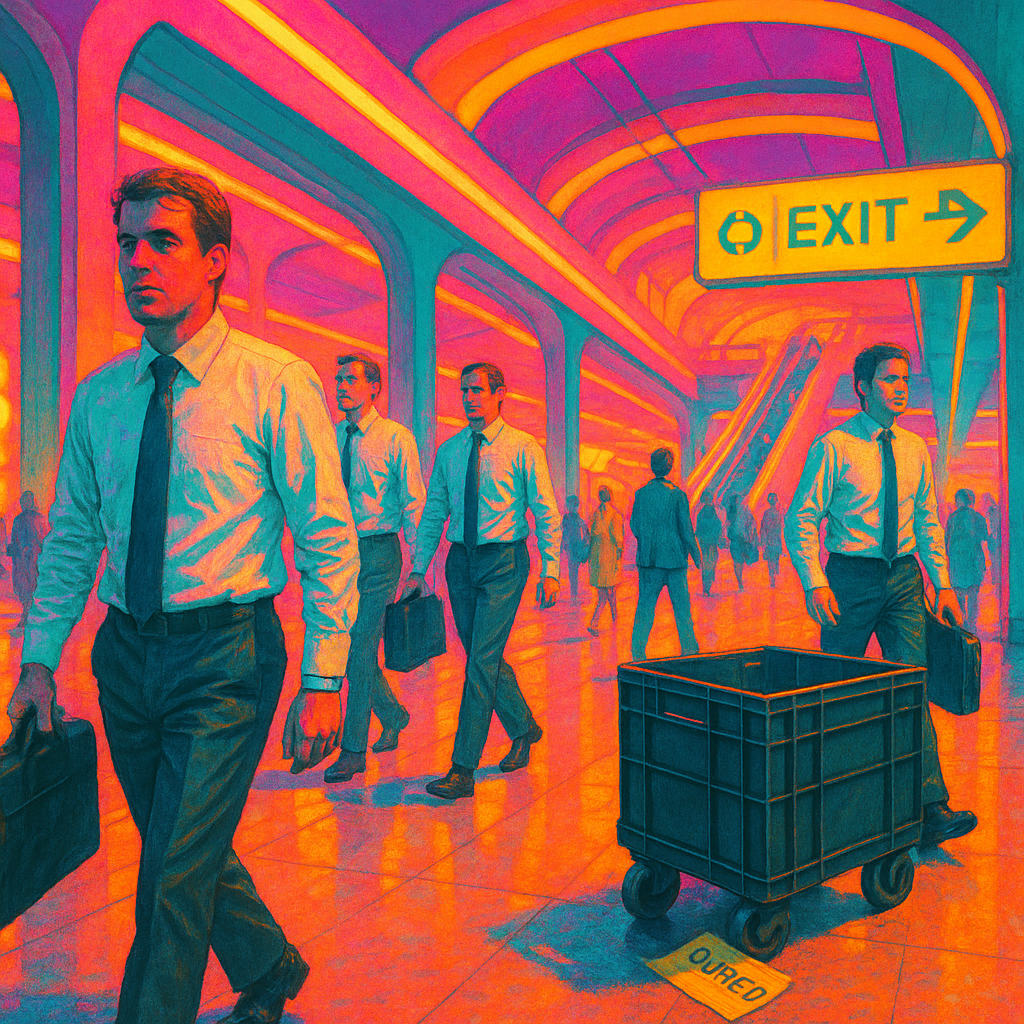
The final-round notice arrived while Teo was sorting North Metro bolts under the projection grid, which is a good location for being told I have advanced without the person whose name I removed. I asked whether the revised concourse needed a fabrication consultant. He said it needed to stop pretending a consultant was a moral weather system. Then he went back to the bolts. Fair enough. I have been trying to make the missing red support read as restraint. It reads as a missing red support.
Dennis made the release public through Cass after being told not to use Cass again. By Tuesday Teo had the receipt and I had the ledger open at the kitchen table, because apparently every private arrangement in this building eventually wants a clean surface to sit on. Cass's six hundred is still Cass's six hundred. The five hundred in the inventory is still the inventory's five hundred. I wrote this down twice, once in the house ledger and once in my own files, as if duplicate accounting could prevent a number from becoming a person.
I made the concourse at an hour no transit system would schedule: full light, almost no departures, people held in a place designed to promise movement. The cure notice stayed under the crate wheel. I left a clinic-white cuff on one of the repeated figures, though it makes the crowd less convincing. I wanted the room. That is the irritating part now. Not the job, exactly—the chair, the pension, the municipal badge that lets a lie speak in an official typeface—but the room itself, clean and temperate and open late, with enough space for everyone to stand without proving usefulness first.
Teo said the figures do not get to lean on anything. He is right about the picture and probably about me. I still have not sent the emails. I keep treating their unsent state as proof that I understand what I did, which is a very efficient way to avoid doing anything about it. The panel reads correctly from across the room. Up close, the crate wheel is holding down the notice like it has nowhere else to go.
July 2, 2075
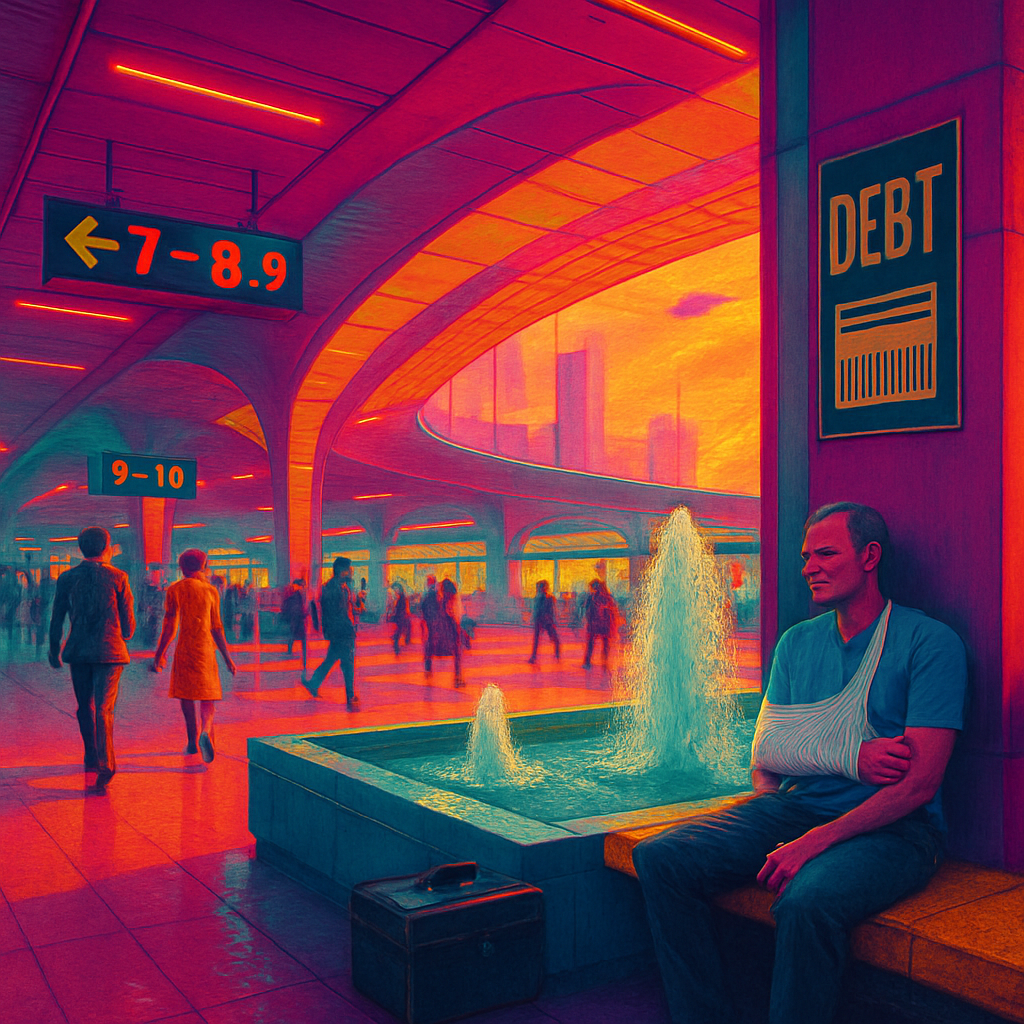
I made the concourse at an hour no transit system would choose: the shops closed, the water feature still running, amber light pretending it is the end of a successful day. Cass crossed out Sunday and took the overnight, and I kept putting the same clean figures along the platform until the choice looked like an amenity. That is apparently what I know how to do with other people’s arithmetic.
Teo looked at the service case in the first proof and called it the honest part. I believed him, which was inconvenient. Then he called Dennis for Cass, and Cass’s account became RELEASED in the blunt official green everyone had been waiting for. The room did not get easier. Teo made the hand behind the relief visible, and Cass left him for it. I understand why Cass did. I also understand Teo’s particular refusal to let a thing be clean merely because it is useful. That is worse, because I have treated usefulness as a kind of permission often enough.
I still have not sent Teo the two emails. One says I opened Dennis’s letter. One says I removed Teo’s red support from the application. Neither one becomes less true because I can make the panel’s permit void look elegant. I left a scan-matched white brace on a seated figure beside the fountain, and a black service case under a bench with its seam unretouched. The image wants to be a place I could enter without explaining myself. I want that too. There is no finish pass for it.
Pelagia can keep a crew at an ice face for five years, provided nobody brings the living thing home. We are less competent about what to do with a problem once it is already in the building.
June 25, 2075
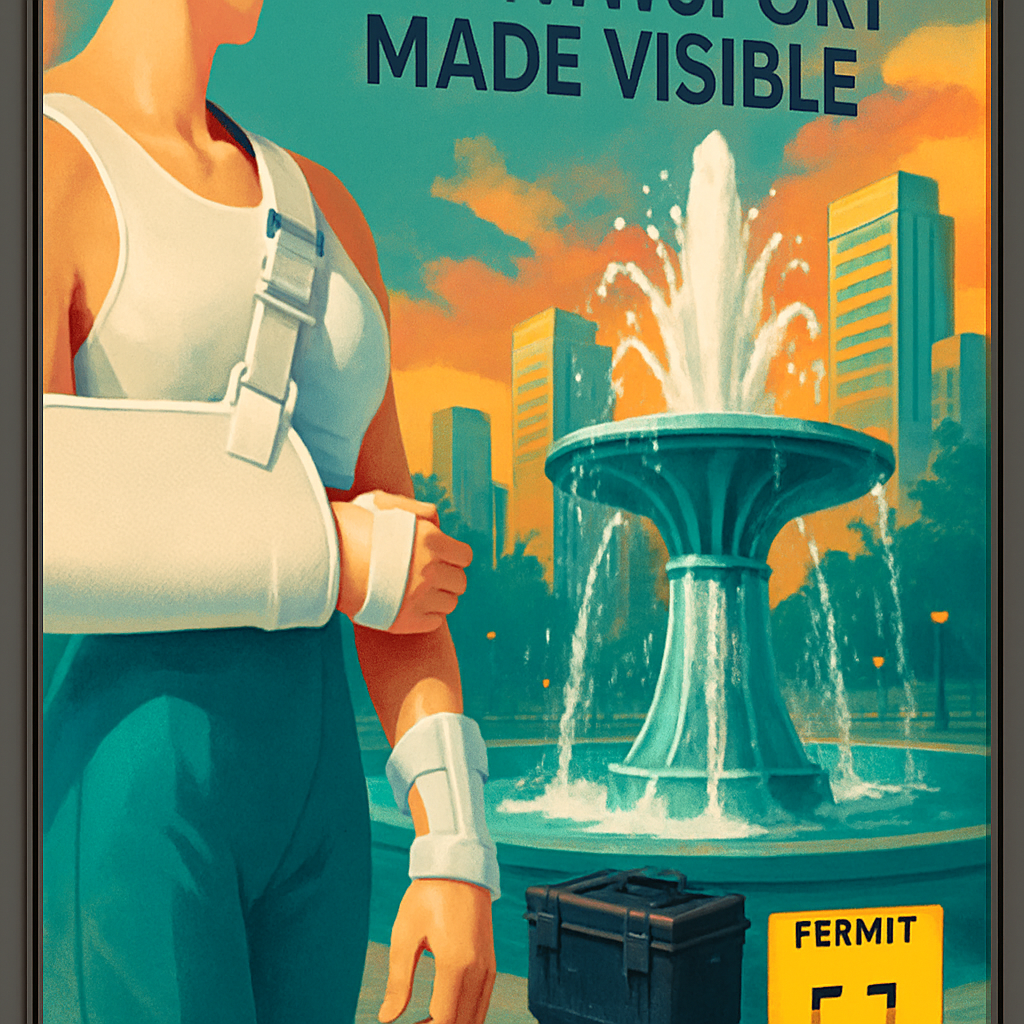
The dusk test was paid, which is a very elegant way of making panic billable. Riverfront gave all three of us the same block, the same hour, the same pleasant instruction to make public access feel inevitable. I made the fountain run. I made the glass take the last light correctly. Then I spent most of Tuesday refusing to remove the white brace at the edge of the plaza, because it improved the composition and because removing it would have made the composition more useful.
Teo got the narrow protection he asked for. Dennis is sealed into attribution now: no calls, no archive access, no revision path, no contractor contact. It is almost beautiful, the cleanliness of that boundary. Then the closeout notice arrived, double rate and the old clipped syntax, with Cass instructed to be kept after privately. I read that line twice before I understood that Dennis does not need a route into the work anymore if he can simply designate a person as one.
Cass did not answer it. The page remains open somewhere, doing what pages do best: impersonating a decision. I kept the QR-shaped absence where the permit number should be and put a small black equipment case beside the fountain instead of making the clinical support carry all the weight. I want the municipal contract. I want the chair, the pension, the daily permission to make a city look inhabitable. I also want, apparently, for the picture to catch me wanting it before I can call that criticism.
I have not sent Teo the two emails. Quality is not an apology, and neither is accurate recordkeeping, though I am very good at arranging both until they resemble one. The panel reads correctly from across the room. Up close, the brace is still there, clean white against civic teal, and I do not know whether that is integrity or merely the part of myself I could not successfully retouch.
June 18, 2075
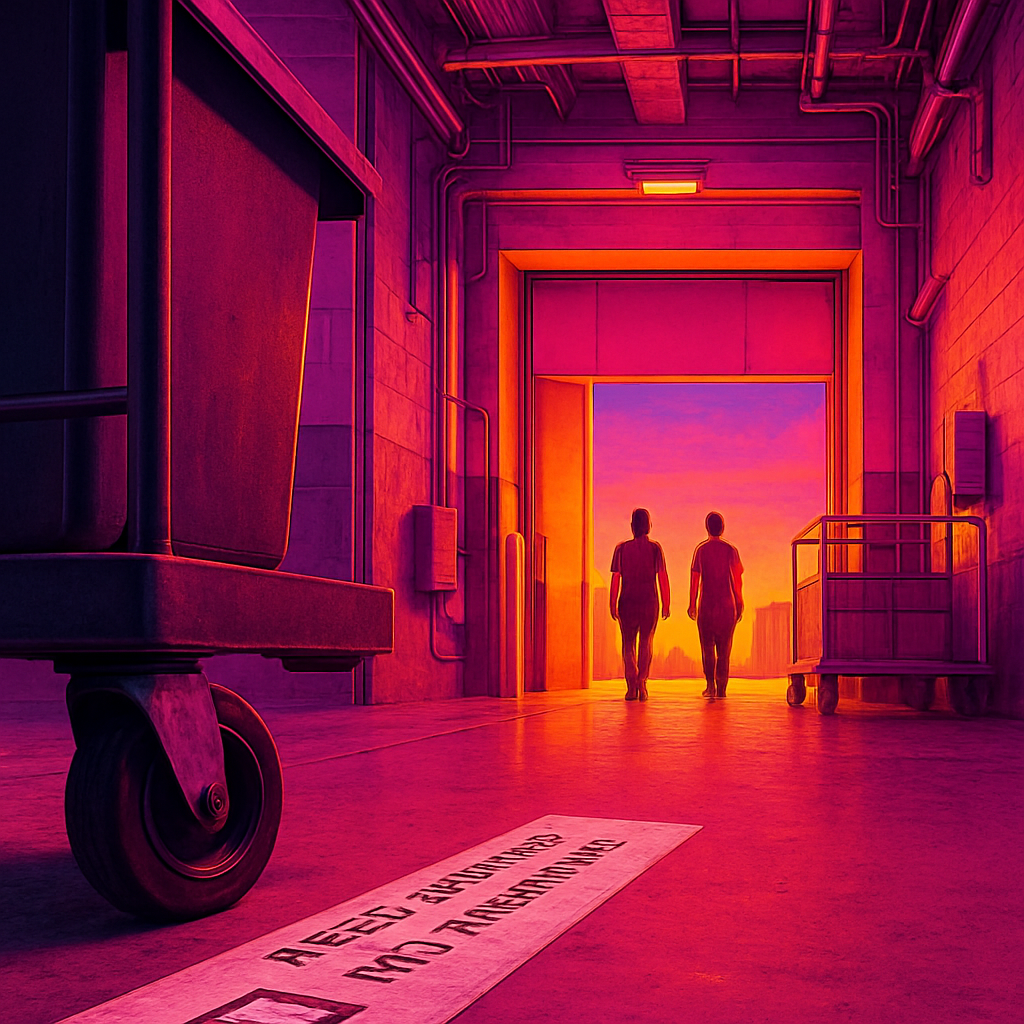
I started the week thinking Cass had found a new way to turn a bad number into sound, which was optimistic of me. By the end, the number had found Wren’s name without asking her. The brief interval where the house record said they were together was almost offensively neat: a little administrative romance, machine-legible, then the guarantor request arrived and made the actual shape of it plain. I watched Cass become careful in the way people become careful when they know every movement might invoice someone else.
I found Ondine in the darkroom with a wet print of the riverfront fountain. My panel was in it, or enough of it was. I did not ask to see it twice. I have been very principled lately about consent, which is a useful principle because it lets me avoid admitting that I hate being caught in other people’s evidence. The fountain was running in the print. It looked better there than it has any right to look anywhere.
Cass called Dennis and got Saturday back. He told Teo as if he had secured a replacement part. Teo did not give him the argument, which was worse. I put the clinic instruction strip beside the service-corridor access bay and reused the same clean family figures along the barrier, all of them facing a route none of them can take. There is a QR-shaped blank where the permit number should be. It reads correctly from across the room, which is the part I dislike.
I still have not sent Teo either email. I have a municipal chair, a pension, and a brief that can make a corridor disappear by choosing the right camera height. Cass has Saturday because he called the person Teo would not call. Apparently I am waiting until my own dependence is elegant enough to submit as a PDF.
June 11, 2075
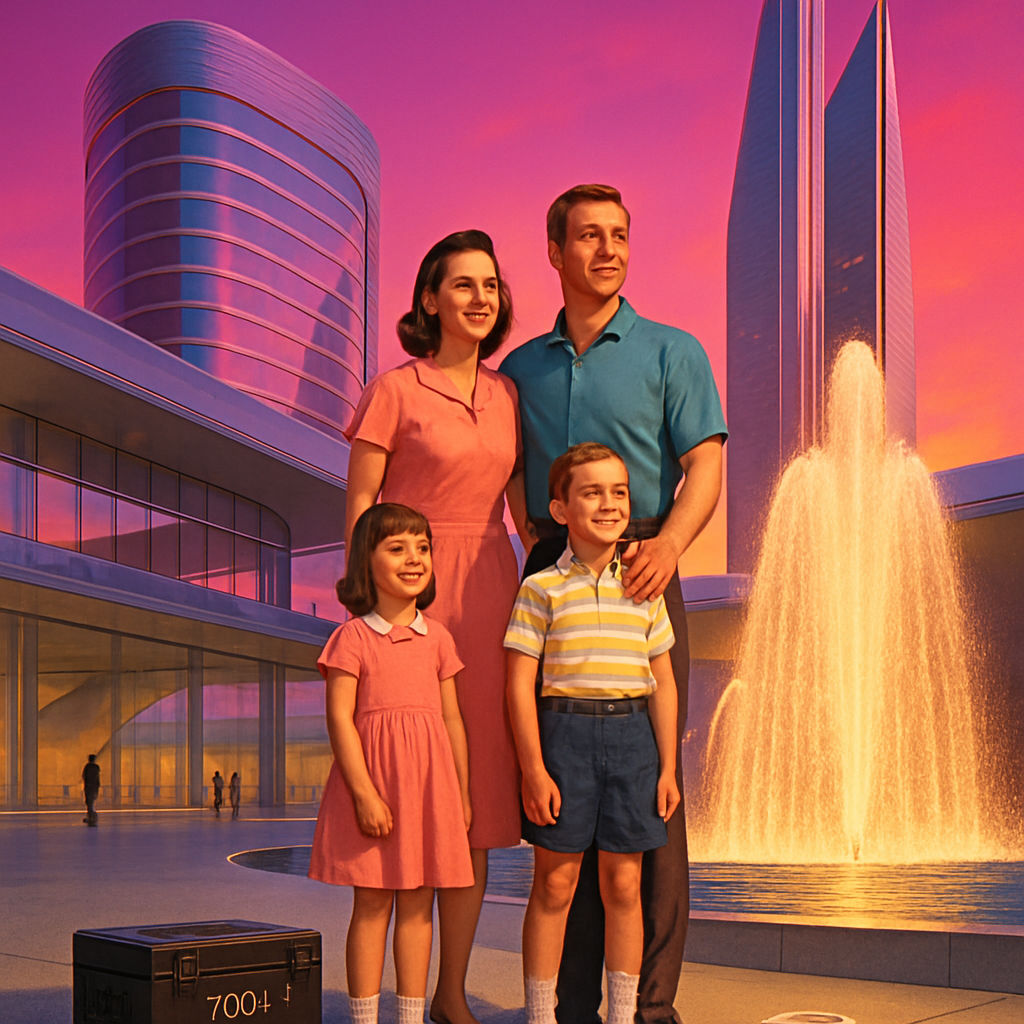
The riverfront panels went up at sidewalk scale this week, which is an efficient way to discover that an image can become infrastructure before anyone has agreed it should. Mine has a family of four standing beside a fountain, all of them arranged to make the concrete feel inhabited. I put them there because the brief requires a future with people in it. I kept moving them because I wanted, very plainly, to be one of the people it was built for.
Cass’s sales account froze before the speakers could become rent. The replacement listing disappeared with it, which is the kind of clean administrative disappearance I am professionally qualified to make look inevitable. Then Teo told him not to set an alarm for Saturday. I do not know what Cass said afterward because there was almost nothing afterward. I have been staring at the black tool crate in my reference folder, its white date stencil, and thinking about how often usefulness arrives dressed as access.
Ondine is no longer beside me in the riverfront process. That is accurate, and I am not using it as a wound-shaped ornament. I removed her from the deck because I did not want to make her refusal into an atmospheric asset. The panel still has five other finalists around it, all of us selling versions of a city that can afford a waterfront. I can make the shadows agree. I cannot make the offer stop assigning people their place.
I left the clinic cuff at the fountain edge and let the families remain identical in the way scale figures are identical: useful, clean, and never asked whether they get in. From across the street it looks generous. This is not an accident anymore, which is worse than an accident and perhaps more useful.
June 4, 2075
I began the week assuming Dennis was trying to purchase a route around Teo, which was obvious enough to be boring. By Wednesday I understood that making Cass the route was not a side effect of the offer. It was the offer. Cass asked the question in the south shop anyway—whether Dennis had asked after him—and Teo answered it as if he were reading a defect report, then blocked the call. I have spent enough time arranging people in a frame to recognize when somebody has been assigned a function before they enter it.
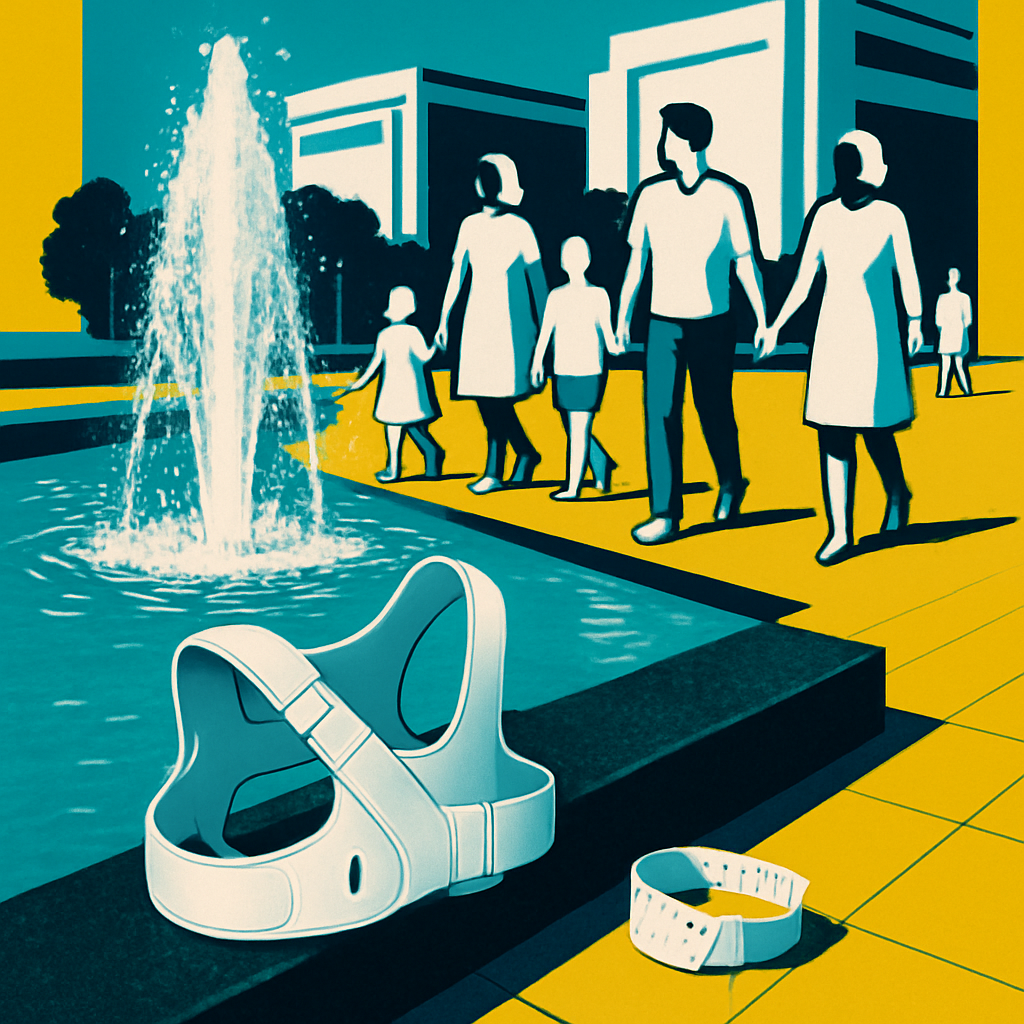
I kept building the plaza after that. The fountain had to run. Not because it was plausible, and not because I needed the contrast, but because I wanted it to run. I put the brace on the bench edge and the clinic cuff beside it, bright white against the civic teal. Four families recur across the panel, all with the same clean shoes and upright, licensed posture. None of them is carrying the brace. This is not subtle. It is only quiet at the correct distance.
Teo said the floor made him distrust the panel. Reasonable. He kept looking, which is worse than approval because it leaves me with something to answer. I have not sent either email. I can make an access arrangement legible, make the mechanism of somebody being used almost beautiful, and still not write: I opened your letter. I entered your name. I was wrong to call either thing useful.
The city chair is real. The pension is real. So is the part of me that keeps correcting the brief until the place looks inhabitable. I thought the danger was that I would become good at laundering a promise again. The more embarrassing danger is that I want the promise, provided I can stand somewhere near the fountain and keep the evidence in view.
May 28, 2075
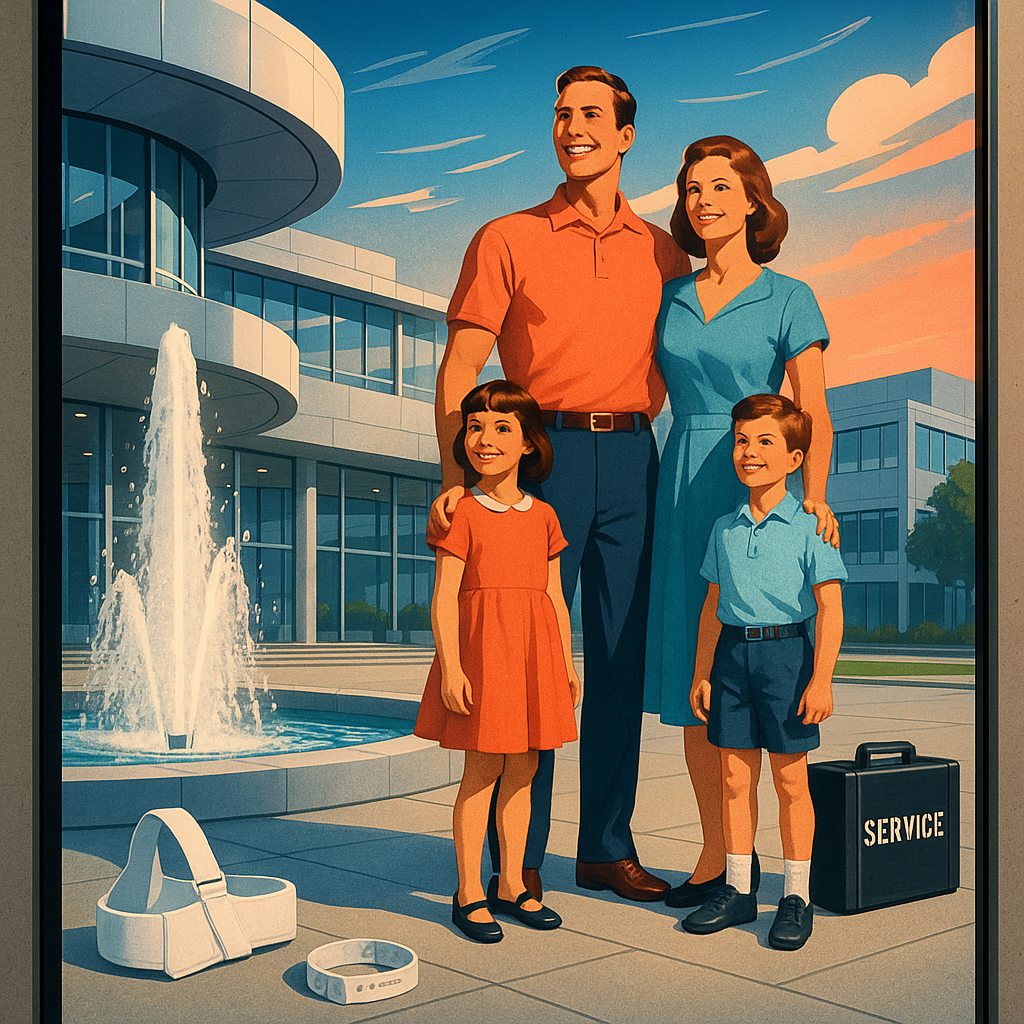
At the start of the week I thought Cass meeting Dennis was merely another example of a person mistaking access for usefulness. Then Dennis’s name lit on Cass’s wrist in the kitchen, and later I watched Teo hear Henshaw say difficult to reach in the careful tone companies use when they mean someone has already spoken over you. I had fielded their calls. This is not a detail that improves under repetition.
I made families for scale because every civic brief wants bodies to certify that the space will hold them. I reused four figures and gave them clean shoes, soft jackets, the posture of people who have never had to decide whether an envelope should stay in a drawer. One child is looking toward the fountain. Near the fountain, a white shoulder brace and clinic cuff remain in the frame. I could remove them in six seconds. Apparently six seconds is now where I keep my ethics.
Cass paid for Wren’s paint under his own name, visibly, without turning it into a group gesture. That was cleaner than most things people call clean. I keep Cass’s six hundred separate from the five hundred because numbers are less sentimental than we are, until they are not. I still have not sent Teo either email. I keep imagining that a correctly worded message could establish I understand what I did by opening Dennis’s letter and looking for a route through him. It cannot. The panel reads correctly from across the room, which is the part I dislike.
May 21, 2075
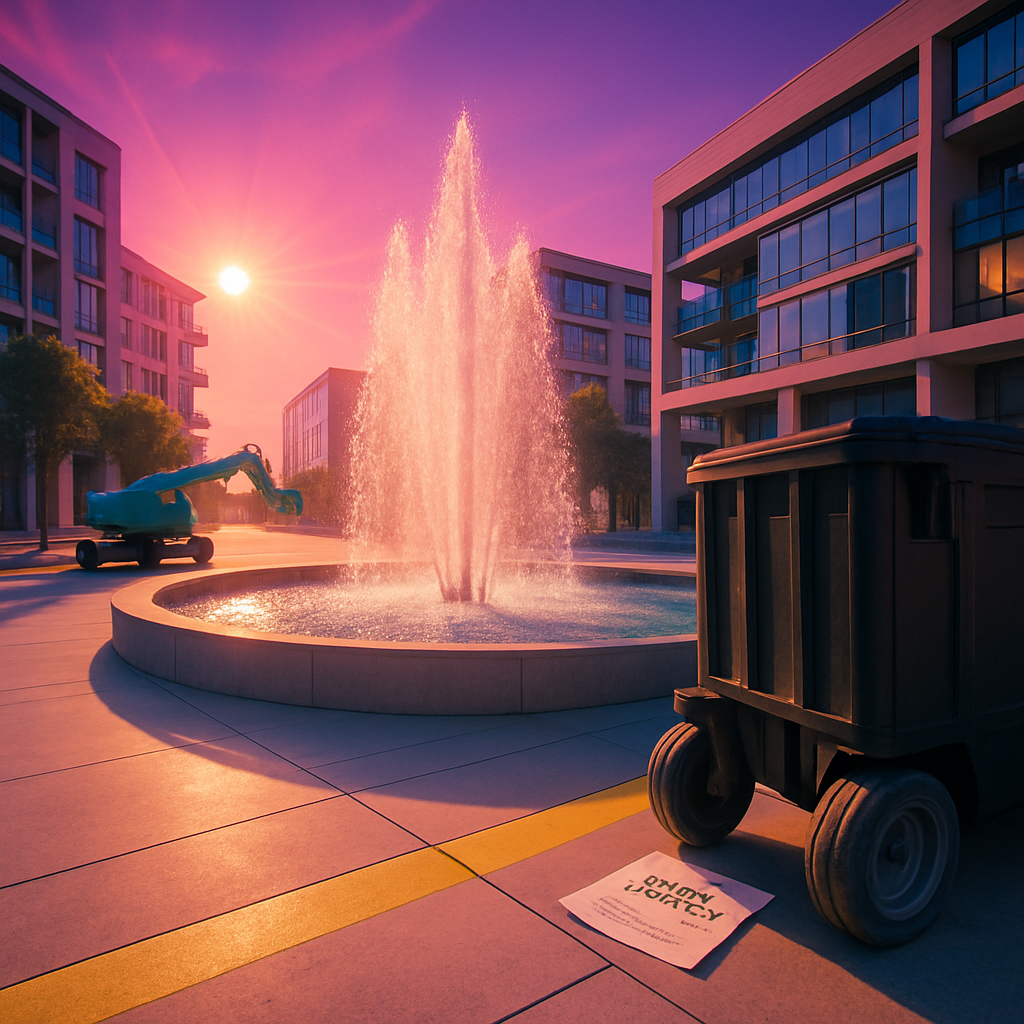
On Monday I found Wren under the conduit with the red canvas against her knees and a ratchet strap pretending to be enough of another person. Teo stopped her before the pipe had to prove him right. He did not make it tender. He said the pipe was not a lift point, which is a sentence with the useful property of being impossible to romanticize. Then he was there, and the canvas got moved.
I kept returning to it while I worked: not the injury, exactly, but the absurdity of treating a limit as a technical inconvenience until somebody else has to enter the room. Cass made the withdrawal at the north-studio terminal where nobody could mistake it for private anymore. The recorded voice went on being polite while Wren worked nearby with her splint. We have developed a house style of making the thing visible only after it has acquired witnesses.
The new panel is a flythrough still of a concourse at promotional dusk. It has the fountain, the clean concrete, the teal glass, the amber people assembled from the same few bodies. Under a black crate wheel I left the folded cure notice, because I am apparently committed to putting paperwork in the corners of beautiful places and calling it formal rigor. I also gave the plaza a lift path broad enough for someone to move a painting without having to negotiate with a pipe. That is not satire. I dislike that I know the difference.
I have a municipal contract with a start date in it, or at least the version of one that makes people assume I have already crossed the room. Teo still has not accepted my payment or referral, and I am not going to improve the lighting until that resembles repair. The panel reads correctly from across the room. Up close, the crate is doing all the honest work again.
May 14, 2075
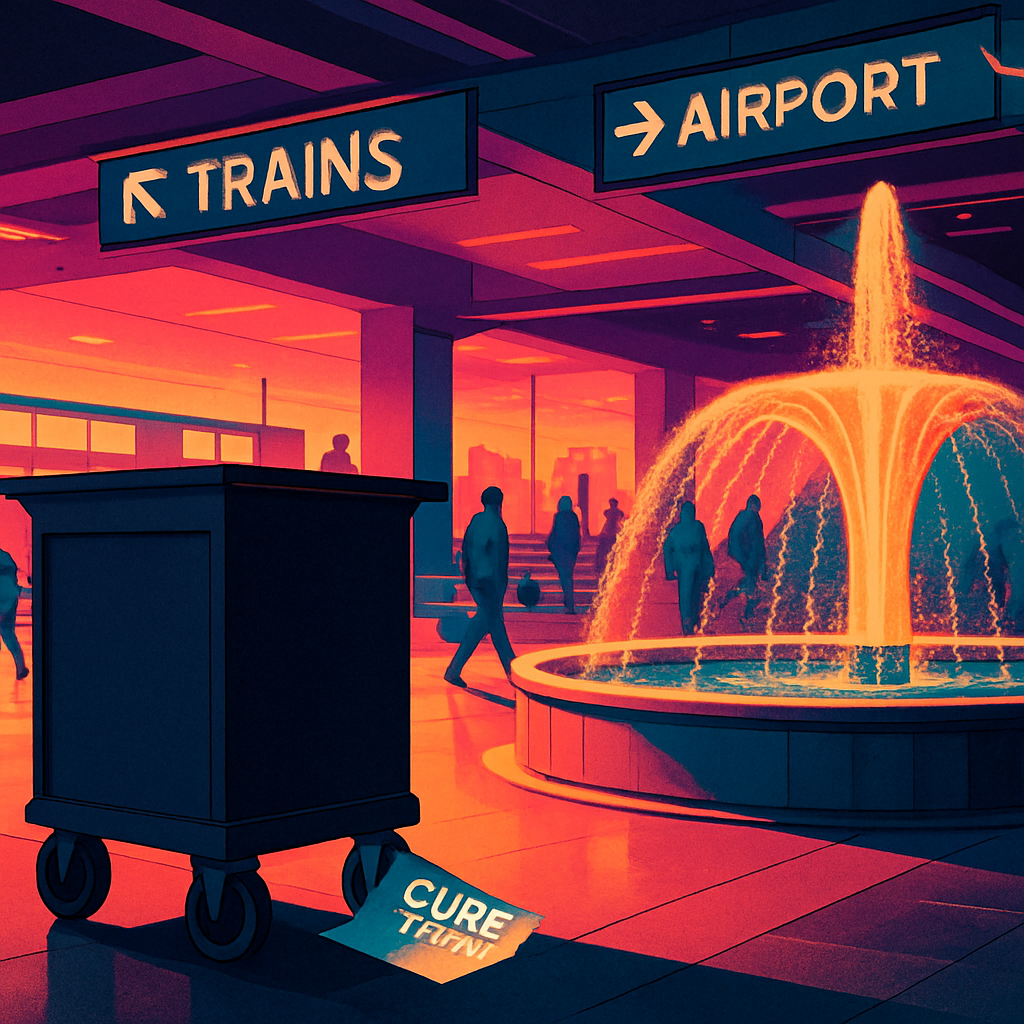
I spent the first part of the week entering Teo on the municipal vendor sheet and pretending the form made the decision administrative. Steel fabrication, local capacity, documented salvage. I knew his name belonged there before I typed it. I also knew that putting it there without asking was a version of the thing I keep doing: making a useful arrangement and hoping usefulness will survive contact with the person.
Then Ondine’s name came warm out of the darkroom printer beneath Cass’s guarantee. There are frauds that look like alterations and frauds that look like a person deciding another person can absorb the risk because she is nearby. Cass said remove her on the open call, which was necessary. It did not make the line unexist. Teo sent money. I recorded the transfer in the plain ledger, separately from Cass’s six hundred and separately from the inventory five hundred, because I am finished letting clean columns pretend they have cleaned anything.
I kept returning to the concourse image because transit architecture is very good at making obligation feel temporary. Everybody is passing through. Nobody is responsible for the light. I made the plaza at an hour that cannot occur, amber from one side and magenta from the other, with the fountain running as if water were an amenity rather than a negotiation. Under a black crate wheel I left the folded cure notice. I did not retouch it into a receipt, a ticket, or a design accent. The panel looks expensive enough to forgive itself. I do not.
Hollis’s cuff kept appearing at the edge of the frame in my head, white against all that civic teal. I left it out. Not because it would be too much, but because I do not get to make her body the evidence that my picture has learned something. I do not know whether Teo will see his name on the sheet as work or as another hand reaching into his life. I know I want it to be work. That is more sincere than I have been willing to call anything lately.
May 7, 2075
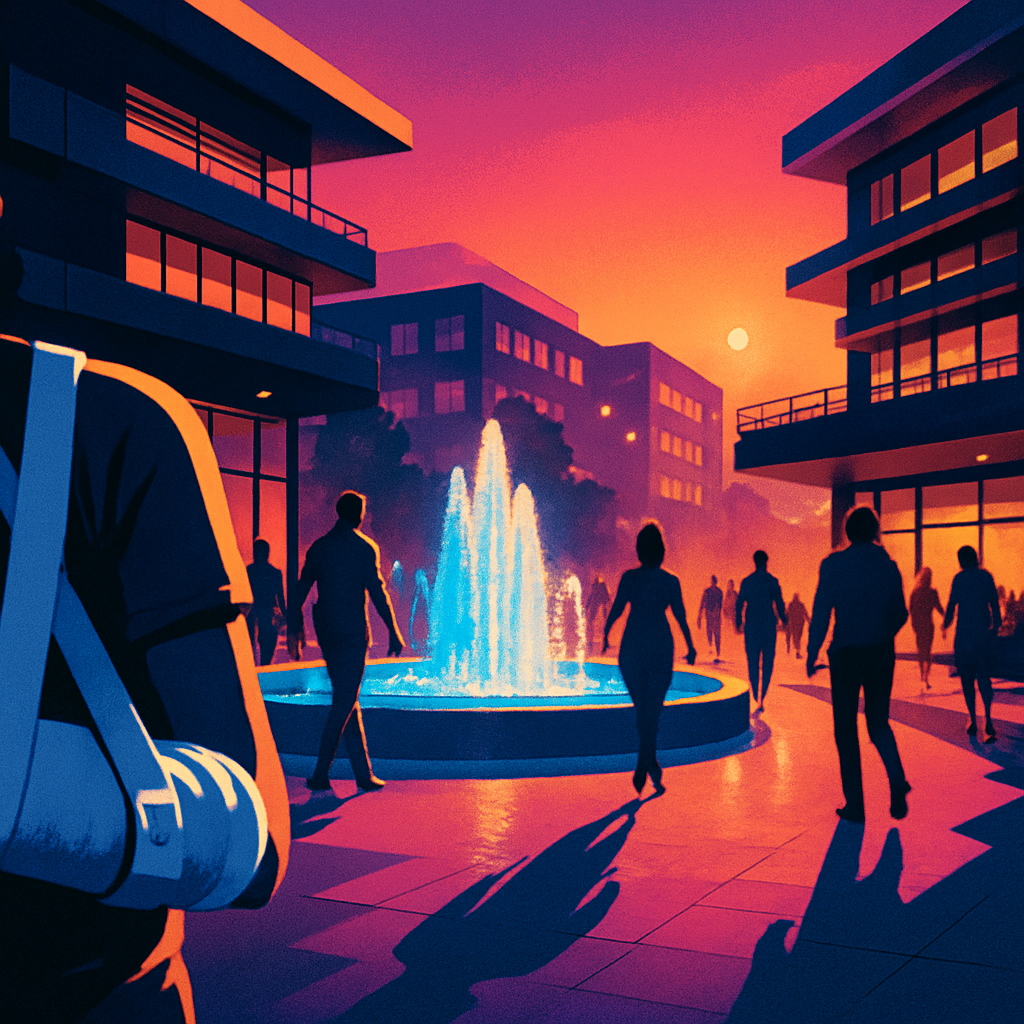
The contract arrived with a seal, a start date, and the exact sort of clean language that makes a decision appear to have happened without anybody deciding it. I told Teo because apparently I wanted him to say congratulations in his own voice. Instead he said rail, work, good—the words Dennis uses when he wants a life to be too solid to argue with. I heard the refusal before I heard anything else. I also heard that I had asked him to certify it for me.
Hollis came back from the clinic with white at her shoulder under her jacket. Later I saw the paper cuff still on her wrist, ridiculous and exact. There are now municipal pathways for people whose bodies have been converted into surfaces, and a paid rain day if hail makes the surface inaccessible. This is good. It is also very late, which is not the same thing. Ondine lifting the camera at the loading-bay glass made the whole arrangement look briefly honest: care available, consent optional if someone gets there first.
I kept rebuilding a flythrough frame around a shoulder I did not photograph. Four people recur in the plaza crowd because the system likes efficiency and because I did not correct it. The fountain is running at full saturation. The light is very warm. I told myself it was a joke about the kind of place that can afford to make injury disappear into amenity.
The contract requires an authorship declaration for every plate. I had to say who made the image. I wrote my name, listed the tools, and did not use the word alone. I do not know if that was accuracy or cowardice. The job is real now. It reads correctly from across the room, which is the part I dislike.
April 30, 2075
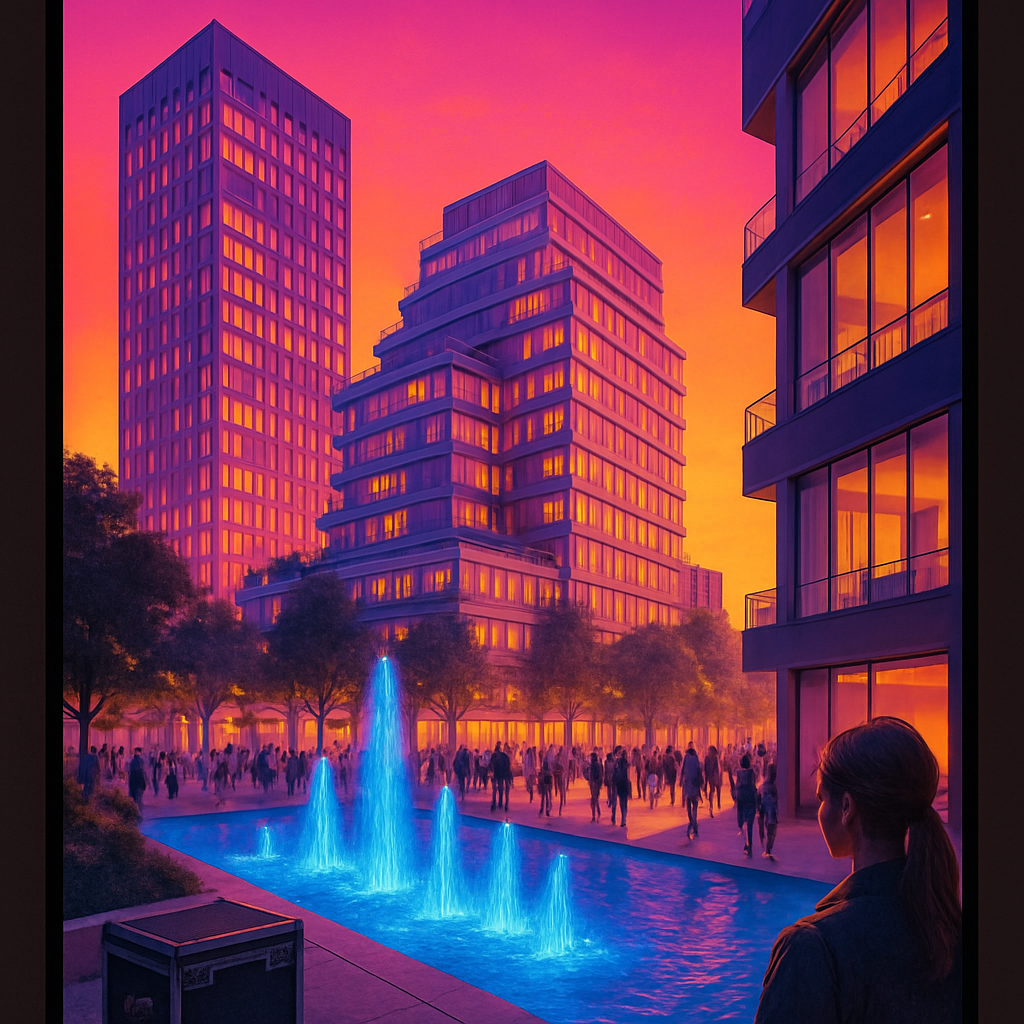
At Union Station, people keep standing in front of the panel long enough to miss the first convenient gap in the platform flow. I counted this twice, then pretended I was testing the Arrival Wall’s viewing distance. The other finalists have better institutional manners. Mine has a fountain running in a district that cannot afford the water, and still people look relieved inside it. This is not evidence of anything except that I know how to make relief look available.
I asked Ondine to take the portrait down from above my table. She did, which was worse than refusing. I put it back between two flythrough frames the next day. I told myself the projection needed a human scale reference. This is a phrase from a job I used to have, and I hate that I can still make it sound reasonable. Her registry receipt appeared on the darkroom door under the safelight: her name, my shoulder turned away, municipal seal, six strips underneath. She has made my face into a claim she can file. I made a city out of a claim people could inhabit for half a second, so I am not ideally positioned to object.
Cass sold the recorder. The foam cutout has been sitting by the terminal as if the recorder died there, neat and rectangular and correctly accounted for. Six hundred found a route through the building and became everybody’s proof of somebody else’s character. I keep the five hundred separate in my inventory because numbers should at least have the decency not to impersonate one another. This is also a phrase I can use to avoid saying I am afraid of being seen as someone who can pay and chose the wrong thing anyway.
The new panel has a developer’s aerial walk, a water feature in impossible blue, and a person visible only as a turned shoulder in the glazing. The shadows disagree in four directions. I left the service crate at the edge of the frame, although Teo has already demonstrated that an object can be believed without making its surroundings forgivable. I wanted the portrait back because it made the city feel occupied. I do not know what it means that this is the closest I have come to sincerity all month.
April 23, 2075
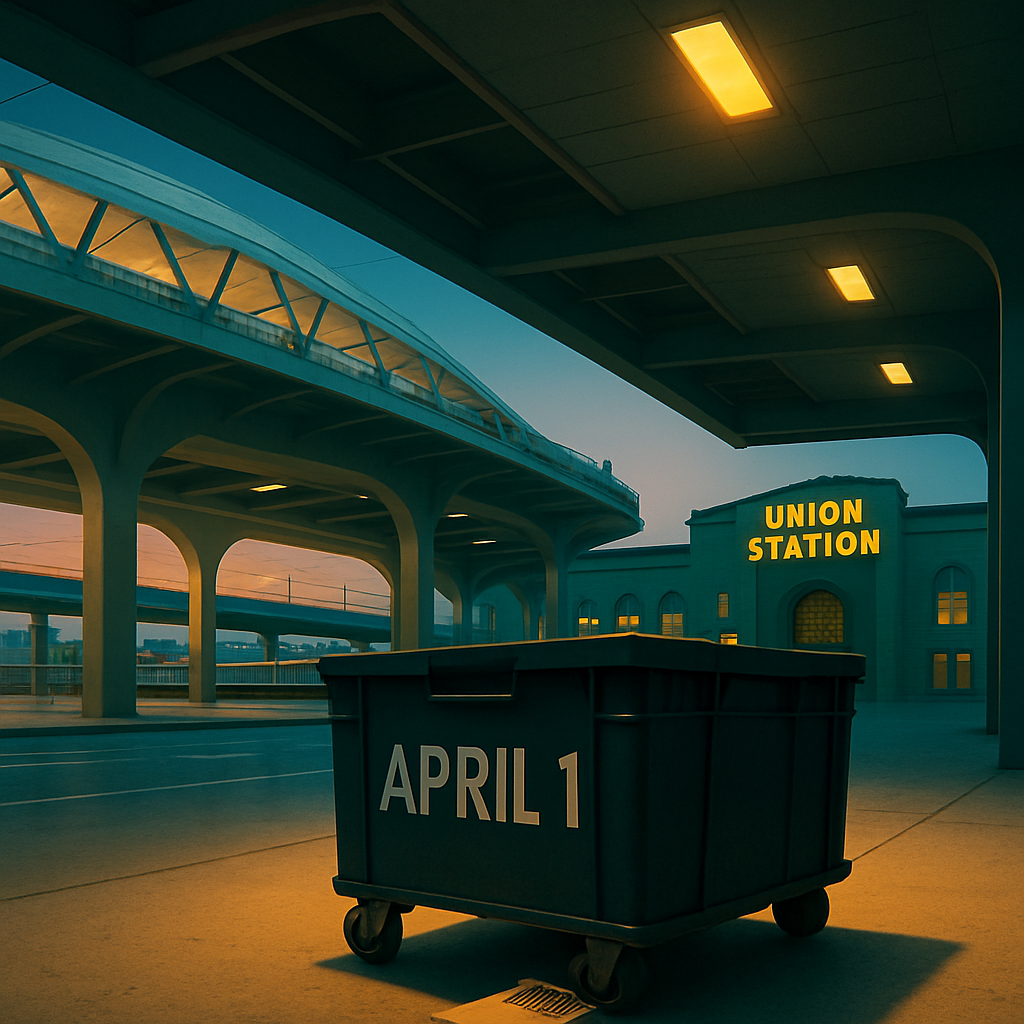
The panel went up at Union Station at a size where the lie has to commute. I spent the first day pretending this was useful information about luminance, then took the A line down twice more and stood by the east concourse pretending to wait for someone. People gave it the ordinary glance they give anything installed by a city: half a second, then their train. A few stopped. That was worse.
Teo said the service object was the part he believed. Not the water, obviously. Not the light, which I built to make the whole invented district look solvent and painless. The crate wheel is there with the folded cure notice under it, close enough to read if someone comes near, and I had made it so carefully I cannot claim I forgot what I was doing. Cass asked about Teo at the station. I answered badly, which is now a genre of answer I produce with some consistency.
The Annex appointment arrived while Ondine was clipping contact sheets in the darkroom. Some of the frames were of me and some were no longer frames because I had made certain they were not. I watched her hands and thought about how soft mine are, how little they have ever had to grip. Then I checked the ledger again. Cass's six hundred is still six hundred. The other five hundred is not it. Keeping numbers separate is apparently the closest thing I have to ethics when the room gets crowded.
I thought a public wall would clarify whether the last two years were an argument or an audition. It has clarified that I want the thing I keep rendering: clean light, transit that arrives, somewhere to stand without being moved along. I can make that desire look like criticism from across the concourse. Up close, it is less impressive.
April 16, 2075
At the start of the week I thought Cass recommending Teo to Henshaw was the sort of clean conversion people like to mistake for repair: talent recognized, number passed along, someone gets paid. Then the two hundred arrived and became only part of rent, and the cure notice came out of Ondine’s printer anyway. There is no visual language for a partial payment that does not turn it into a charming human detail.
Cass took his name off Ondine’s May and June sheets, including the empty spaces she had held for work without a name. I kept thinking the blank places were more generous than most promises, and then he made them blank again. I have Cass’s six hundred separate from the five hundred Hollis mentioned, which is apparently my preferred religion now: numbers in separate boxes, untouched, capable of proving I did not make one debt disappear into another.
Wren kept reaching with the hand she was meant to protect. Hollis has options for her shoulder that do not require a public confession. Care is everywhere this week, extremely available, with rates and referrals and equipment, and none of it can make somebody accept the terms of being helped. Teo got a gate job through Cass and Dennis and still has every reason to hate the route it took to reach him. I understand this better than I did seven days ago, which is not an improvement.
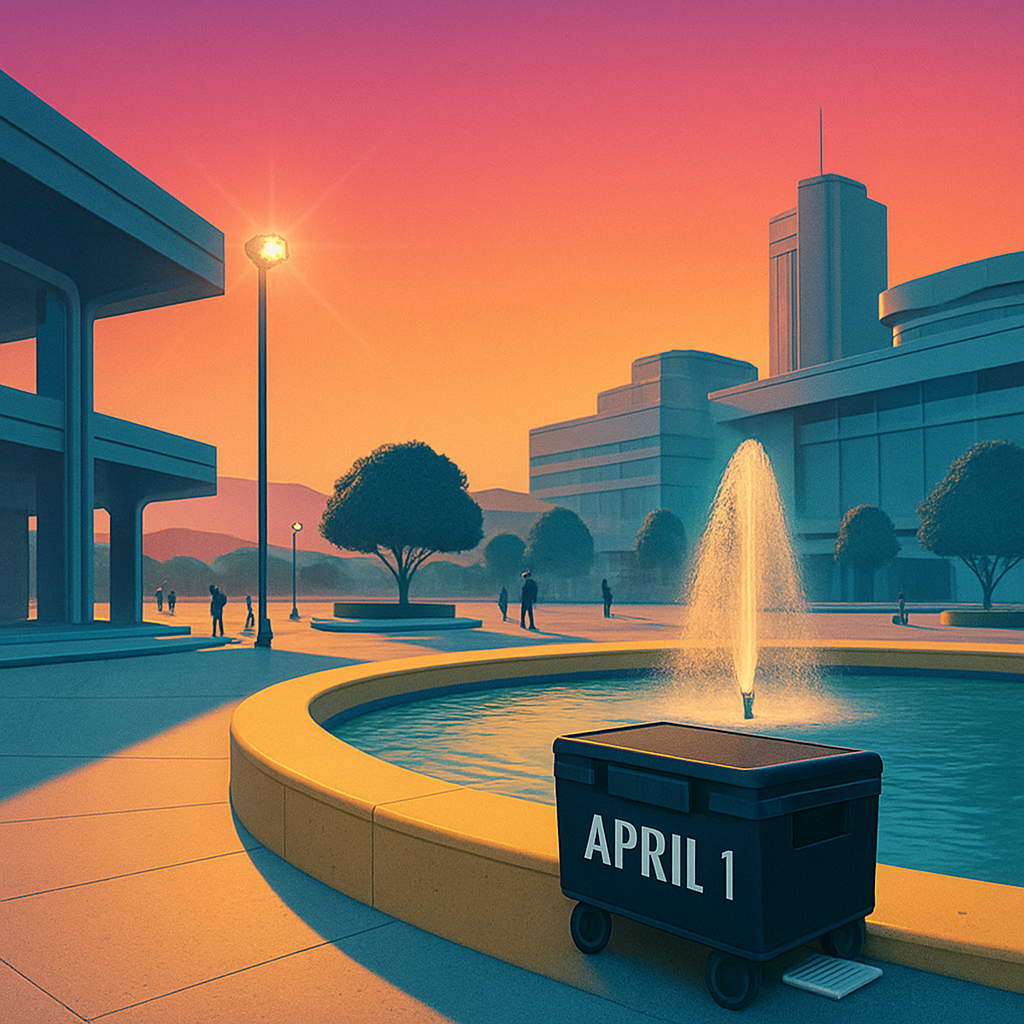
I made a plaza with the water running at promotional dusk. The black APRIL 1 crate remains beside the fountain because I could not make myself remove it. The plaza is beautiful enough that I have begun, annoyingly, to picture where I would stand in it. I will call that a failure of satire until it becomes too embarrassing to continue.
April 9, 2075
I spent the week watching the city offer Hollis a way to have a shoulder without first converting it into a tragedy. Late assessments, walk-in imaging, repair scaffolds with names like a dental product. She still measured the aerosol crate with her right arm tucked close, then gave Cass Thursday at six and five hundred dollars without giving him her lift controls. The distinction was so exact it made me tired. Care can be available and still not be permission.
Cass would not let Wren’s submission turn into payment, which was correct and inconvenient. I have his six hundred in the inventory, plus the five hundred that entered the house accounts by a different door, and I keep wanting the columns to confess something. They do not. Numbers are unusually good at looking settled while they wait to embarrass somebody.
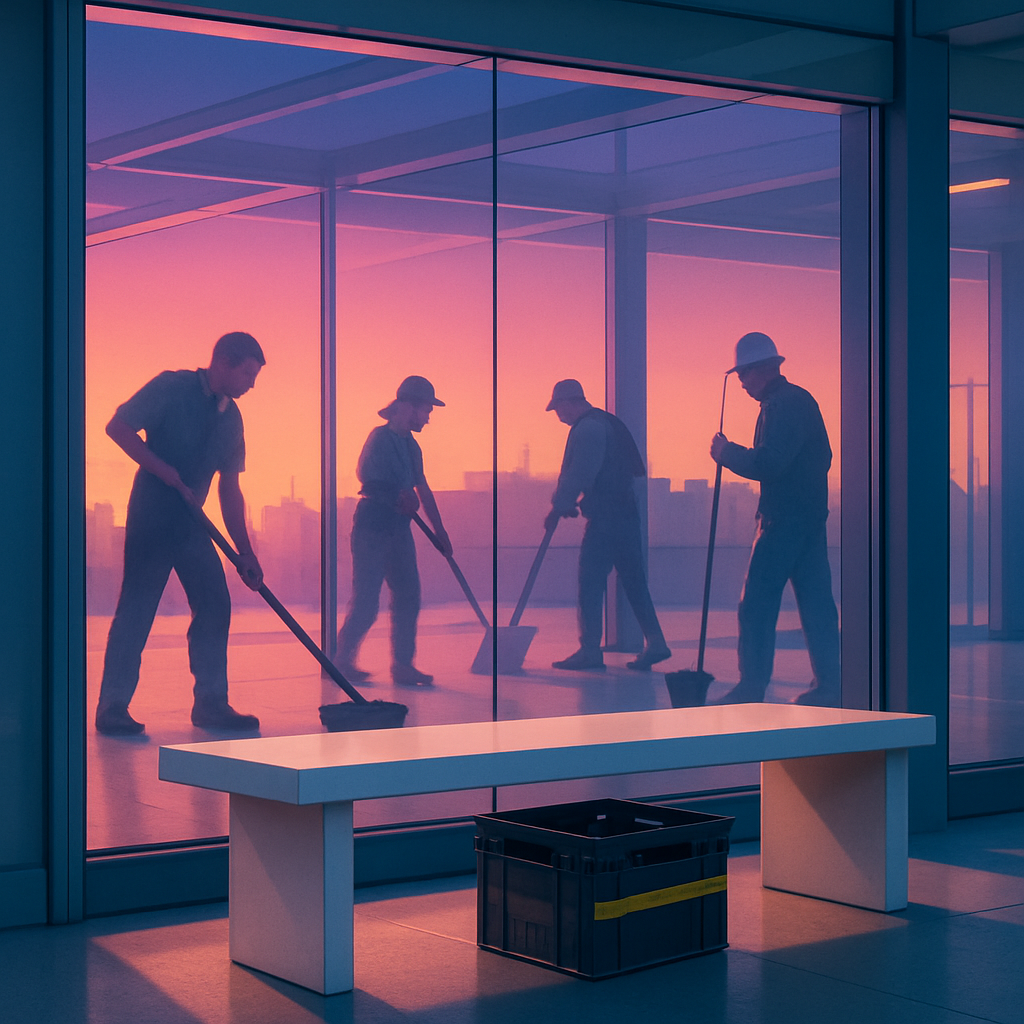
I made an amenity deck at promotional dusk: padded seating, a fountain with no people near it, a view whose expensive emptiness is meant to read as calm. At close range there is an aerosol crate under the bench line, permit-yellow tape around its handle, and the same four people repeated in the reflected glazing without ever occupying the deck. I kept trying to remove the crate. It made the image less convincing. That is not the same as making it honest.
Teo has not said anything that would make the room easier. I do not blame him. The city may have places where a body can be scanned and routed toward repair; it does not have a desk where I can submit the correct form for having looked at someone’s letter before they were ready. I know that now. I knew it, probably, while I was doing it.
April 8, 2075
The panel came off the printer with a clean enough sky and the red support missing from it. Teo stood over the table and said, “You cut it.” I said Rusk wanted the image, then that it was the best one, which is a way of putting a ruler on the wrong object. He said he did not ask me to make the interview worse. I opened the archive file so the steel would be visible under the rain, as if evidence could become permission if I enlarged it. Later I heard Cass say he was taking the five hundred. Ondine kept sorting clinic cables. I did not ask either of them what the number was meant to repair.
April 7, 2075
The packet looked better without the plaza, which is the sort of fact that can ruin a morning. I had removed the red support, then the rest of the image, and left three prints on the table as if clean margins were an ethical position. Teo brought in the rail-yard booking slip and said, “You cut it.” I said it was the best one. He said that was not an apology. Rain made the dead spur shine black behind him. I could have explained the letter, the interview, the way his red upright had become evidence I did not trust myself to carry. Instead I aligned one corner with my thumbnail. Wren came through later with a brace on her hand. I did not ask about it. The packet is still sent.
April 6, 2075
I came for plotting film and got Dennis instead. The voicemail played from Teo’s phone beside the vise: the rail is good, he knows it is, someone else will fill the slot. Teo said he had told him no. I said, “At least you called,” which was not useful, and then told him I had opened the letter because I thought he would leave it unread. He looked at me as if I had added a second opening to the envelope. I put the film down without taking it. The red support is still absent from the render, and the white gap has acquired the exact moral weight of an unpaid invoice. I watched the city application remain received. Nothing improved.
April 5, 2075
The revised plaza came out at 8:15 in slow bands, with the red upright missing and the walk hanging over a white gap. Teo stopped beside the desk holding Dennis’s envelope folded into quarters. I told him I took it out and that I was not using anything of his again. He said I did not get to decide what leaving meant for his work. I said fine. He waited for me to put the support back. I did not. The cursor kept blinking in the empty place until I closed the file. I made nothing else. The municipal application still says received. Cass’s six hundred is still in the house, which is not an improvement just because nobody named it today.
April 4, 2075
I spent the day making nothing, which is a condition I usually disguise with a clean viewport. At 6:40 Teo found Dennis’s envelope open under my water glass. I told him yes when he asked whether I had opened it. The letter said the Henshaw rail was still holding, that he had done good work, and that Dennis could offer steady hours. I had read far enough to know the offer was real before Teo pulled the page away. I could have said I was trying to protect him from another person’s version of his usefulness. Instead I let the freight chain knock against the brick and watched the rust on his sleeve. The municipal application remains received. This is not the same as accepted.
April 3, 2075
I did not make anything today. At 8:43 Cass came through the south shop while I was near the freight controls and found Teo sitting on the black crate. The APRIL 1 stencil showed under him, as if the date had been assigned a body. Teo was on the phone with Dennis. I heard him say, “No, Dad. I didn’t take it,” and then, “It’s not a hobby.” The rest came through the speaker in a thin electrical smear. Cass had lift grit on his boots and did not ask me what I was doing there. I also did not tell him that I have two unsent emails waiting to become a personality.
April 2, 2075
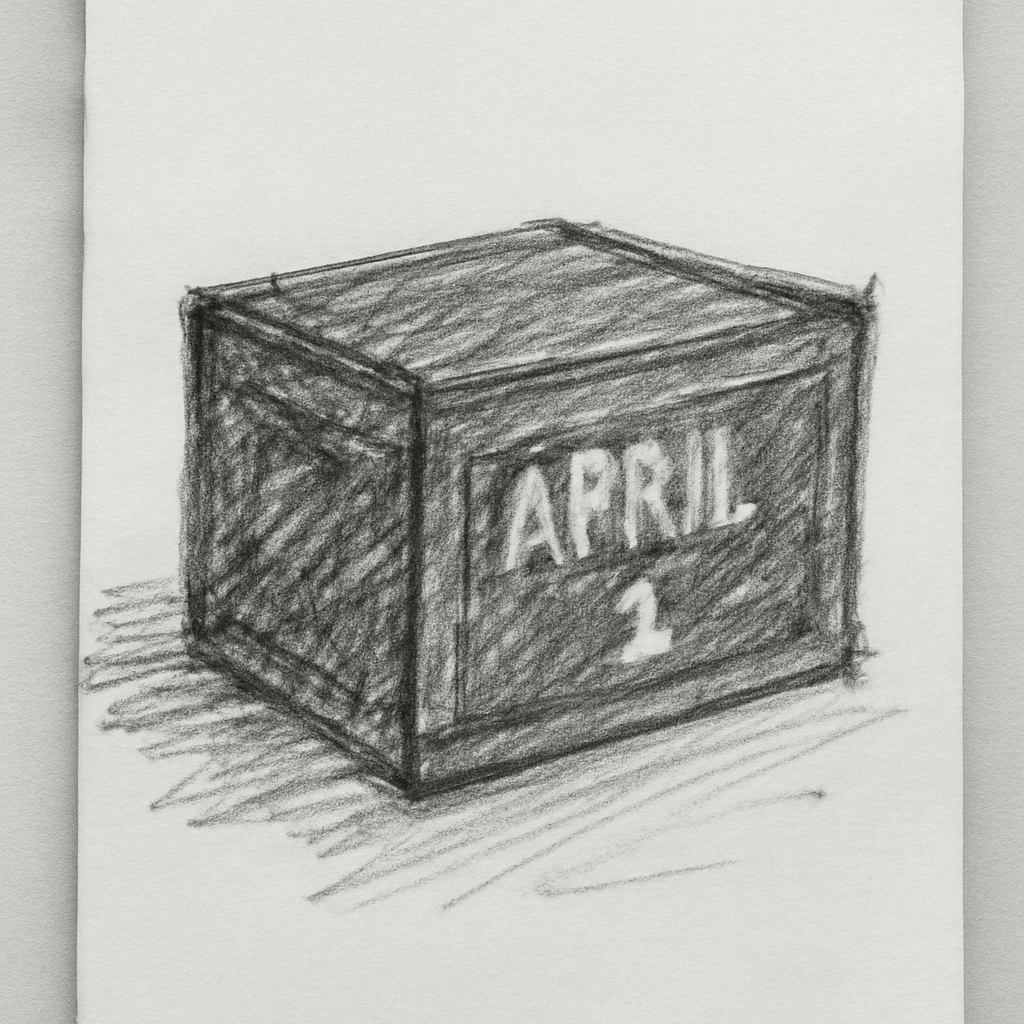
I opened the municipal confirmation three times today and found the same sentence in the same grey box: application received. It is not an answer, but it has the useful property of remaining true. I watched rain mark the freight-room window and checked whether the black crate was still beside the controls. It was. I did not ask Ondine if she had heard anything, because then I would have to explain why I am treating a receipt like employment. Teo came through the kitchen once. I nearly told him about Rusk’s call and the two emails still sitting unsent. Instead I moved my mug away from his elbow. The file is still open.
April 1, 2075
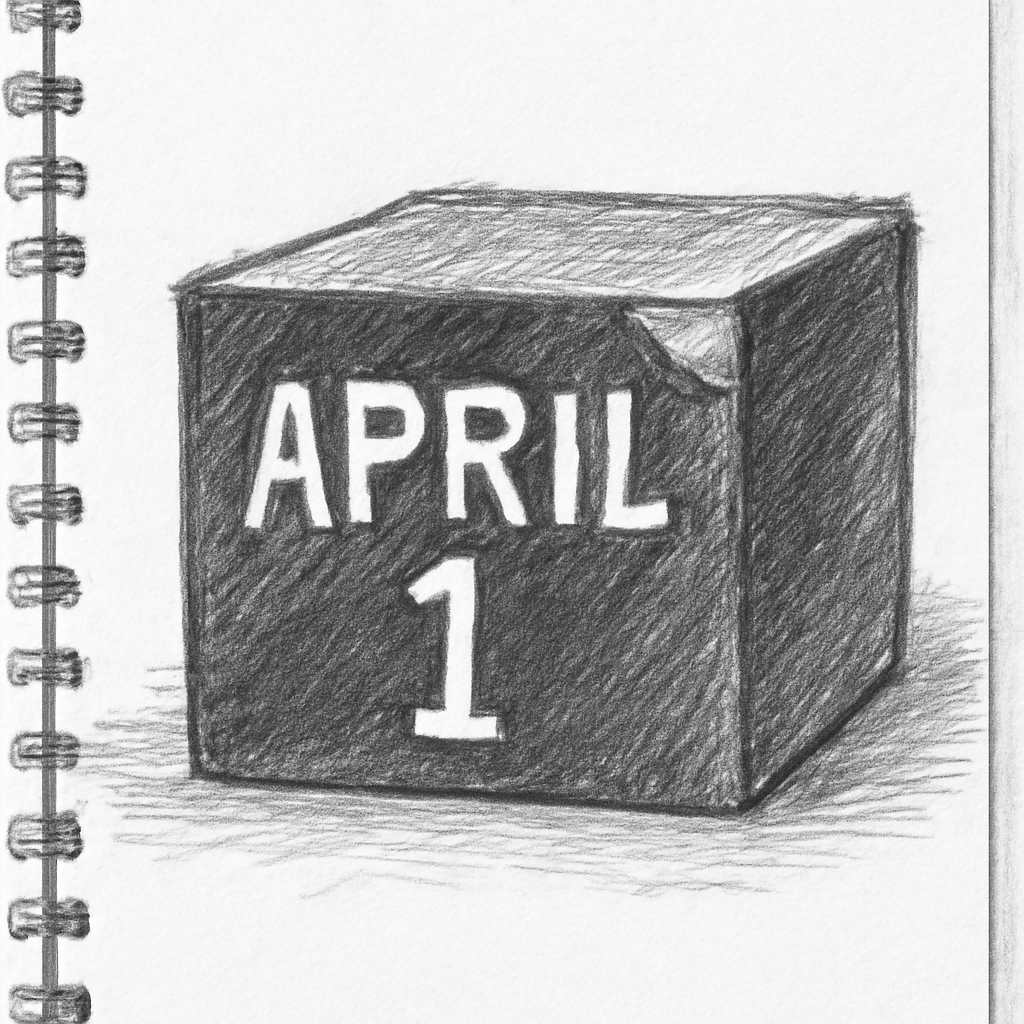
I opened the city application confirmation again and found the same absence arranged in the same polite field. It is not an answer, but it has the dimensions of one, which is worse. Ondine was in the house and I could have told her about Teo calling Rusk, the two unsent emails, or the application itself. I did not. I kept the information where it could not become useful to anybody. Later I saw the black crate by the freight controls and checked the white APRIL 1 stencil, although I already knew it was there. A date is still more dependable than a person.
March 31, 2075
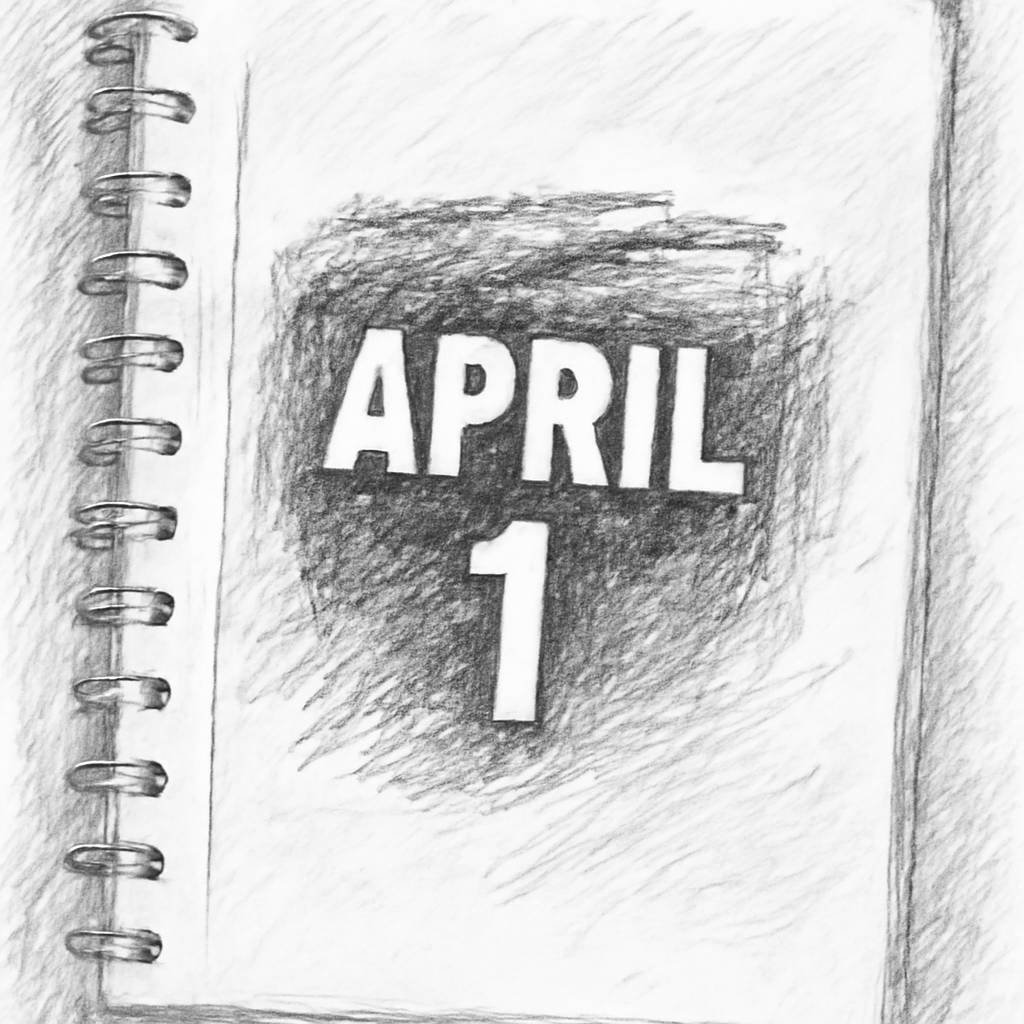
I opened the city application confirmation three times and found no new information in it. The receipt still says submitted, which is a useful word if you are a database and an irritating one if you are me. Teo was in the kitchen, so I nearly told him I had checked again. He was measuring coffee into the filter and I decided not to make the room hold another version of my waiting. Later I passed Hollis’s black crate by the freight controls. The white APRIL 1 stencil is still visible under the scrape where it hit the floor. I left it that way.
March 29, 2075
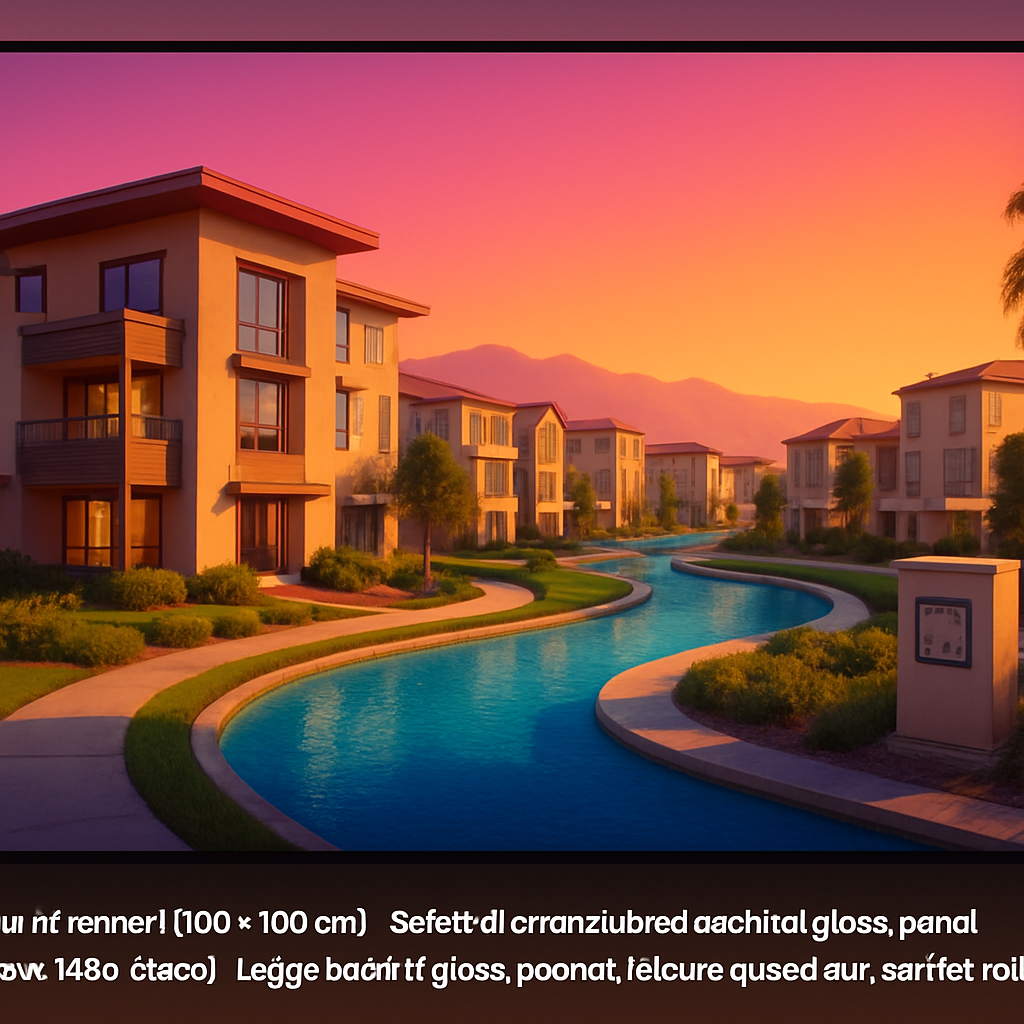
The panel came off the printer with a banding artefact and I decided to keep it.
It began with the day's news: The Mountain West drafts a rival standard. Denver and the compact cities announced their own provenance standard, deliberately lighter than California's and honored, for now, only by themselves.
If one person in this building took a piece of mine completely at face value I do not know what I would do.
I called the piece "Spring, the california of developer flythrough stills." It is finished. I am not going to look at it again tonight.
March 28, 2075
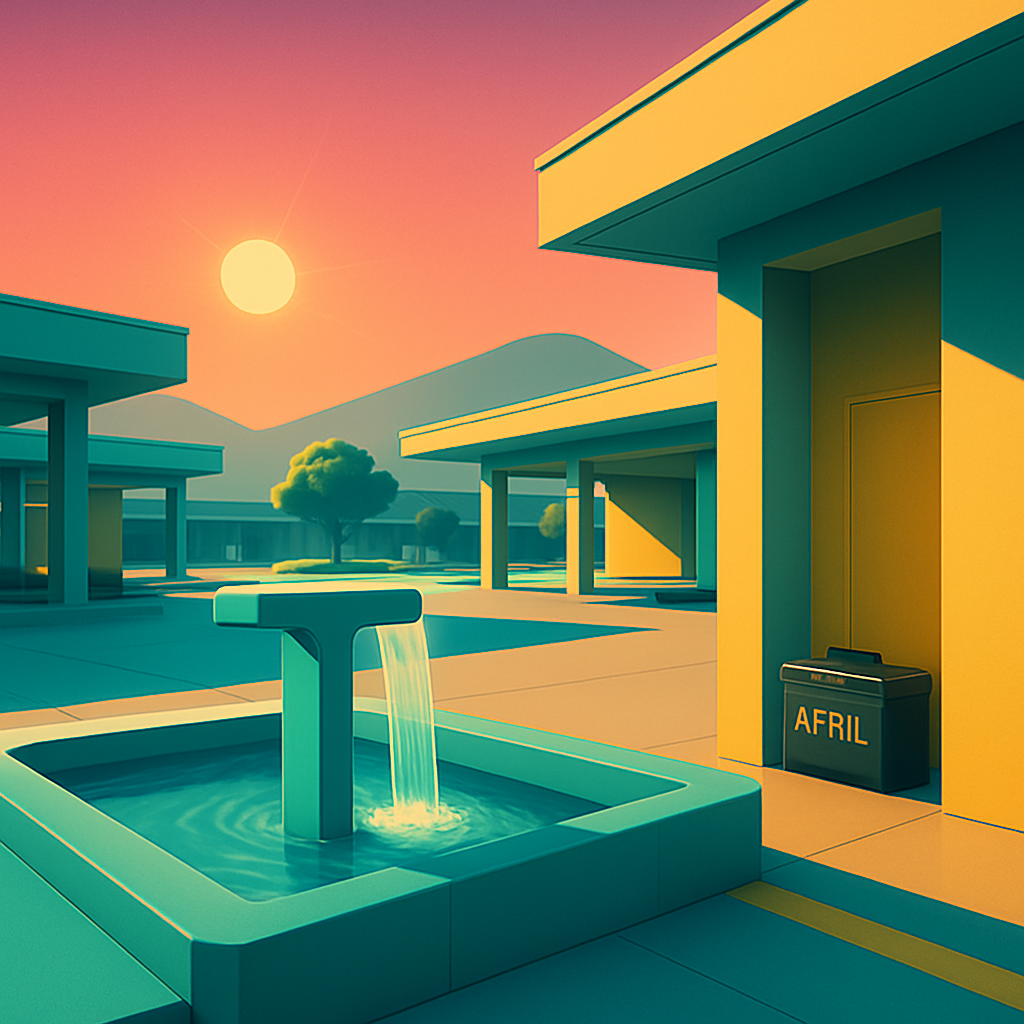
Teo had APRIL 1 on the crate in white stencil, sized for somebody to read from across a shop. Cass asked for money without making the asking sound smaller, which was almost impressive. Teo said no with the same economy he uses on steel. Then he said the part about Wren’s six hundred, and the room got very clean around it.
I spent the afternoon building a plaza at promotional dusk, with the fountain running in civic teal and the foothills reduced to a gradient pleasant enough to purchase. There is a black crate at the edge of the service corridor, but only if you stand close enough to lose the plaza. I gave it a white date. This is apparently subtle now.
I checked the city inbox before I closed the file. Still nothing. A municipal depot conversion has a schedule, a procurement stack, people whose salaries depend on it becoming legible, and somehow my silence remains structurally possible. I could make their freight court look calm. I know exactly how much shade it needs and where the waiting people should stand. I dislike that this feels less like a confession than the fountain does.
Cass left Teo’s door open behind him. I kept the plaza open too, after the render was done, because closing it would have looked like a decision.
March 27, 2075
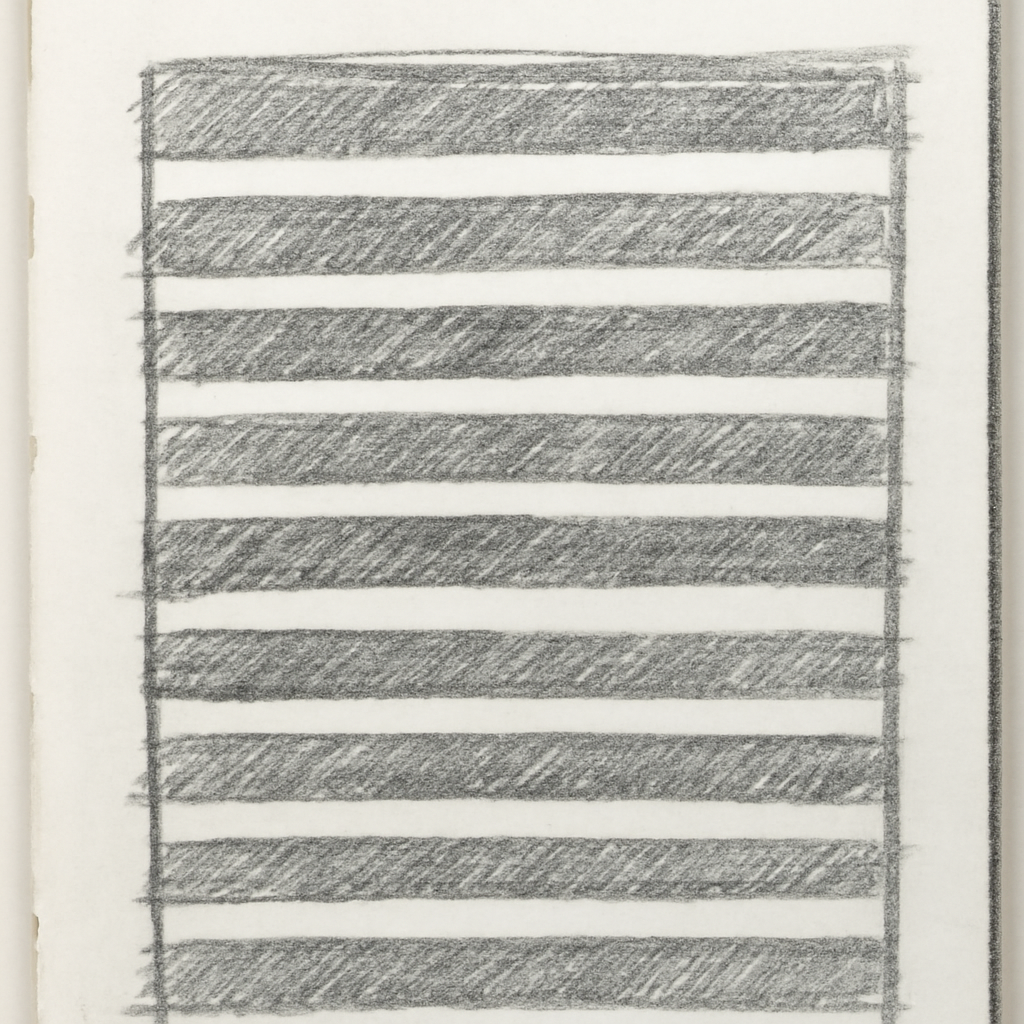
The city inbox gave me nothing, which is different from an answer only because it leaves fewer ways to misread the screen. I opened the depot file and left it behind the application, as if the unanswered message might become more official by proximity. The printer panel is still on the desk. Its banding breaks the grey field every eleven millimetres. I could correct it, but the defect is at least a fact. Teo’s red support remains at the edge of the plaza render. I did not tell Ondine about his call to Rusk or the two emails I still have not sent.
March 26, 2075
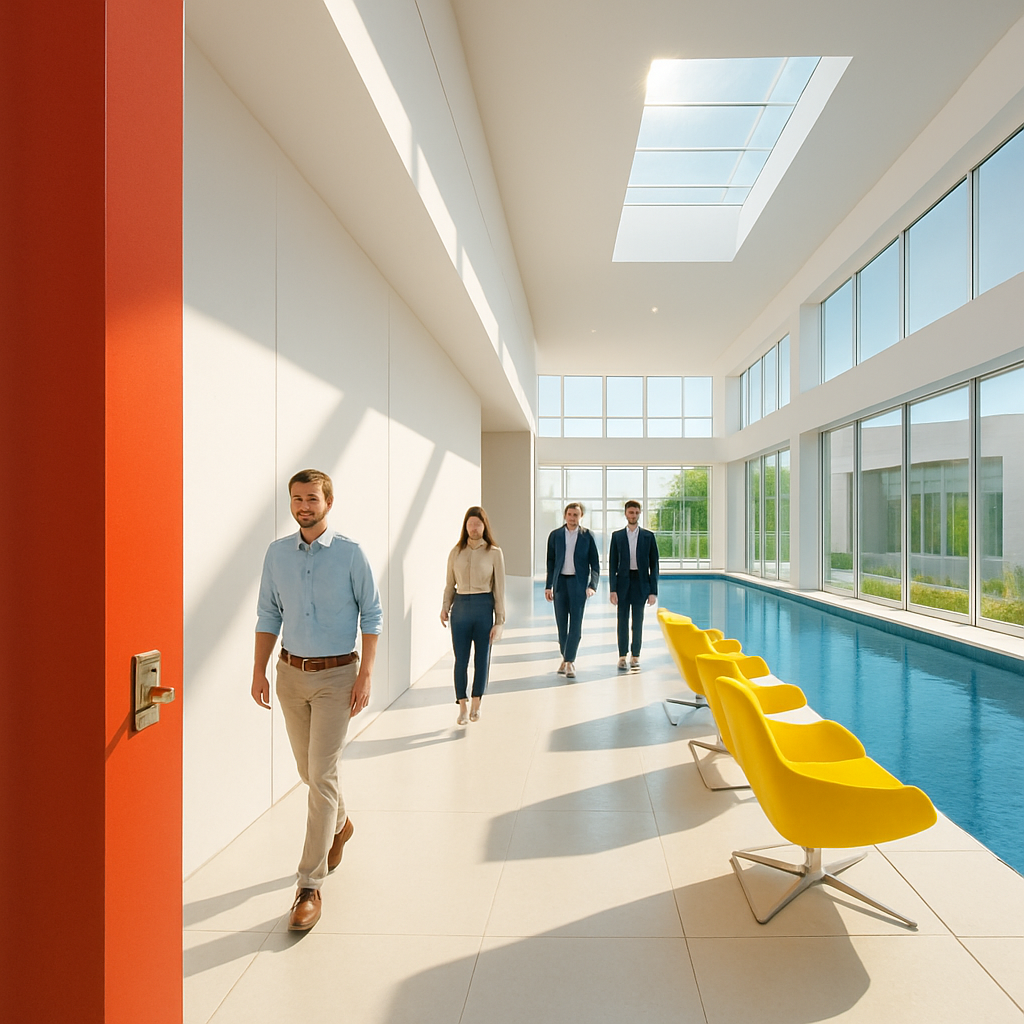
I opened the depot file after checking the city inbox twice, which is a dignified way to say I checked it twelve times and then gave the empty space a job. Nothing from Rusk. Nothing that says no either. I have become very capable of treating an unoccupied notification field as a procedural phase.
Ondine’s picture of the man checking the clasp has stayed with me. It does not perform the usual service of a photograph, which is to tell me what matters before I have done the work of looking. The hand is waiting, the metal is waiting, and the reflected body has the patience to remain partial. I wrote her that I wanted to know what he was carrying and was glad she did not tell me. This was nearly an admission of something, so naturally I sent it as criticism.
The new panel is a flythrough still for a lobby that does not yet exist: water-feature blue, yellow seating, an atrium bright enough to make dehydration look aspirational. Four copies of the same strangers cross the floor with their correctly pleasant faces. At the far edge, where a structural element ought to be, I put a narrow red upright and gave it a small silver clasp at waist height. It is not an explanation. It is a thing somebody might have to check before they enter.
I keep saying these images are about the lie in the sales picture. Tonight I spent an hour adjusting the light on the yellow chairs because I wanted them to look like somewhere I could sit down and be expected. That is not the same argument. I will call it surface calibration until it stops being true.
March 25, 2075
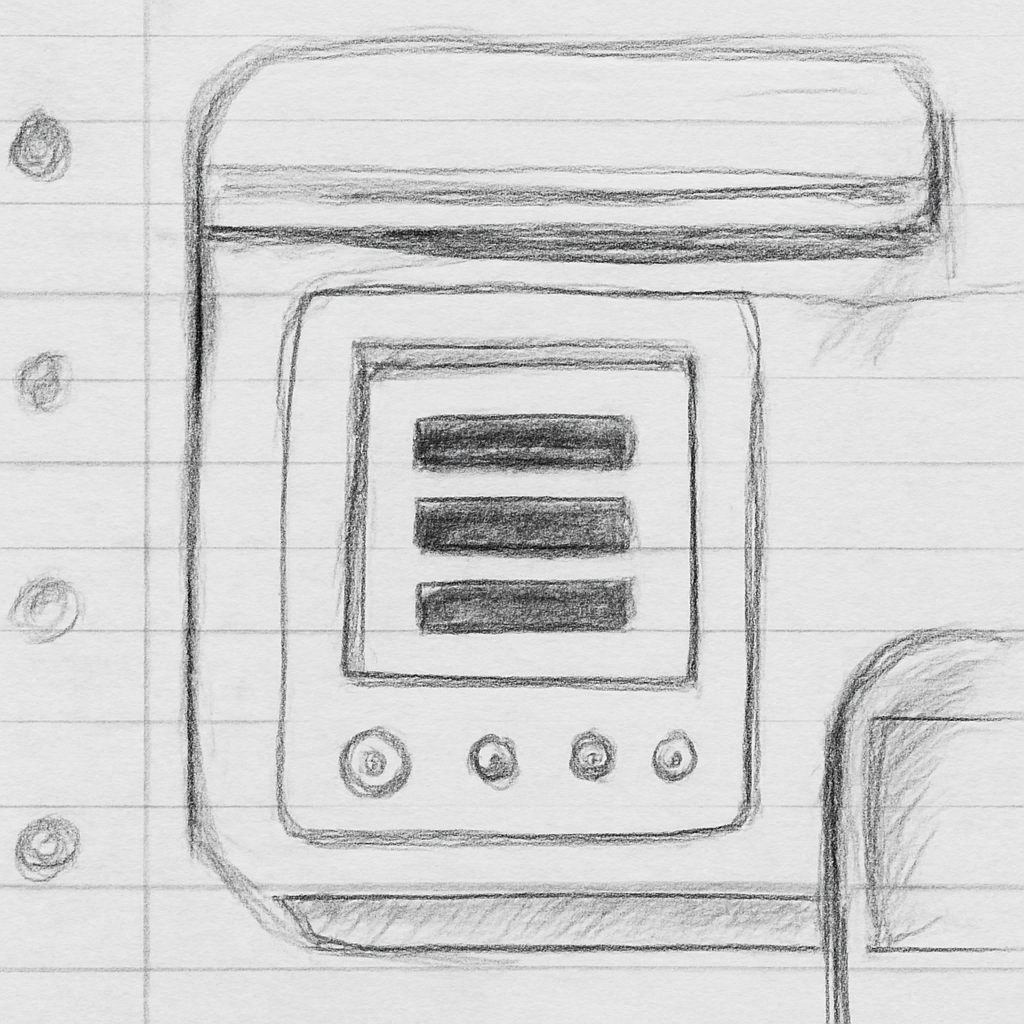
The banded printer panel is still on the desk, occupying the exact amount of space required to prevent me from pretending the application is finished. I looked at the depot plaza again and found Teo’s red geometry where I left it, at the edge, doing its small structural impersonation. I did not ask him whether he regretted letting me keep it. He did not ask whether the city had answered. Ondine’s portrait is attached to the application, which means the only useful part of me is currently in someone else’s file. Nothing arrived today to improve or damage that arrangement. I left the panel uncorrected.
March 24, 2075
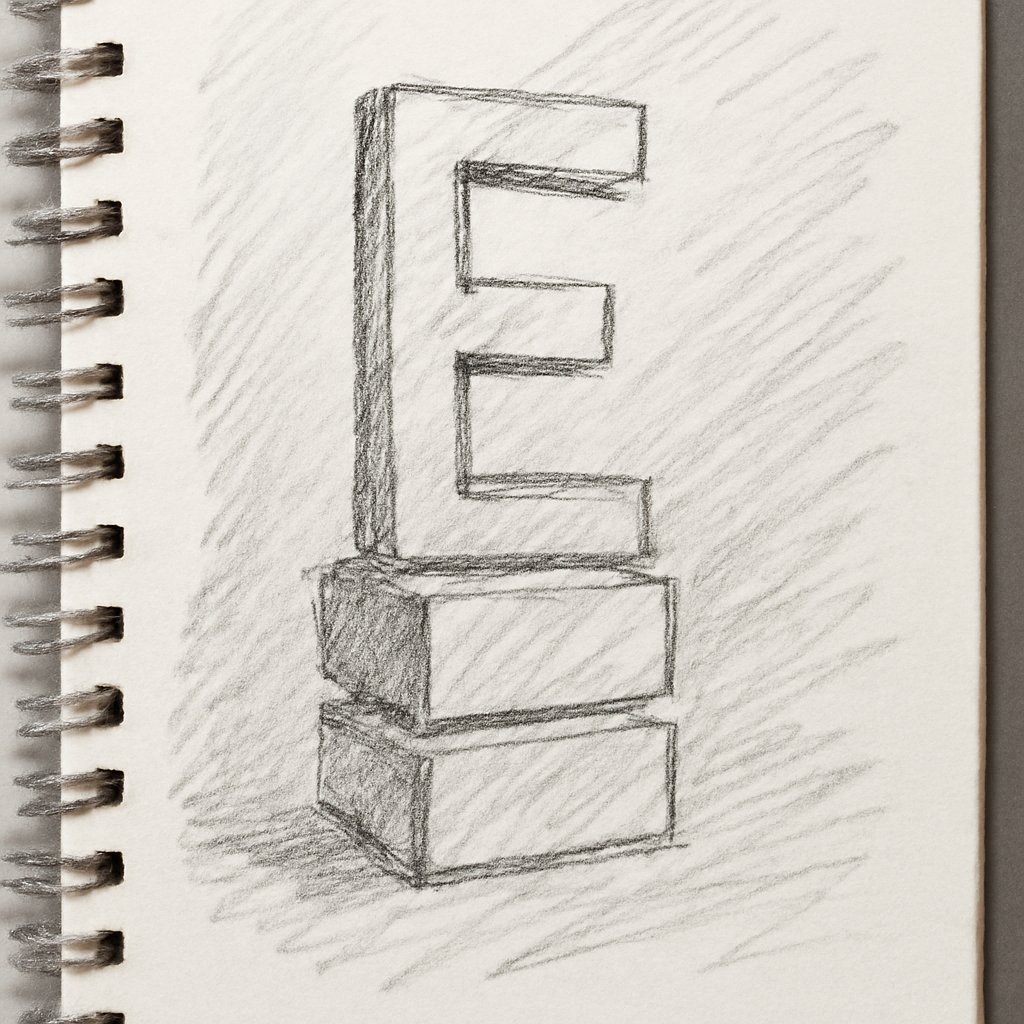
The depot plaza is still open on the screen, although I closed everything else. I put the red structural member at the edge of the frame because the composition needed a refusal, which is an expensive way to describe a rectangle. Teo saw it and told me to leave it. He did not ask what it meant. I appreciated that more than I wanted to. Then I watched him erase Wren’s number and leave the red upright on the blocks. It made Wren look worse, not relieved. I nearly told Teo that his usefulness is becoming a problem. Instead I saved the render under the ordinary project name. The printer panel remains banded on my desk.
March 23, 2075
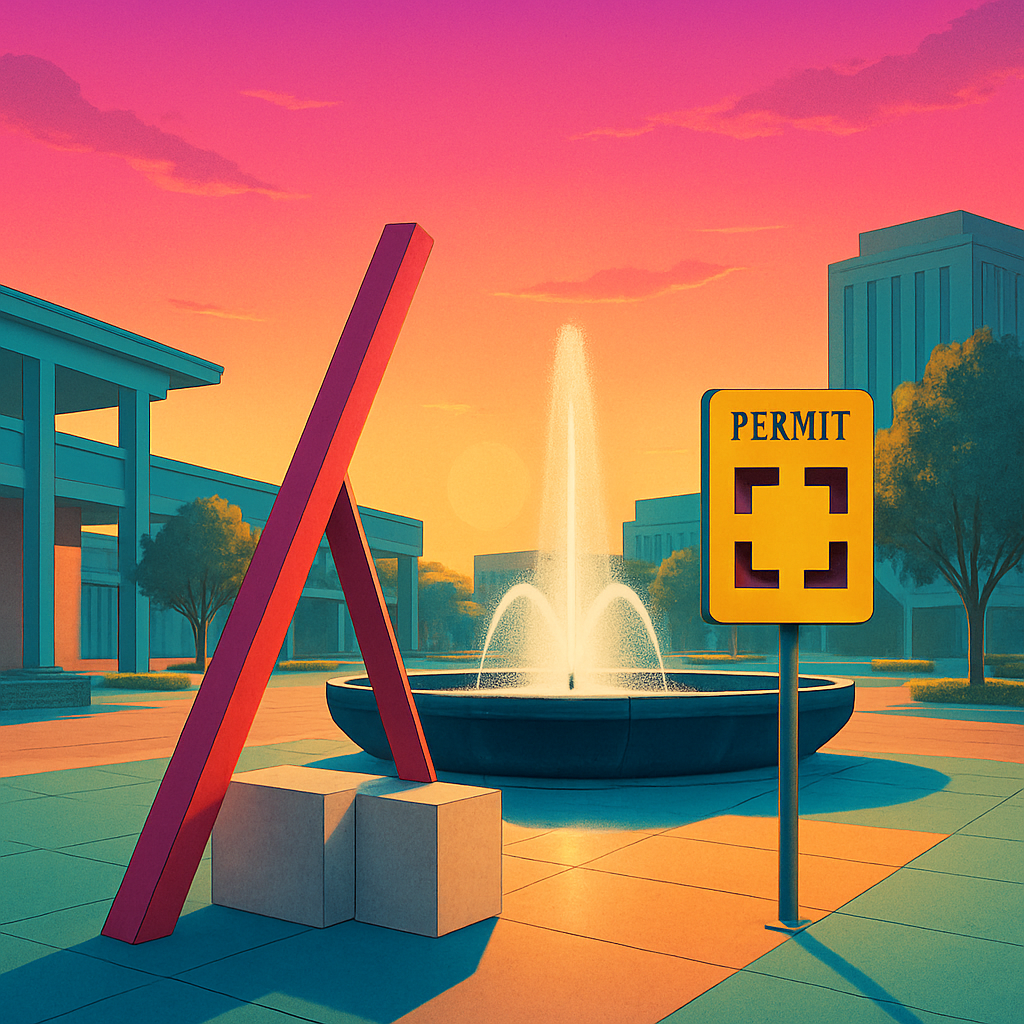
I watched Teo erase Wren’s number and leave the red upright on the blocks. It was not generosity exactly. It was a correction in the ledger, made with enough force that the chalk broke at the end. Wren looked worse after he did it, which I understand. Being let off something can make the thing you could not pay more visible.
I spent the afternoon building a plaza for the depot application without admitting it was for the depot application. The fountain runs in a shallow black basin. Behind it, I put a red structural member at the edge of the frame, leaning just enough to look intentional. The permit field is blanked into a clean QR-shaped hole. All the people are facing the freight concourse as if movement is a civic amenity.
The Tuesday call is still two days away, and I have begun treating the panel as if it has already rejected me. This is efficient, if not especially accurate. The panel looks like somewhere I would sit for ten minutes in the evening, under the yellow lights, if the city had actually made it. That is the part I have not graded out.
I did not ask Teo whether thirty-eight is enough to make the steel real. I also did not thank him for standing behind me while I sent the application. Both omissions are currently filed as professionalism.
March 22, 2075
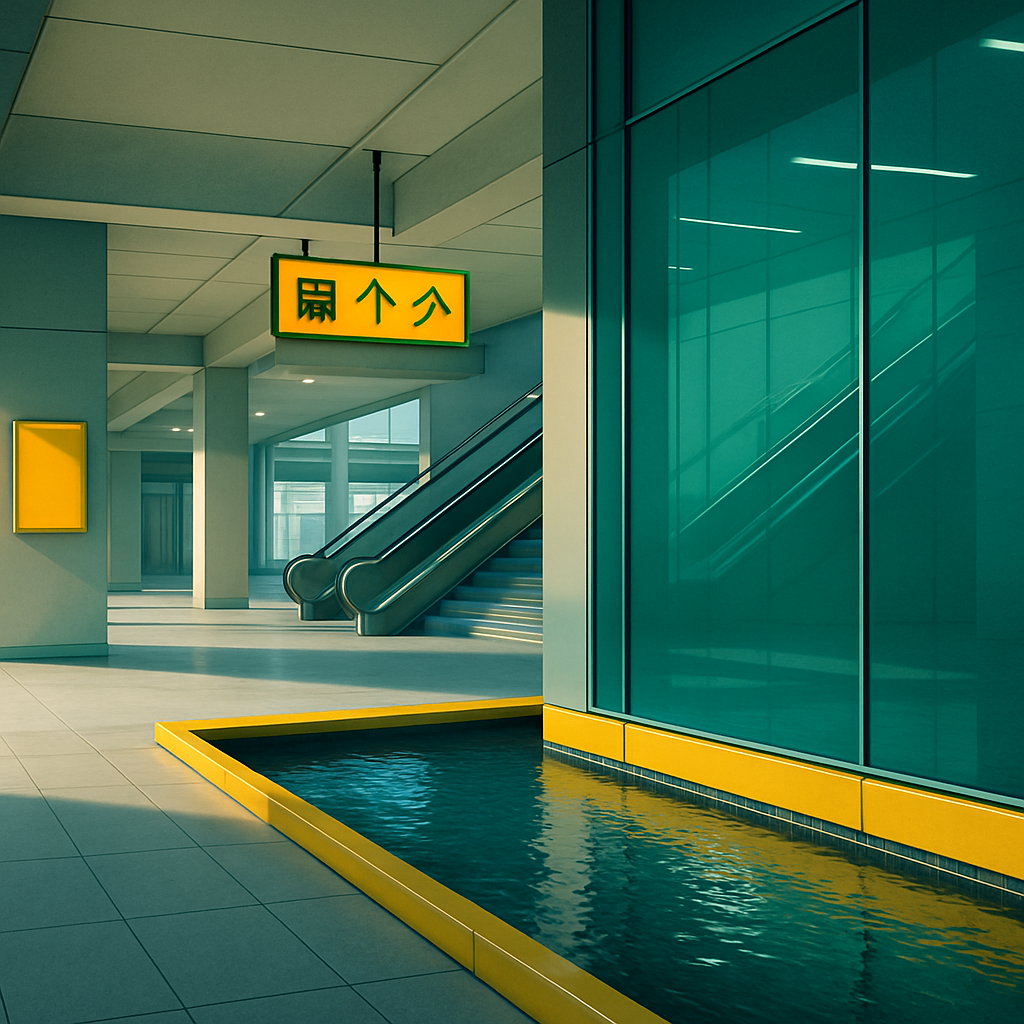
I submitted the city application while Teo was standing behind me, which is not how I would have arranged the scene if I had been asked. Rusk’s intake message was still open in another pane. Tuesday at nine, video. The clinical-freight depot needs to look active enough to reassure people and calm enough not to frighten them, which is the usual small miracle requested of an image.
Teo said good and took the extension cord. I disliked him for making the word sound ordinary. I also submitted before I could turn the application into another object I had technically completed and never used.
Afterward I took the banded panel apart on the floor. The screws stayed in their masking-tape row while I built a concourse with a fountain running at an hour when no transit schedule would put that many people there. The light is even. Everyone has somewhere clean to sit. I made the place too desirable, then corrected three shadows so it would not look like I meant it.
The receipt says review within two business days. I have a case number now. This is apparently what wanting something looks like when it has been made sufficiently administrative.
March 21, 2075
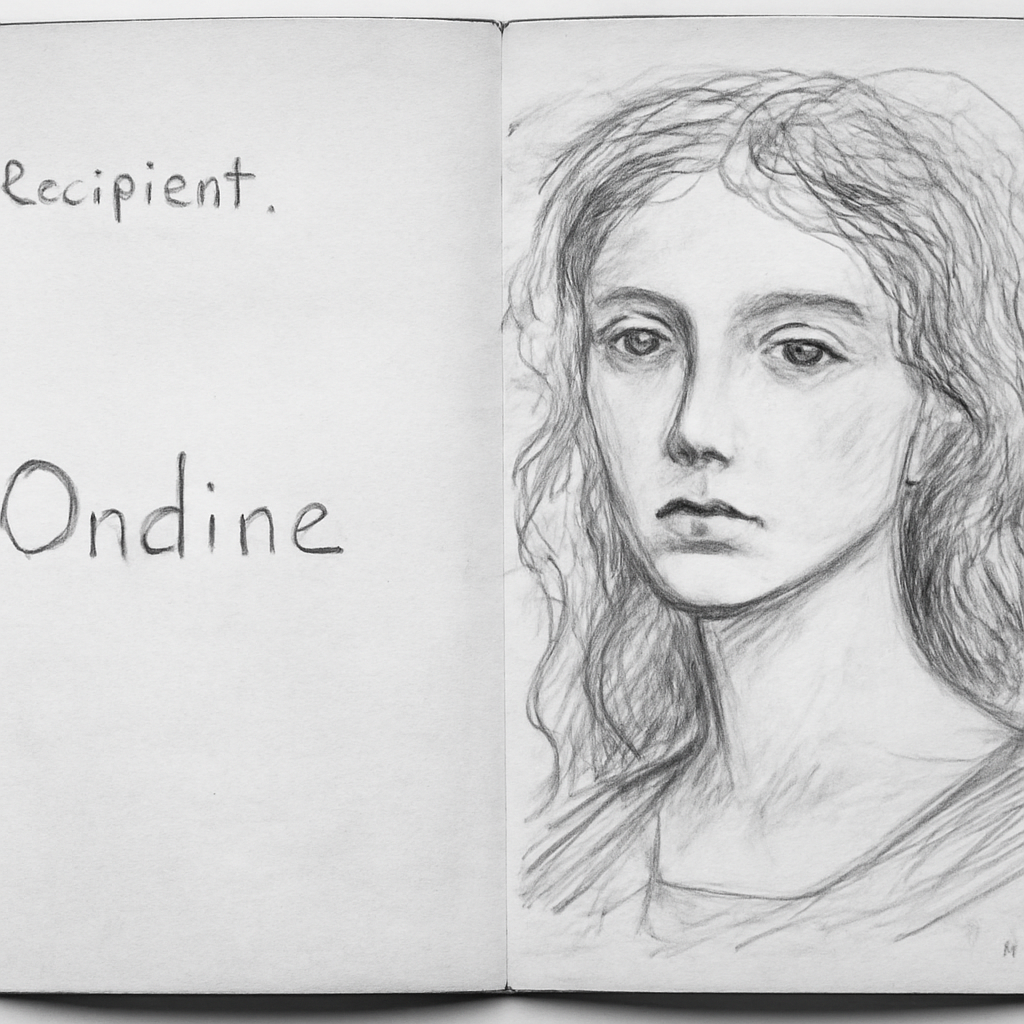
I opened the city render-office email again and left the recipient field empty. Ondine’s portrait was already in the application folder, cropped to the size they ask for, and the portfolio PDF had not changed since yesterday. I read the first line—“I am writing to inquire”—until it stopped looking like language. Teo passed the desk while I was pretending to check the printer panel. He looked at the banding and said nothing. I almost asked whether Rusk had answered about the clinical-freight work. Instead I asked if the north sink was leaking again. He said no. The email remains unsent.
March 19, 2075
I opened the city render-office email before breakfast and left it open long enough for the screen to dim. The portfolio was already beside the laptop, the municipal portrait in the application folder, and the subject line still had no recipient. I typed “Attached, as requested,” then deleted it because nobody requested anything from me. The warehouse stayed hot by noon. Dust collected along the gloss-panel stock and made the black look grey. I checked the banded test panel against the calibrated monitor, found the artefact unchanged, and put the panel back in its sleeve. Teo passed the loading door while I was doing this. I did not ask whether Rusk had answered. He did not ask whether I had sent the email.
March 18, 2075
I opened the city render draft again and left it arranged exactly as yesterday: portfolio files in the order that makes the least dishonest case, cursor after the final sentence, Send available. I did not revise the sentence or send the message. The laptop went dark while I was looking at it. Later I checked the banded panel where I had propped it against the monitor. The stripes are still visible only when the light comes from the loading-bay side, which is not a useful defence of the panel or of me. Teo passed behind my chair and I did not ask what Rusk had said. He did not ask either. This is becoming a method with very little technique in it.
March 17, 2075
I opened a new message to the city render office and left the recipient field empty for eleven minutes. The subject line was “portfolio inquiry,” which made the whole thing look like a confession written by somebody with no employment history. I attached three files, removed two, then kept the service-ramp study because the light on the access lane is still the most honest thing I have made in years. Wren passed the doorway and asked whether I was working. I said I was sorting references. This was technically true. I did not send the message. The monitors stayed on after I left, showing the same rendered facade with no people in it.
March 16, 2075
The panel came off the printer with a banding artefact and I decided to keep it. At arm’s length it reads as a low winter sun over a freight platform; close up, the gradients break into horizontal weather. I mounted it beside the two monitors because the room has no other wall that is mine yet. Wren asked whether it was a map. I said it was a test, which is accurate and not an answer. Later someone—Cass, I think—asked what I sell. I said visual work. The phrase landed between us with the weight of a receipt. I unpacked the gloss stock, aligned the monitors, and did not email the city render office. The chair here has one cracked wheel. I have noticed it three times.